A blog showing videos of handcuffs, various brands and models such as Smith & Wesson, Peerless, Yuil, ASP, Clejuso and more.
• Click "Older Posts" under the last video listed, to see the next page of videos :)
Showing posts with label UK. Show all posts
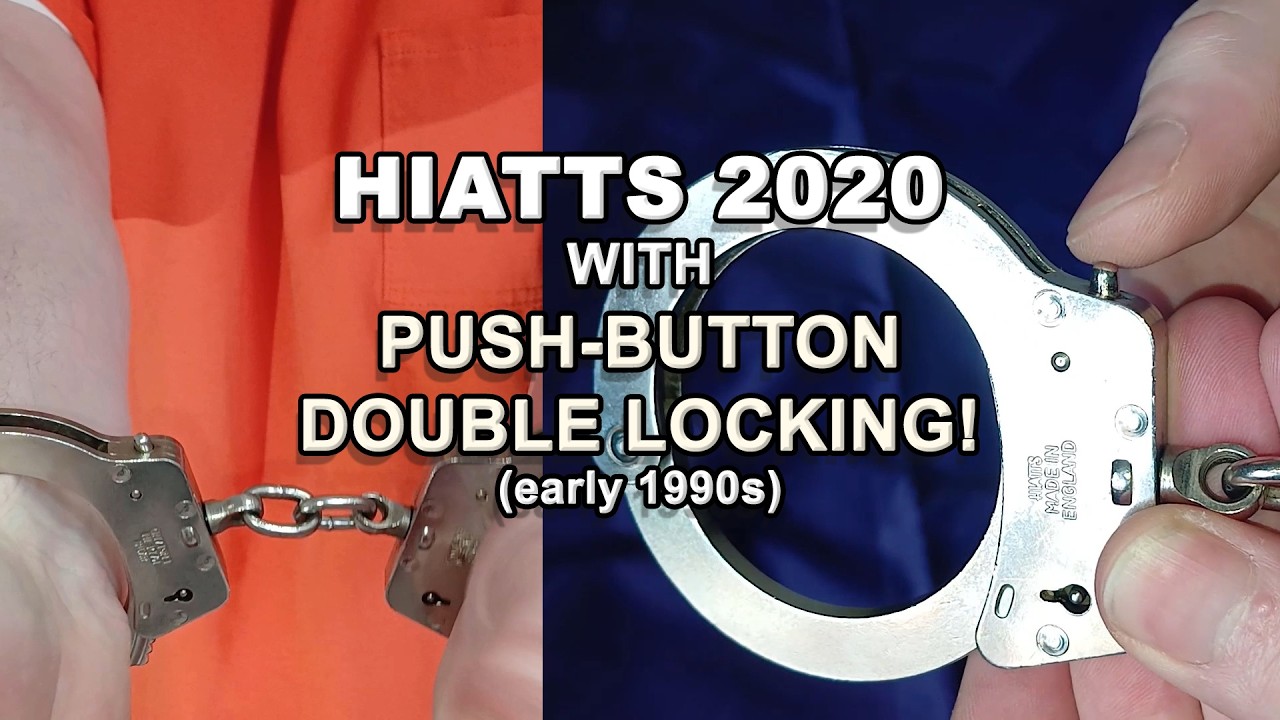
Quite Scarce HIATTS Model 2020 British Chain Handcuffs With External Push Button Double Locks!
These are the HIATTS 2020 chain-link handcuffs with external push buttons for the double lock. They are very, very early 1990s, given that it is a classic HIATTS 2010 design with leftover swivels from the prior 1980 model.
It was a bold experiment, to increase the ability to double lock the cuffs in a hurry without having to use the back end of the key. But it had an unforeseen detrimental effect. The handcuffs could accidentally double lock while in the case on the officers belt or even while gripping the handcuffs to apply them. This means you pull the handcuffs out to secure a criminal... and they won't go around the wrist. Or as you are applying them, you get a couple of clicks or so around their wrist and your grip presses the double lock and they won't properly tighten. Very inconvenient when struggling with a criminal and you have to unexpectedly dig your key out, undo the double lock and re-single lock the cuffs without doing the same mistake again!
These are not a very common item, because they weren't deployed widely, after these issues were noted. Usually cost more than a regular surplus pair of HIATTS 2010, at least 2 or 3 times the cost. I got mine for less than half price of what I would pay for a 2010!
Also, this is the first appearance of my genuine US prison Bob Barker brand orange 2-piece prison scrubs in a video. Plain prison clothing like this in Khaki or orange, provide a nice plain background that is bright enough, with no distracting patterns or dark colours that reduce restraint visibility. This way, you can more easily see the handcuffs or leg irons that are being shown in a worn context, compared to back in the day when I wore my usual black clothing. After all, the items are the only star of my videos! Plus the clothing is a good match for the context of the usage of restraints.
Please like and subscribe.
Enjoy!
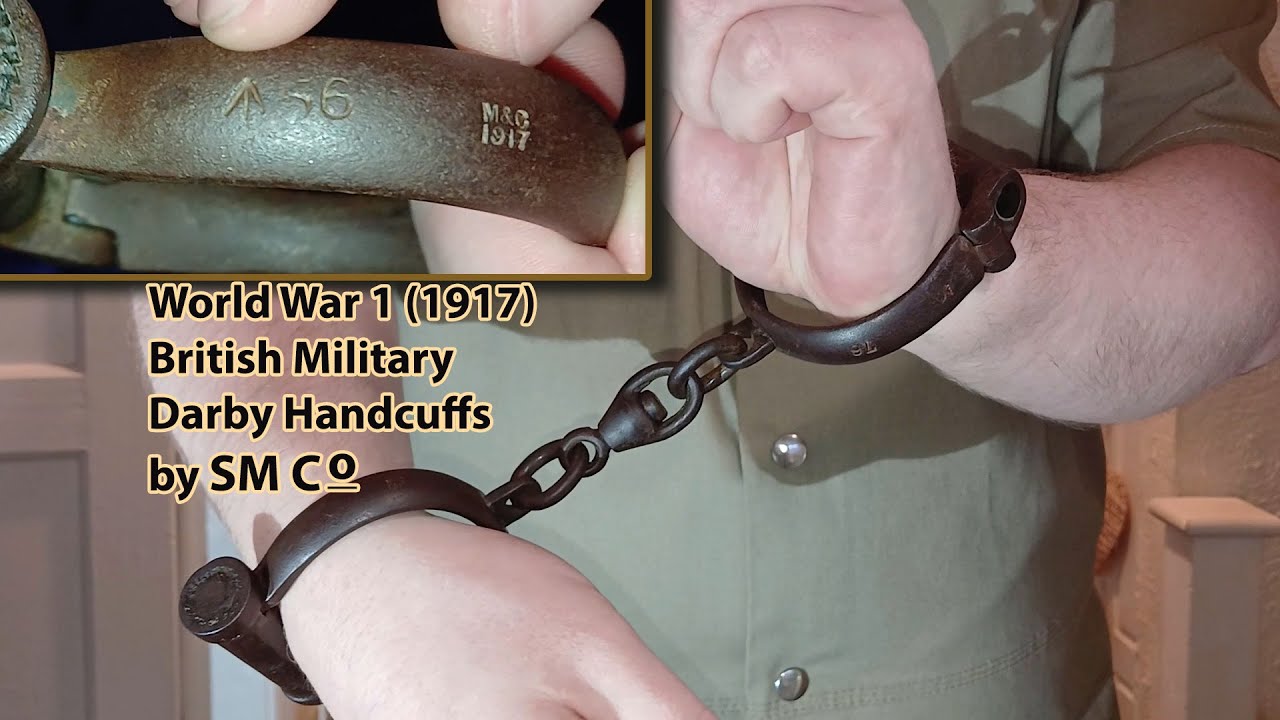
Scarce SM Co Darby WW1 Great War British Military M&C 1917 LARGE Handcuffs with Broad Arrow
These are a pair of British MIlitary SM Co (Security Manufacturing Company) pair of HIATT 104 style non-adjustable Darby handcuffs From WW1.
SM Co are only known to have made handcuffs during the first world war, to fulfil government contracts when other manufacturers could not keep up with the demand. These are stamped with the official British military Broad Arrow or Crows Foot stamp, as well as M&C which was a military and government marking of the day. M&C likely stood for Ministry and Civil or Military and Civil. So to have M&C AND also the Broad Arrow is always cool! Dated 1917, as per the stamp. M&C 1917 is stamped very small!
They are a Size 3 large size... If I can spin my wrists around in them, they're big... ! 403 grams in weight. There would be many reasons for handcuffing during The Great War, such as internal soldier discipline if they had tried to desert, or got drunken or such things as well as for prisoner transport.
I had to do some usual maintenance on them. Using Autosol to remove the surface loose red rust to let the dark patina show through, blasting with fully evaporating brake and clutch cleaner, brushing, re-lubricating etc. But once I had finished (and waxed them of course!) they are a really nice pair of handcuffs. And they came with 2 keys! Fully, legitimate working keys. I am very impressed.
Have these been in the trenches subjected to gas attacks, apprehending German military officers? Have they been re-purposed during WW2 or given to reserve units like the Home Guard? Impossible to tell. I was unable to obtain their history because the seller had no direct ties to the original owner.
They work smoothly. This is the first SM Co brand of handcuffs in my collection.
Enjoy!
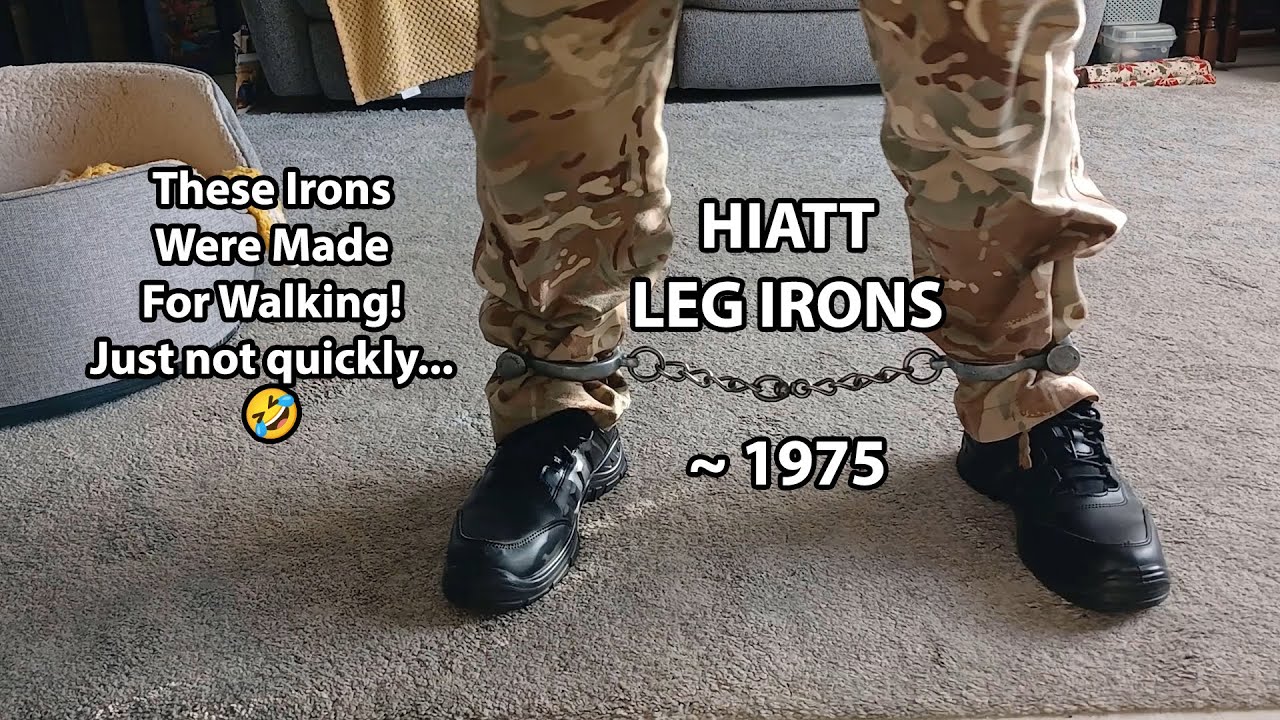
British HIATT Darby Leg Irons ~ 1975 Made from good quality alloy
These are HIATT Darby Leg Irons From 1974-1975 timeframe.
The chain and swivel are steel, but the body of the leg shackles are made from an alloy. Commonly referred to as "pot metal" although HIATT being a well known company of quality products, they used a particularly good alloy, perhaps Zamak 5 for strength. The construction is more bulky than the traditional all-steel versions and this is to accommodate for the alloy's properties to maintain the required levels of strength and security. Steel ones did not need to be bulked up.
They have the standard Darby locking mechanism, consisting of an internal sprung bolt which the key interacts with and on it's other end is the pawl that locks into the hole in the shackle to keep them securely closed. As you turn the key to undo them, eventually the collar on the key hits the resistance of the body of the shackle and from that point, the subsequent turns pull the bold outwards, freeing the shackle to open.
Because of the shape of the shackles, they are able to spin around quite well on the ankle, which aids in being able to walk in them better. They are actually quite comfortable.
These were made around 1974 to 1975. According to a reliable source in 1975 HIATT were just coming out with these Alloy models at that time. Being made of a quality "pot metal" alloy, they were cheaper and easier to manufacture. The rectangular and chunkier construction was almost certainly to counteract the shortcomings of the alloy to ensure they would meet security needs for real-world restraints while still reducing production costs and time.
Initially they were branded with the HIATT branding, but with rising tensions in the world about the use of leg irons and connections to slavery and degrading treatment of people, they stopped branding them.
Not too long afterwards of a year or two they stopped production. But the very latest ones they came out with prior to stopping seemed to have EVEN cheaper construction with rivets for the hinge pins and more sloppy tolerances as those were intended for markets other than genuine real security needs.
Given the history, the fact that mine are branded AND they have a number stamped on them and the key, coupled with the fact that the hinge pin is the classic steel type that is flush and the fact that the tolerances are nice and tight, these that I have are no doubt for actual real-world use, part of their initial line of Alloy leg irons.
Enjoy!
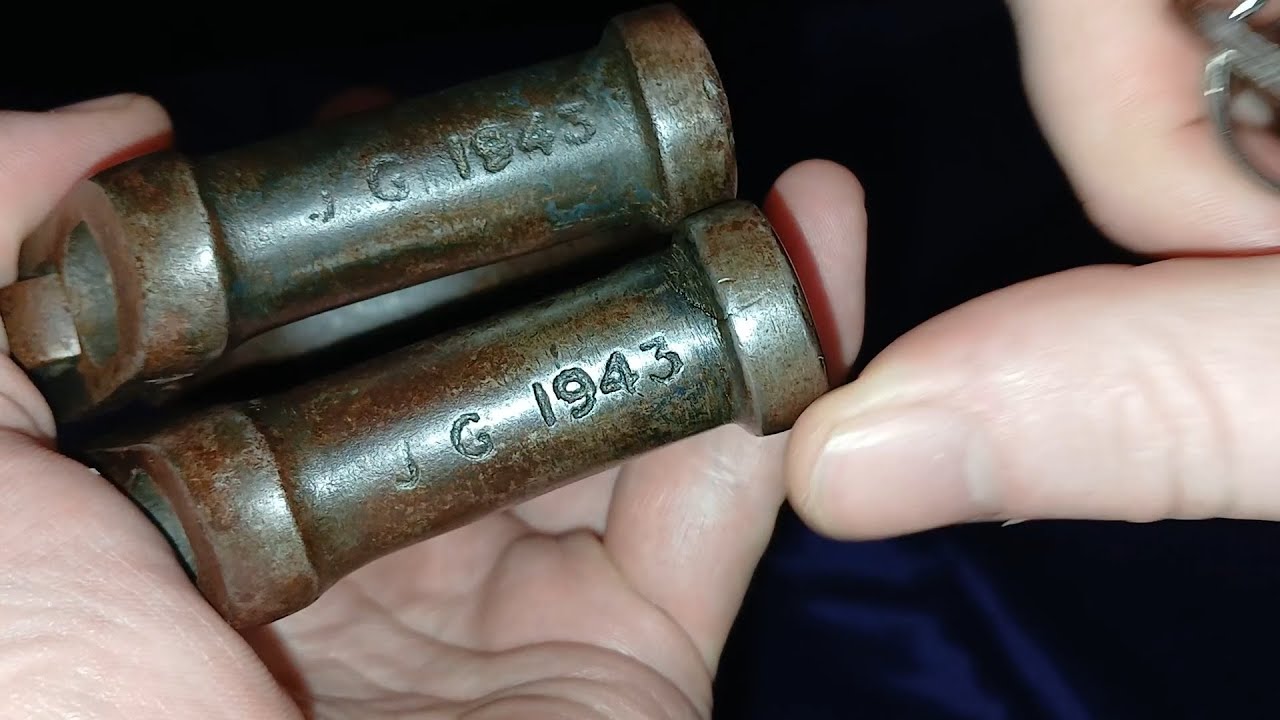
JG 1943 WW2 False Backstrap British Military Darby Handcuffs
These are JG (J.G) Handcuffs from World war 2 ( 1943 ). They are British Army issue and have the Broad Arrow (or crowsfoot as it's sometimes called) stamp very clearly on the lock tube.
These are really cool and heavy handcuffs (605 grams), though strangely are a bit on the small side. I can just about fit my wrists in them but they are certainly not comfortable at all, so I won't be doing an on-body demonstration.
These are a false backstrap, which means the hinge looks like a backstrap but it isn't. Imagine a backpack strap. You have the material end and the other end is a buckle kind of thing. The shackle of the cuff is longer and gets fed through a rectangular hole made in the lock tube and then the shackle tail bit is folded back on itself so that it is permanently linked to the lock tube.A FALSE-backstrap like on this handcuff is opposite. The lock tube does not have a solid rectangular hole made, it has pincers that are poking outwards and the shackle is meaty on the hinge side and has a hole drilled through it. The shackle is placed between the pincers that are part of the lock tube and then the pincers are crimped inwards into the hole that is on the shackle to create a permanent connection and form the hinge.
There is a little crack near the cap end of the lock tune on one of the cuffs that lets light shine through. Though there is more than enough integrity surrounding it so that it's not a security issue or any form of show-stopper. 00:43 shows the crack on the bottom shackle near the right side by the plug end.
All in all, very nice indeed! Very happy to have another world war 2 handcuff in my collection and a British Military one at that! The little nick on the key barrel and the crack in the lock tube leads me to believe these have likely seen some serious action.
Anyway, Enjoy!
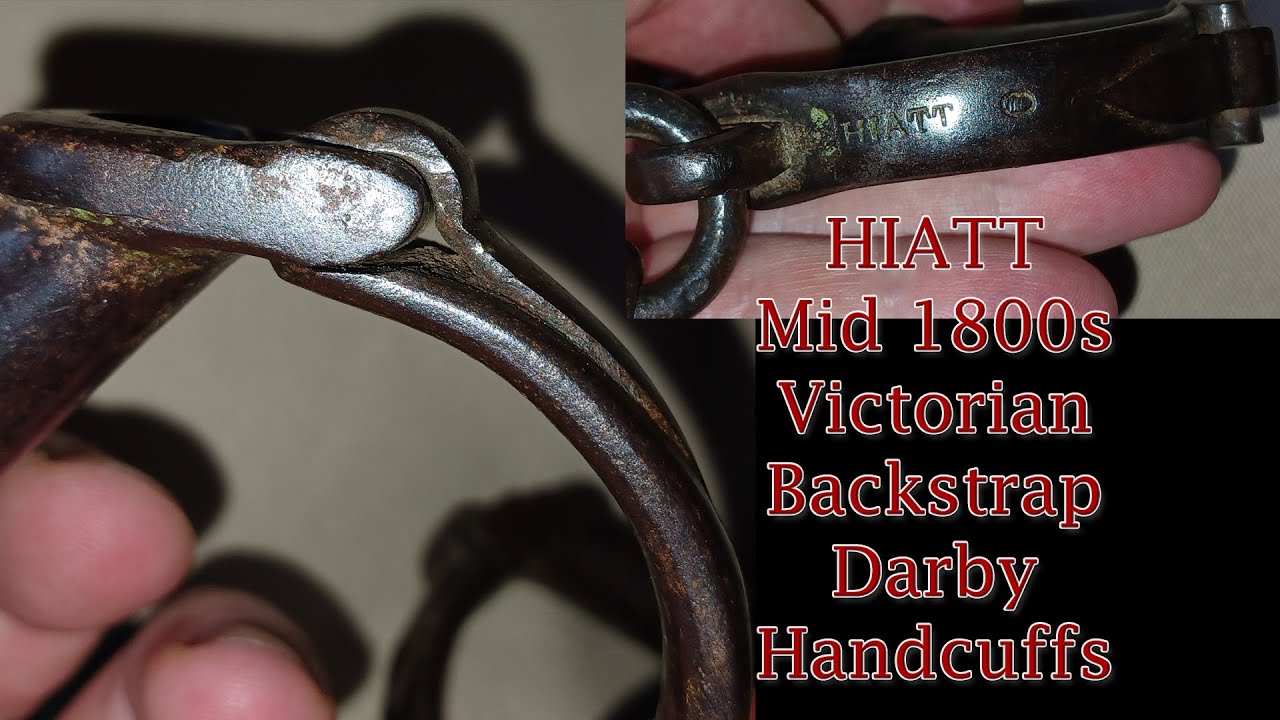
HIATT 104 Approx mid 1800s Genuine Backstrap Darby Victorian Police Handcuffs in GREAT condition
Happy Handcuffs day! (Feb 20th) These are a Victorian pair of HIATT 104 Darby Backstrap handcuffs from the mid - late 1800s.
These differ from my other HIATT 104 handcuffs, in that these are a genuine backstrap or back strap. This means, instead of having a more modern hinge style where the two sections mate and a pin is pushed in to keep them connected, these instead have an elongated tongue at the end of the shackle which is fed through a specially made gap in the lock tube and folded back on itself to create a sturdy hinge. It is quite an elegant system, really.
In the early 1800s, Darby handcuffs had various hinge styles, including backstrap and pinned hinge. There are also later hinges called False backstraps, like on my JG Army handcuffs which was a somewhat similar visual style but instead of folding a tongue over to create the hinge, the shackle was made more chunky and a hole drilled through it, at which point the lock tube would be permanently connected through the hole in the shackle.
I am incredibly happy to have an actual backstrap handcuff in my collection! They had been in the original owner's family for many many years. Handed down. The seller's Granddad had them since before WW2 and I would imagine his dad gave them to him since these are from the 1800s, given this old hinge design. I got a great deal on them. I could not fully tell from the images but once I got them, I knew for sure what I had! They had some surface rust but were in amazing working order. I used a bit of super fine wire wool, some peek metal cleaner, Autosol polish and Renaissance wax polish and now they look a million miles better.
They are less heavy than my other 1800s pair of HIATT, by about 100 grams lighter (these are 397g, whereas my more bulky 1800s pair weigh 496g. They are what I would call a large size. I have somewhat large wrists and there's decent room left when wearing them.
Best estimates I have seen from people with more experience of varying models, are that mine are an early Hiatt backstrap pair from approx 1850 ish (mid 19th century) So at the time of making this video, they are probably 160 years old and still work smoothly!
Enjoy!
Subscribe to:
Posts (Atom)