Showing posts with label Hiatt. Show all posts

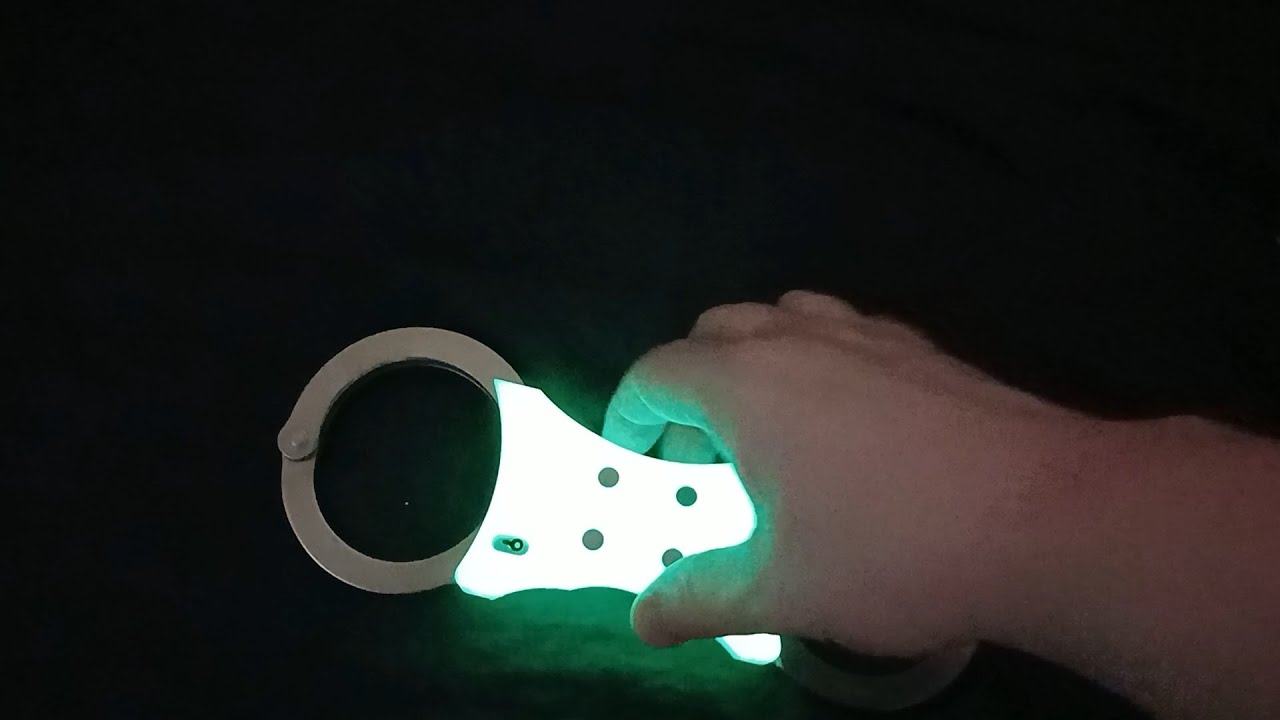
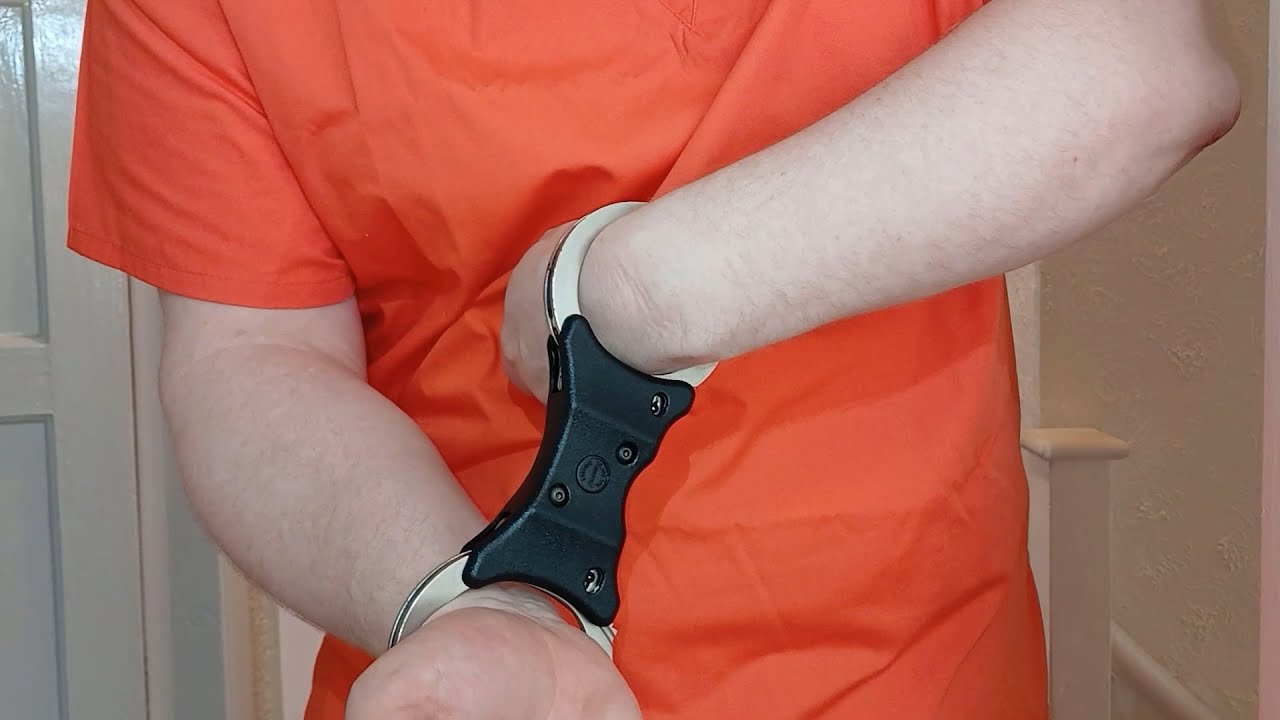
Quite Scarce HIATTS Model 2020 British Chain Handcuffs With External Push Button Double Locks!


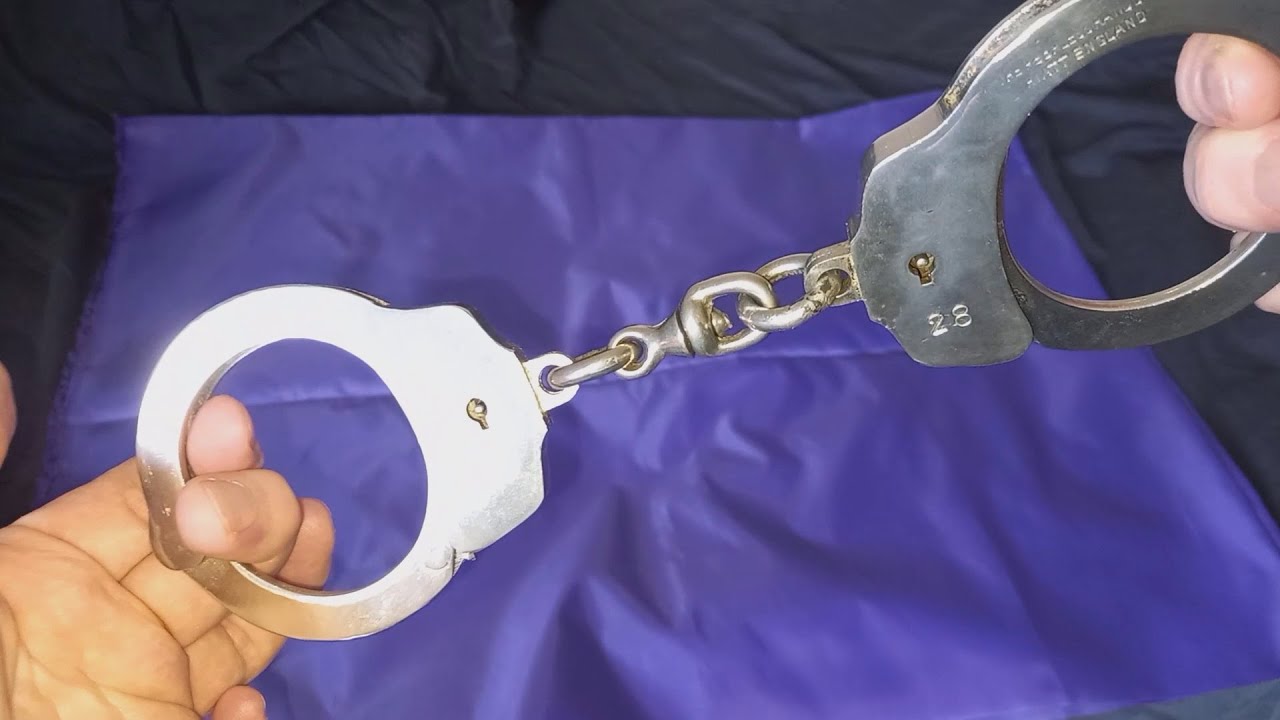
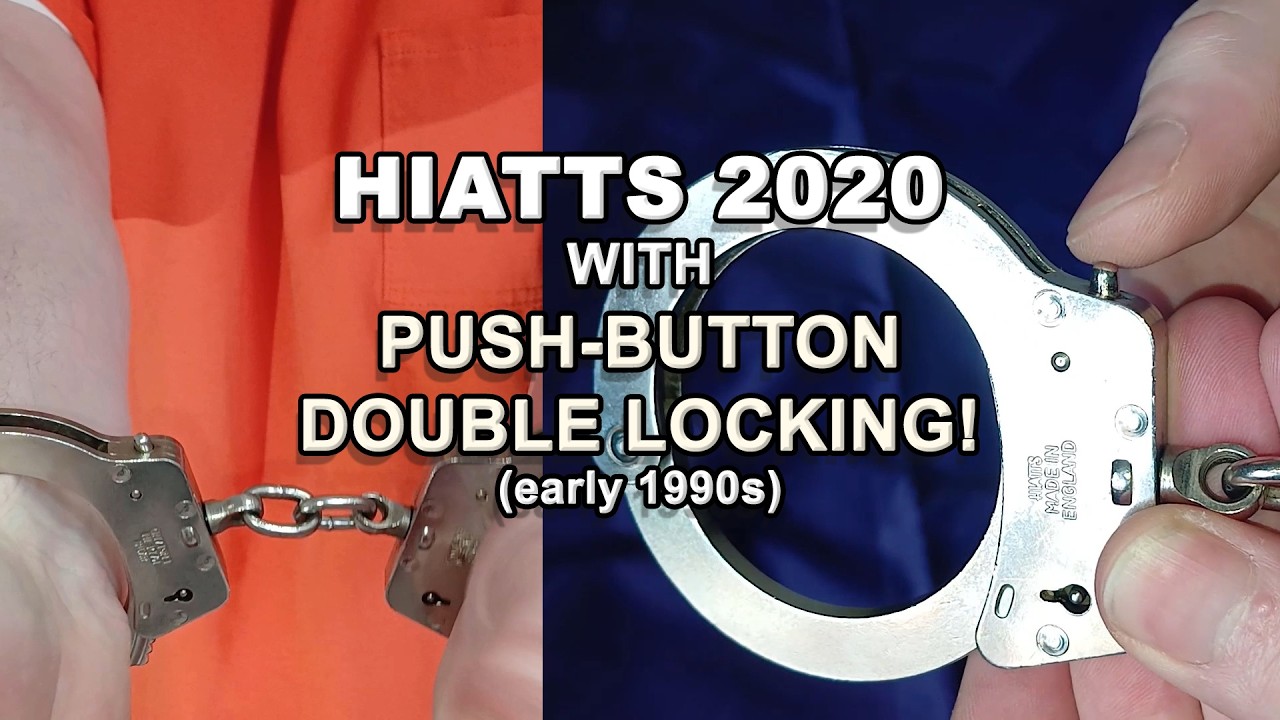
These are the HIATTS 2020 chain-link handcuffs with external push buttons for the double lock. They are very, very early 1990s, given that it is a classic HIATTS 2010 design with leftover swivels from the prior 1980 model.

It was a bold experiment, to increase the ability to double lock the cuffs in a hurry without having to use the back end of the key. But it had an unforeseen detrimental effect. The handcuffs could accidentally double lock while in the case on the officers belt or even while gripping the handcuffs to apply them. This means you pull the handcuffs out to secure a criminal... and they won't go around the wrist. Or as you are applying them, you get a couple of clicks or so around their wrist and your grip presses the double lock and they won't properly tighten. Very inconvenient when struggling with a criminal and you have to unexpectedly dig your key out, undo the double lock and re-single lock the cuffs without doing the same mistake again!

These are not a very common item, because they weren't deployed widely, after these issues were noted. Usually cost more than a regular surplus pair of HIATTS 2010, at least 2 or 3 times the cost. I got mine for less than half price of what I would pay for a 2010!

Also, this is the first appearance of my genuine US prison Bob Barker brand orange 2-piece prison scrubs in a video. Plain prison clothing like this in Khaki or orange, provide a nice plain background that is bright enough, with no distracting patterns or dark colours that reduce restraint visibility. This way, you can more easily see the handcuffs or leg irons that are being shown in a worn context, compared to back in the day when I wore my usual black clothing. After all, the items are the only star of my videos! Plus the clothing is a good match for the context of the usage of restraints.

Please like and subscribe.

Enjoy!

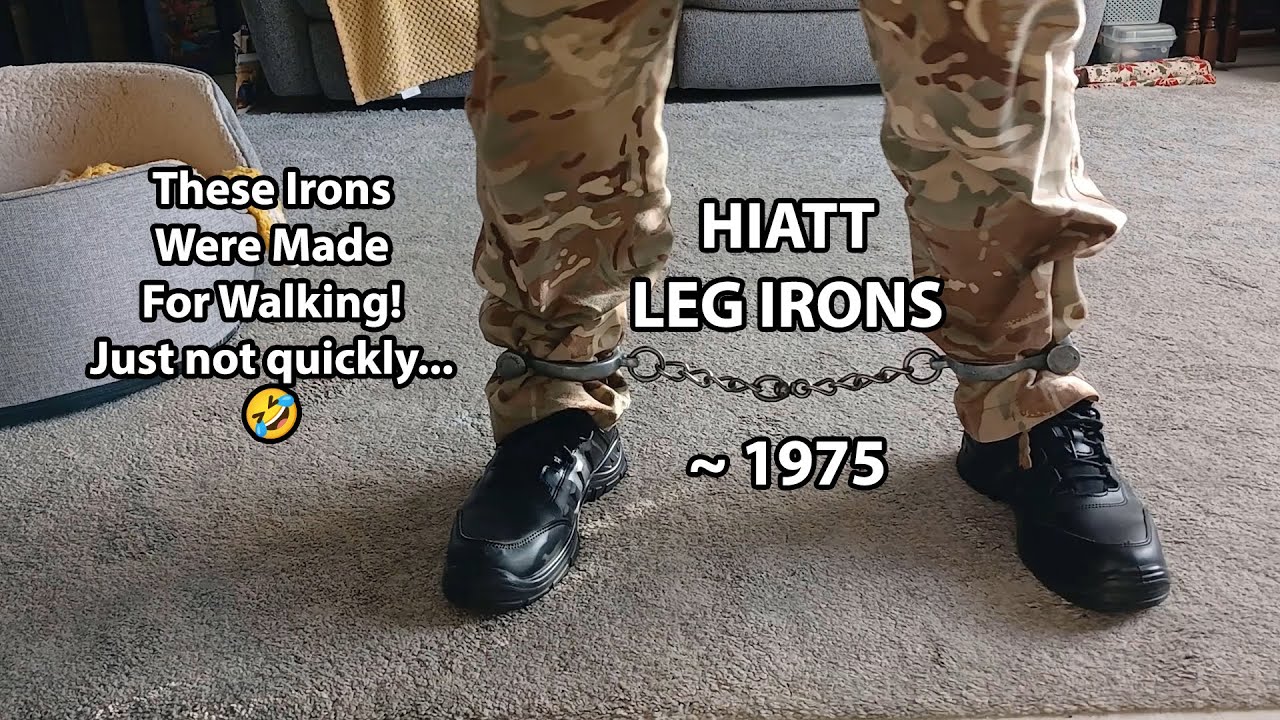
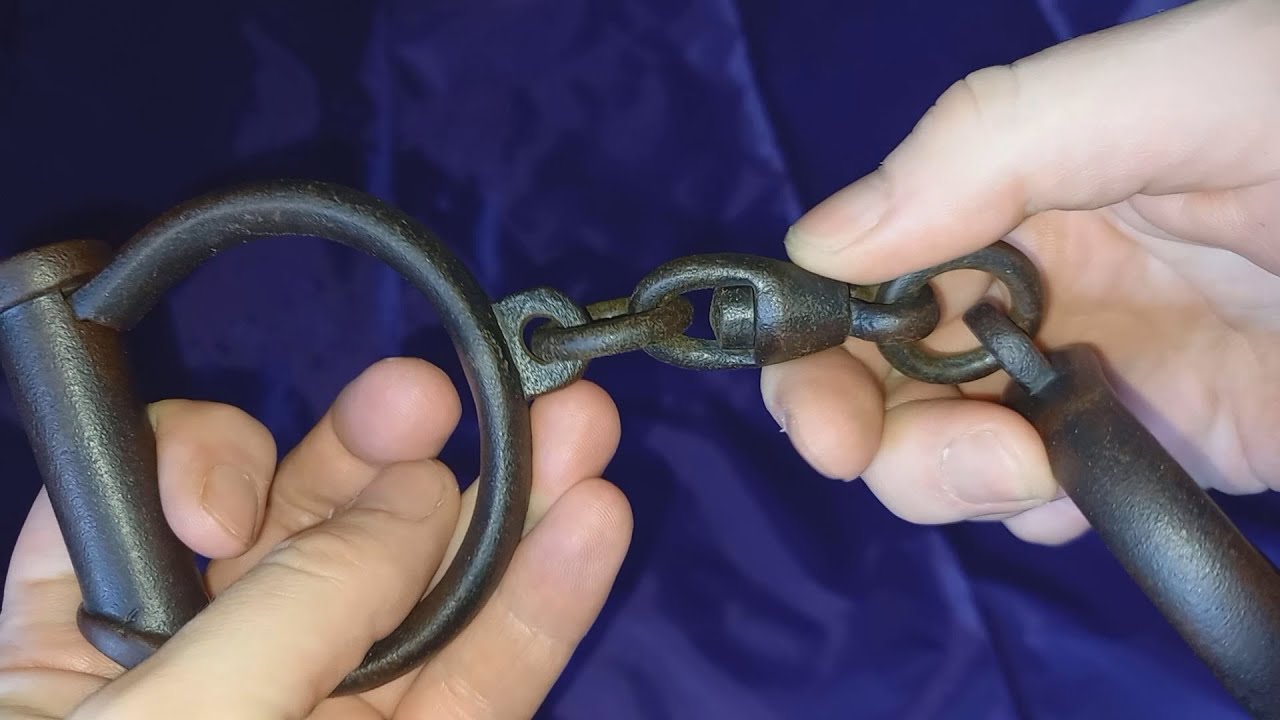
British HIATT Darby Leg Irons ~ 1975 Made from good quality alloy


These are HIATT Darby Leg Irons From 1974-1975 timeframe.

The chain and swivel are steel, but the body of the leg shackles are made from an alloy. Commonly referred to as "pot metal" although HIATT being a well known company of quality products, they used a particularly good alloy, perhaps Zamak 5 for strength. The construction is more bulky than the traditional all-steel versions and this is to accommodate for the alloy's properties to maintain the required levels of strength and security. Steel ones did not need to be bulked up.

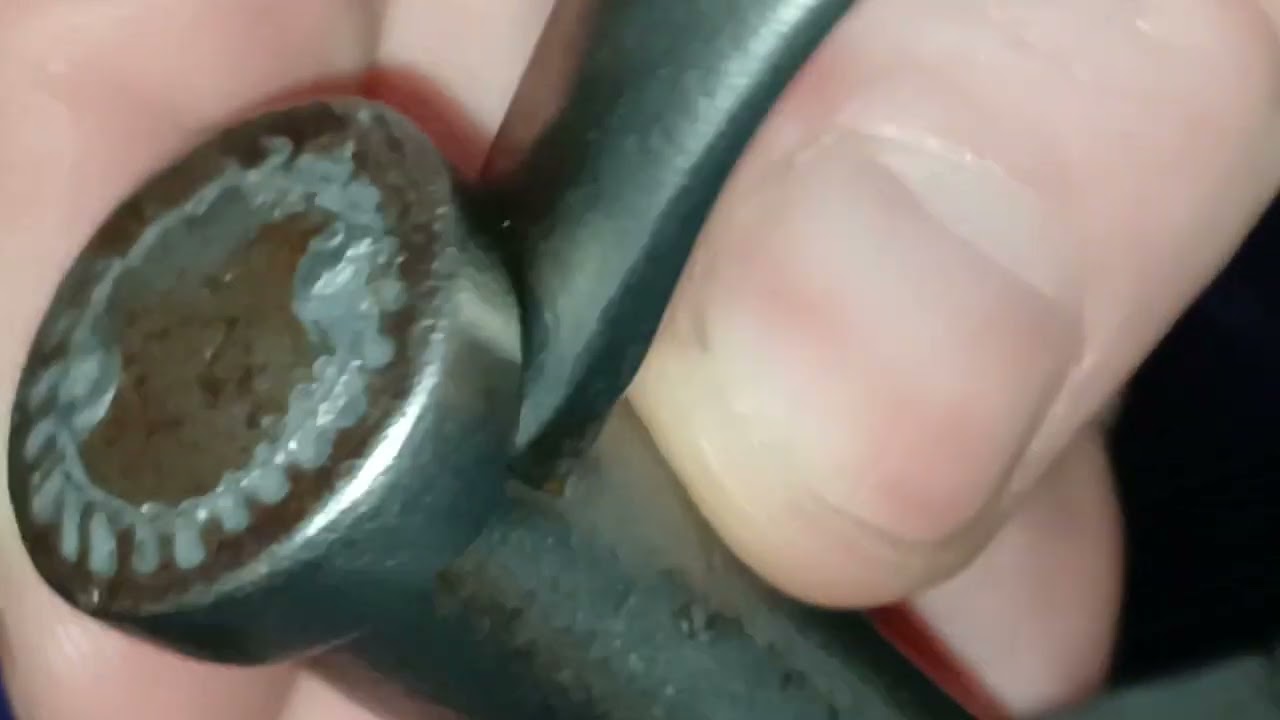
They have the standard Darby locking mechanism, consisting of an internal sprung bolt which the key interacts with and on it's other end is the pawl that locks into the hole in the shackle to keep them securely closed. As you turn the key to undo them, eventually the collar on the key hits the resistance of the body of the shackle and from that point, the subsequent turns pull the bold outwards, freeing the shackle to open.

Because of the shape of the shackles, they are able to spin around quite well on the ankle, which aids in being able to walk in them better. They are actually quite comfortable.

These were made around 1974 to 1975. According to a reliable source in 1975 HIATT were just coming out with these Alloy models at that time. Being made of a quality "pot metal" alloy, they were cheaper and easier to manufacture. The rectangular and chunkier construction was almost certainly to counteract the shortcomings of the alloy to ensure they would meet security needs for real-world restraints while still reducing production costs and time.

Initially they were branded with the HIATT branding, but with rising tensions in the world about the use of leg irons and connections to slavery and degrading treatment of people, they stopped branding them.

Not too long afterwards of a year or two they stopped production. But the very latest ones they came out with prior to stopping seemed to have EVEN cheaper construction with rivets for the hinge pins and more sloppy tolerances as those were intended for markets other than genuine real security needs.

Given the history, the fact that mine are branded AND they have a number stamped on them and the key, coupled with the fact that the hinge pin is the classic steel type that is flush and the fact that the tolerances are nice and tight, these that I have are no doubt for actual real-world use, part of their initial line of Alloy leg irons.

Enjoy!

Totally butchered HIATT Darby handcuffs - Salvaged & turned into a gimmicked set by CoxysPics


Just a quick look at this pair of HIATT darby handcuffs, which are likely from the very very early 1900s, given the font, shape of shackle and the clevis bulge. But they have been absolutely tortured and butchered by someone trying to make them work, because the bolts had been stripped of threading. It's a shame, because it is a nice pair of Darby handcuffs otherwise!

‪@CoxysPicks‬  got them cheap and was able to restore them to function (Video here:    • HIATT Darby - From Broken to functional   ) and turned them into a gimmicked pair for me (they pull open without needing a key), since with that level of butchering done to them in a former life, they are not really a collectors item any longer. He did a great job at getting them working again. Though because of the damage previously done to the end plug on one side, it kept trying to come back out. So I have twice applied some JB Weld MarineWeld, to try and help keep the plug in. It has not totally come out, but it doesn't like to stay perfectly in either. Hopefully this last application will do a better job at keeping the plug on one side properly installed.

This pair does not have WARRANTED WROUGHT on and neither is it a HIATT BEST, so I am wondering if perhaps these were not used by primary police, but by some other person like perhaps security, or something? Still, if you ignore the damaged plugs, they are a rather nice looking old Darby handcuff!

HIATTS 2103 British Police Handcuffs with Original Smooth Grip Design (Is old design worse? 🤔)


These are the HIATTS 2103 police Speedcuffs. They are British rigid handcuffs. Though this pair is an earlier pair which had the original smoother grip design. By smooth, I mean a nice flowing ergonomic design with no harsh steps.

These have the usual HIATT pin-push double lock, they have backloading capability and mechanically identical to all my British 2103 HIATTS.

I have 4 pairs of these now, though each one has differences. The grips on this early model are fantastic! The thumb naturally slides into the concave sections of the grips very nicely. Whereas the more modern (and even the new American HIATT ones) have the tear-drop shaped protrusions where the thumb goes. There may be some benefits to the tear-drop models but I find them not as comfortable to grip as this old pair with the nice ergonomic design. Very very nice indeed!

These have 3 pawls, though like every other British HIATTS I have tested, there is no split-spring, meaning if you go to lockpick your way out of these, you only need to pick or shim one of the pawl bars and a tiny squeeze on the bow will make all the other pawls drop. Modern TCH have a split spring so that the only way this is possible is if you hit the exact middle pawl, making the TCH slightly more secure.

I have wanted a pair of these with this grip design for a long time and was lucky enough to find a pair being sold by rusthut2020 on eBay. I have bought several cuffs from them now and it's always been a pleasure. Very accommodating and decent people. Very recommended.

A quick comparison of Victorian HIATT 1800s Backstrap Darby handcuffs to my previous ones.


Since these handcuffs are essentially identical to my previous ones, except where the number is stamped and the fact that the key doesn't work in my existing ones, I decided to make a comparison video rather than a full video overview.

These handcuffs were scheduled for recycling at a place that deals with metals, but someone spotted them in a pile of junk metal from a house clearance and decided to list them on eBay. I asked the seller what brand they were and he said they had no brand, only having "HARD" stamped on both shackles. Well he was incorrect. They are HIATT. I was kind of hoping they would be a different brand. But I feel like I have helped rescue them from becoming part of a electric vehicle engine block or something lol.

They are nice, though generally speaking not as nice external quality as my existing ones. The stamping is ok but the HIATT is not quite as deeply stamped as the one side on my existing ones. In person they look not too bad after I did some work to get rid of rust. But on camera here they look a bit dreadful. Weird they look so bad on camera but not too bad in person.

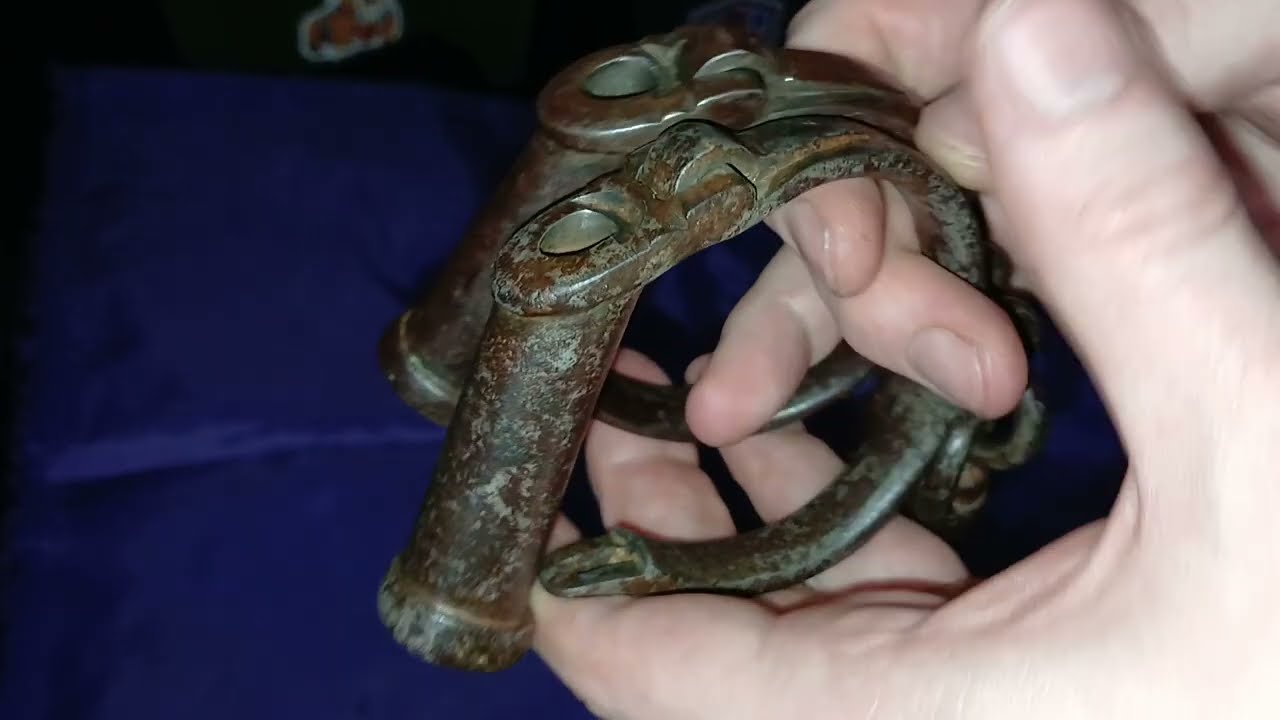
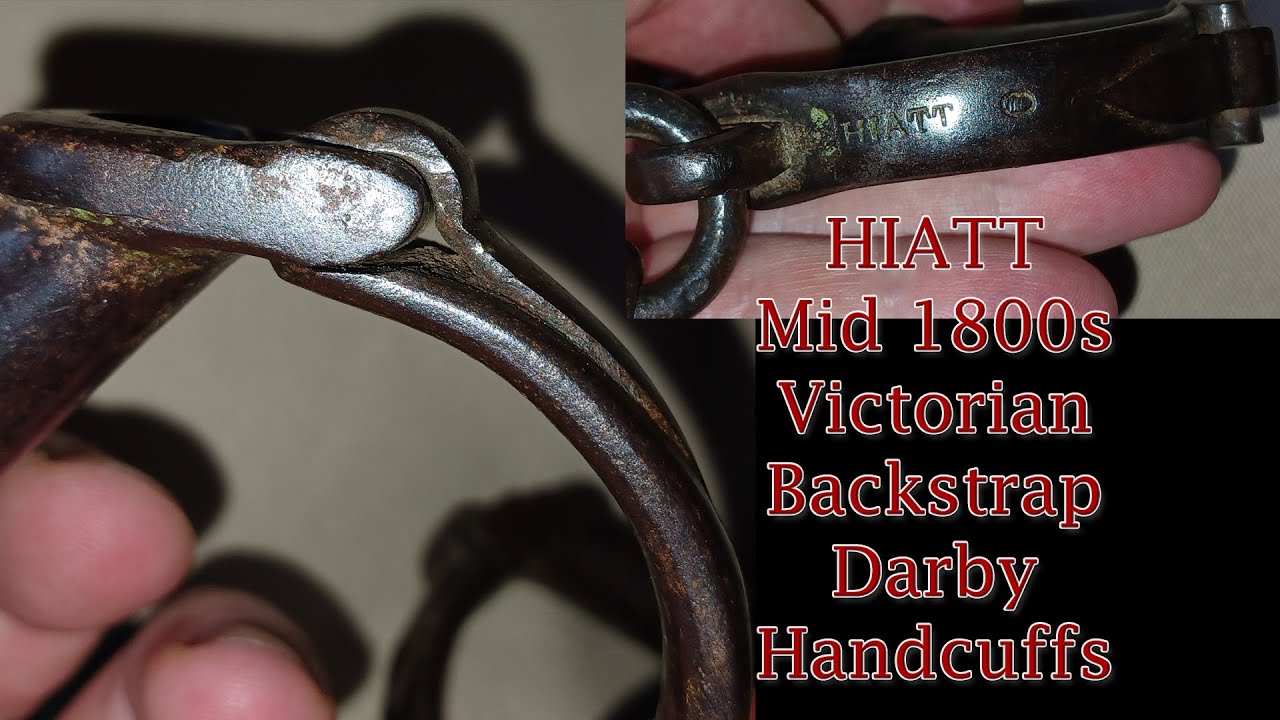
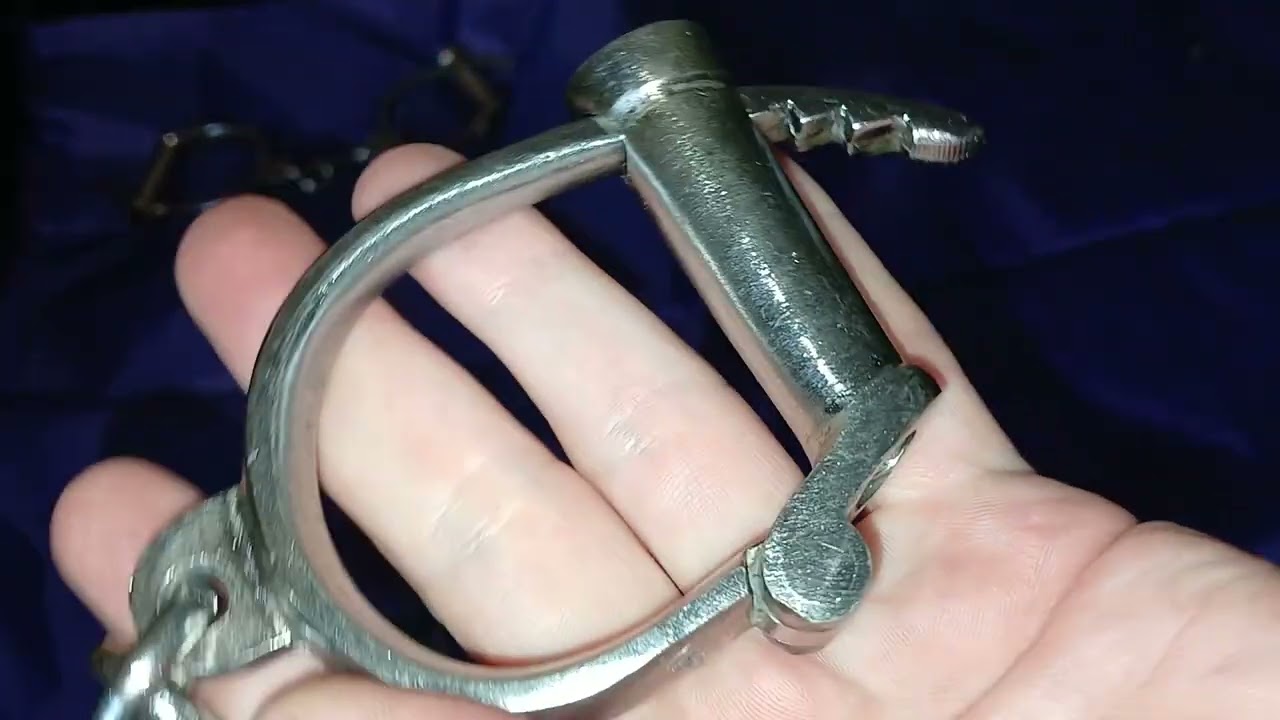
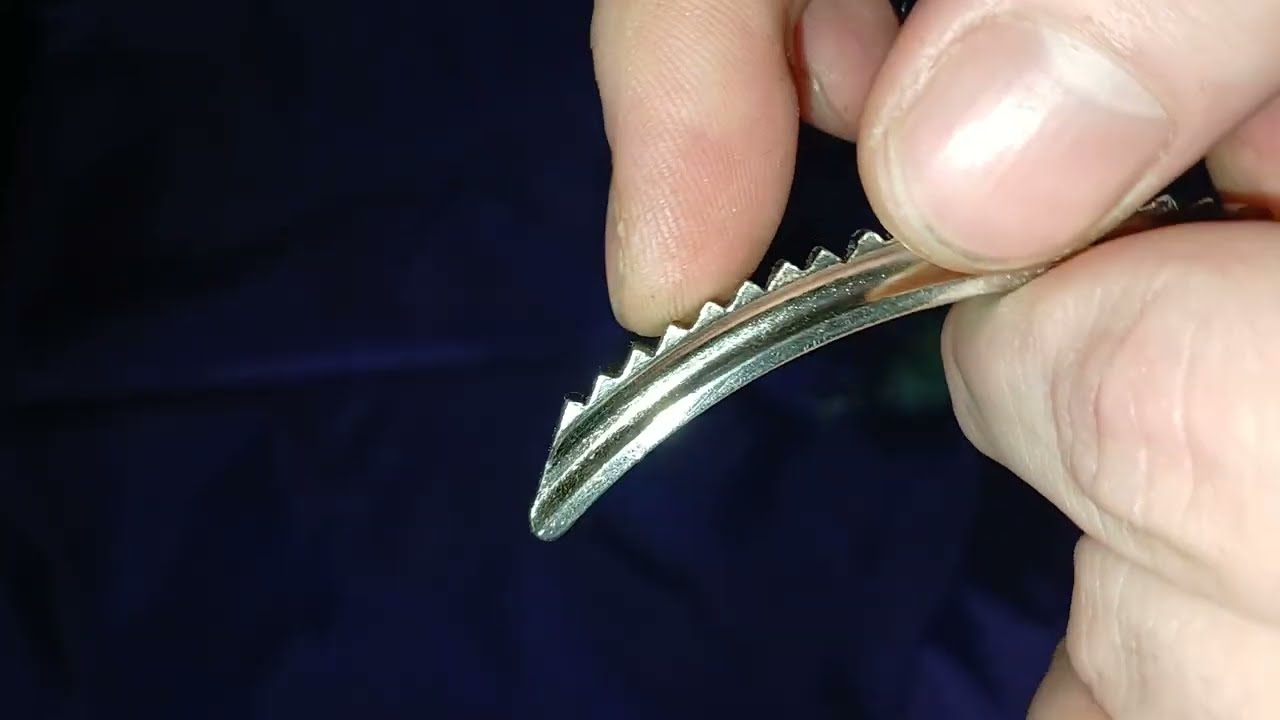
HIATT 104 Approx mid 1800s Genuine Backstrap Darby Victorian Police Handcuffs in GREAT condition


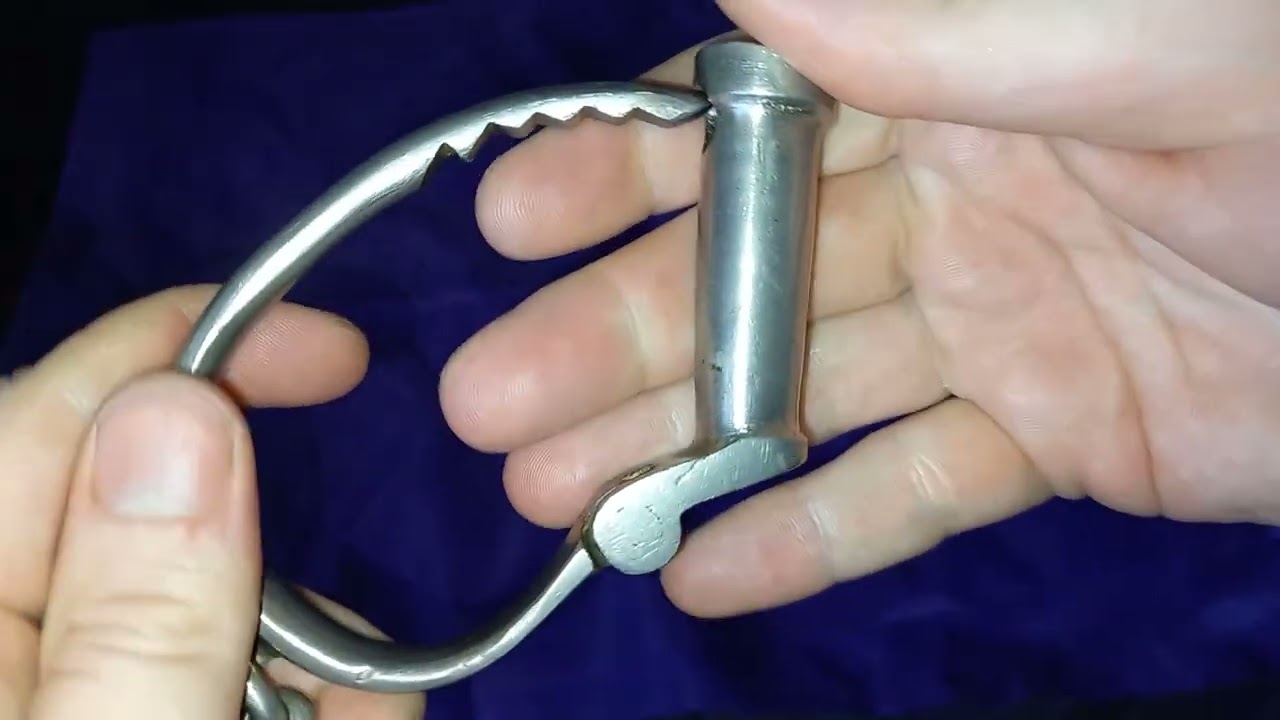
Happy Handcuffs day! (Feb 20th) These are a Victorian pair of HIATT 104 Darby Backstrap handcuffs from the mid - late 1800s.

These differ from my other HIATT 104 handcuffs, in that these are a genuine backstrap or back strap. This means, instead of having a more modern hinge style where the two sections mate and a pin is pushed in to keep them connected, these instead have an elongated tongue at the end of the shackle which is fed through a specially made gap in the lock tube and folded back on itself to create a sturdy hinge. It is quite an elegant system, really.

In the early 1800s, Darby handcuffs had various hinge styles, including backstrap and pinned hinge. There are also later hinges called False backstraps, like on my JG Army handcuffs which was a somewhat similar visual style but instead of folding a tongue over to create the hinge, the shackle was made more chunky and a hole drilled through it, at which point the lock tube would be permanently connected through the hole in the shackle.

I am incredibly happy to have an actual backstrap handcuff in my collection! They had been in the original owner's family for many many years. Handed down. The seller's Granddad had them since before WW2 and I would imagine his dad gave them to him since these are from the 1800s, given this old hinge design. I got a great deal on them. I could not fully tell from the images but once I got them, I knew for sure what I had! They had some surface rust but were in amazing working order. I used a bit of super fine wire wool, some peek metal cleaner, Autosol polish and Renaissance wax polish and now they look a million miles better.

They are less heavy than my other 1800s pair of HIATT, by about 100 grams lighter (these are 397g, whereas my more bulky 1800s pair weigh 496g. They are what I would call a large size. I have somewhat large wrists and there's decent room left when wearing them.

Best estimates I have seen from people with more experience of varying models, are that mine are an early Hiatt backstrap pair from approx 1850 ish (mid 19th century) So at the time of making this video, they are probably 160 years old and still work smoothly!

Enjoy!

HIATT 115 Scotland Yard Adjustable Darby Handcuffs - A Later Alloy Version?!


These are the Hiatt 115 "Scotland Yard" adjustable darby handcuffs. My existing pair is gimmicked, meaning they pull open. So now I have a non-modified original pair to put in my collection so that I can pull my gimmicked ones out and keep them separate with the rest of my gimmicked cuffs.

I have not done an on-person demo of these because the springs are very strong and hard to operate with one hand.  

They are basically a darby style handcuff which has a ratchet so that they can close smaller and smaller to fit the wrist size of the wearer. It was a great idea, but since the mechanism has to be exposed by the open hole at the bottom, it is possible to stick thin objects in and release the handcuffs without having to use the key. They were not super popular from what I have heard. Standard Darby non-adjustables were preferred for a very long time.

This pair is from perhaps the 1970s or 1980s, as they are not steel. They aren't the grey ones which were more cheaply constructed, but a better version. Non-magnetic essentially (very very slight attraction, maybe from the plating). Almost as heavy as my all-steel ones.

I was hoping to get a pair from the early 1900s to go into my British Police Cuff Lineage box, but these are legit and will serve the purpose of filling a gap in my collection.

I'm glad to have a non-gimmicked pair in my collection!

Enjoy

A quick look at some cheap eBay HIATTS 2050 Hinged Handcuffs that I gimmicked / tricked out


This is just a quick look at a pair of Hiatts 2050 hinged handcuffs that are gimmicked. Basically they are identical to the recent TCH hinged handcuffs I did a full overview on. I got them cheap off eBay for the purpose of having a look-alike hinged handcuff which is gimmicked. The only real differences are the edges are slightly less harsh and the branding stamp says TCH instead of HIATTS, but aside from that they are identical.

Gimmicking is a modification process that means you can pull the handcuffs open without having to use the key. This gimmick is sometimes referred to as "Bridge Jumpers" after this style was used when people jumped off a bridge and escape handcuffs in the water. It's a really, really stupid simple gimmick. It would not pass inspection in close up magic. Not only are the teeth filed at a non-normal angle (which only a pro would notice) but you always hear the cuffs open with a Zzzziiiipppp when you pull them open. So not very covert.

Gimmicked handcuffs are routinely used on TV and in the movies, for health and safety reasons. This way if there is an emergency on set when actors and extras are handcuffed or leg cuffed, they can get them self free in an instant. They can also be used as safe props for stage work, used for costume and related cosplay, pranks etc.

I go one step further and modify the double locking push-pin activator to ensure if someone were to borrow them and use them, the wearer cannot get "trolled" by someone jabbing a paper clip into the double lock activator and get the person stuck in them. To do this I use a rotary tool with a conical grinding bit to widen the hole at the exterior side. Then I clear the hole using PMA brake cleaner to ensure it's free from oil/debris etc and I plug the hole with Steel-Stik, which is an epoxy putty. Once it cures hard, you cannot push the pin to double lock them. Imagine trying to push an avocado through a little kitchen funnel. It won't press in any deeper. You can visually see this at this timecode on the video 00:24 and 01:11

Making these gimmicks is a pain, because you need to repeatedly test each tooth over and over again after grinding and make sure every tooth is decently enough perfect so that random rare hang-ups where they glitch out and stop pulling open at some point are prevented. If a glitch like that were to happen you'd have to jostle them about and try again or tighten by one click and then try to pull open etc. So perfecting the grinding or filing of the teeth is very important.

I always like to have some gimmicked handcuffs on hand because they come in handy for experimenting picking or using keys in various cuff positions, knowing that if you screw up,  you can get yourself free. Also friends/family/colleagues around here could borrow a pair if they were going to some fancy dress thing and wanted some more legit handcuffs for their costume that look and feel real but are safer to mess about with lol. Never happened yet, but always nice to have!

Enjoy!

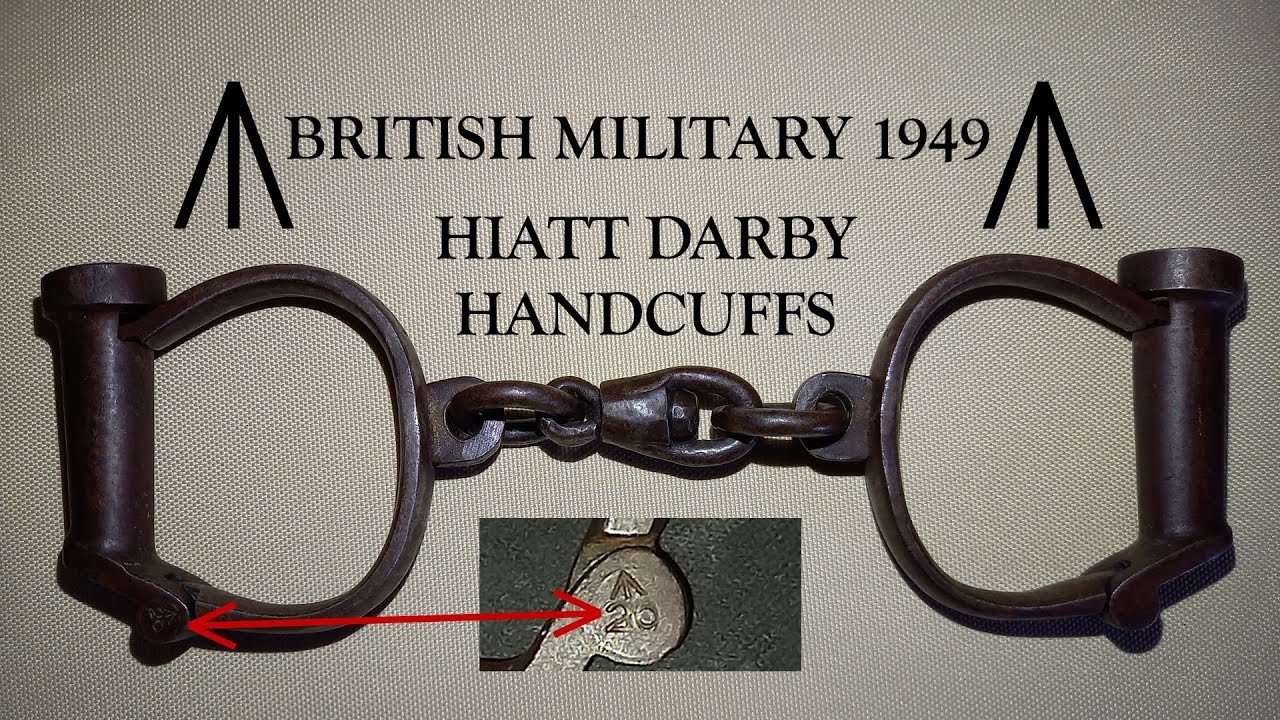
HIATT 104 (basic) 1949 British Military á—‘ Darby Handcuffs


These are a pair of Hiatt 104 Darby handcuffs. They are from 1949 and are British Military issue, 4 years after WW2.

The mechanism uses a screw key, as most Darby handcuffs. However, the internal bolts' threading is worn/abused and while one cuff (with the crows foot / Broad arrow stamp) works decently enough, the other only works with 1 key out of all keys I have and only if I am careful, slow and lose while initially turning. So, I will not be doing an on-person demo of them because I do not want to have to destroy them to get them off me or anyone else.

They do not have any markings like BEST, WARRANTED WROUGHT or HARD. So, these are likely a more budget model of lesser quality/ruggedness after the war when things were tight due to the country trying to rebuild. The damage on the threading makes sense to me in light of the presumed lower-grade quality & strength, because if they were hardened, they would have been stamped HARD and the fact it has no such stamp means they are made (likely) of softer more wear-prone steel.

They are size 1. I did try them on initially. On my wrists they are snug and fit ok, but if I flex out my hands to separate my fingers the max distance, I can feel the discomfort on my wrists.

They have a very nice Broad Arrow or Crows foot stamp on the hinge of one bracelet. Not obscured or worn, still very easily visible! I like this.

It is a pity they are not in better-working condition, but due to a poll I posted, 75% of people said they would keep them regardless of their lack of ability to function properly, so I have decided to officially welcome them into my collection 😀

Enjoy!

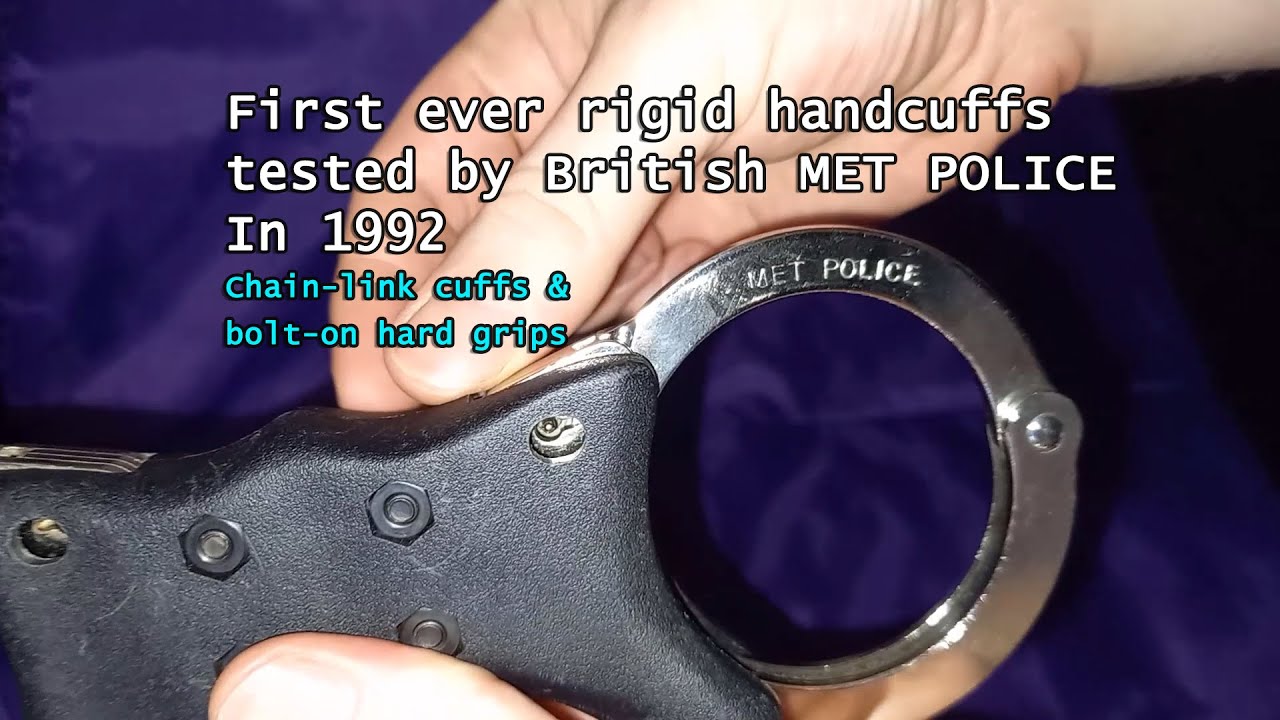
Quik-Kuf Pre-assembled HIATTS 2003 handcuffs with Bolt-on Hard QK Grips. Strong pseudo-rigid


This is the original Quik-Kuf. It was initially trialled by the British MET Police in London in late 1992 for 3 months, to see if having a rigid handcuff would provide an advantage for officers in terms of restricting arm movement as well as offering more control over suspects.

This pair of cuffs consisted of a pair of HIATTS 2003 chain-link handcuffs, which are the 17% larger wrist size model (same size used today on modern British rigid cuffs) and special hand grips, designed by Quik-Kuf were then bolted on over the top, encasing the chain-link handcuffs in hard polymer or FRN type material. This made a pseudo-rigid handcuff. It is not a true rigid, because if someone could use leverage or extreme strength they "might" be able to snap the casing and gain more movement. Maybe... But they are very strong and a decent rigid handcuff.

So as you would expect, using a pair of standard HIATTS chain handcuffs, they have all the usual features, 3 pawls, back-loading, double locking.

After the trial, it was determined that this rigid style was excellent at helping control dangerous individuals as well as performing the typical functionality of securing arms. Later in 1994 a specific rigid handcuff was made from the ground up and manufactured by HIATT in partnership with Quik-Kuf which had a rigid steel bar connecting the bracelets and then a similar set of grips (though different style) bolted over the top to make handling of the handcuffs ergonomic and easy.

So this is pair is a nice (and as-is complete) pair of handcuffs to add to my British Police history of handcuff usage box, because it represents a turning point, going to rigid as standard instead of chain-link.

I hope you enjoy the video 😀

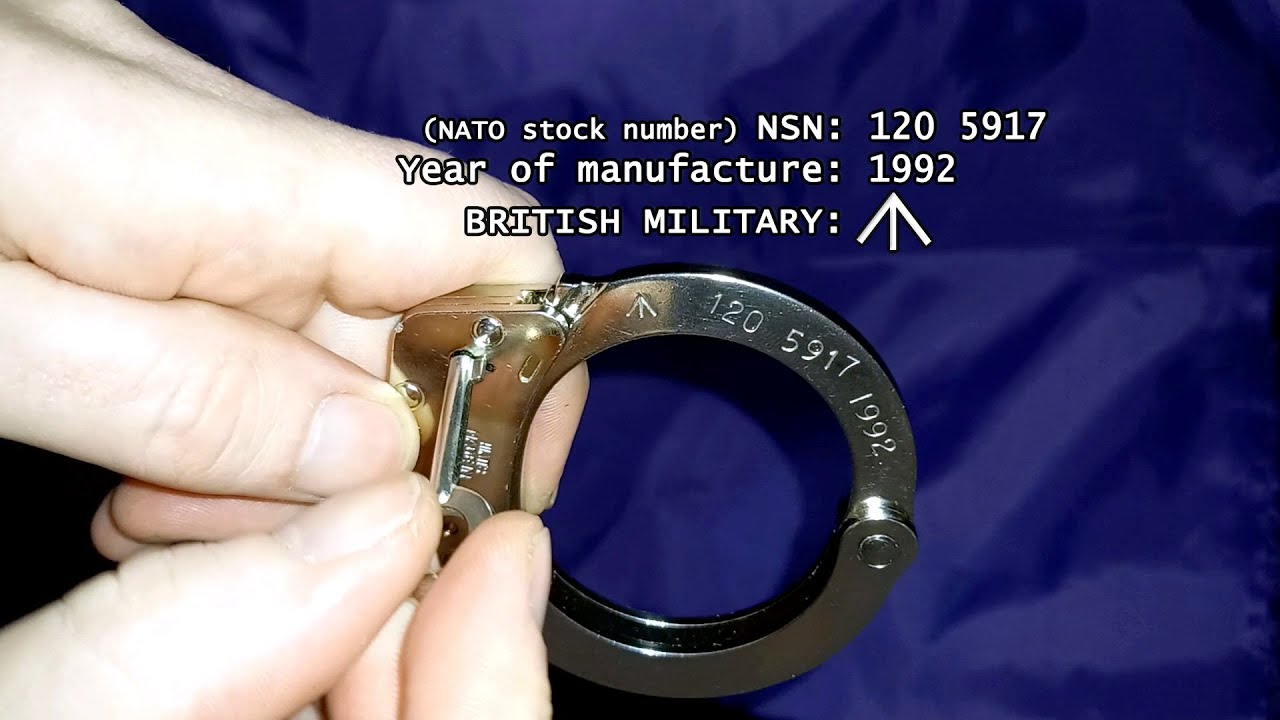
HIATTS 2010 Chain-link Handcuffs with á—‘ British Military Broad arrow / Crows-foot!


These are a typical pair of HIATTS 2010. The regular size of their chain-link handcuffs. But these are from British military surplus. They are in stunning condition. They look almost unused and have good, strong springs in the mechanism!

These have the year of manufacture on them (1992), they have the NSN number (NATO Stock Number) stamped on and if that wasn't cool enough, they have the British military Broad arrow or Crows-foot stamped on them too which is just the cherry on top!

All the features you'd expect. They double lock, have 3 pawls and they back-load. Soon as I got them I did some maintenance on them just in case. I brushed any crap out of the teeth (pawls & bows), polished them with Peek metal cleaner and then waxed them. Also I lubricated the boss rivet, swivels and internal mechanisms with WD40 Specialist Dry PTFE lubricant.

These are one of my pairs which are so shiny, it's hard to photograph them because they want to look black, due to reflecting my camera's body lol.

I am super happy to have these in my collection, even though I now have 3 pairs of HIATTS 2010. I have a standard pair with serial number, a MET POLICE stamped pair and now this British military broad-arrow pair!

😀
🌜

Enjoy!

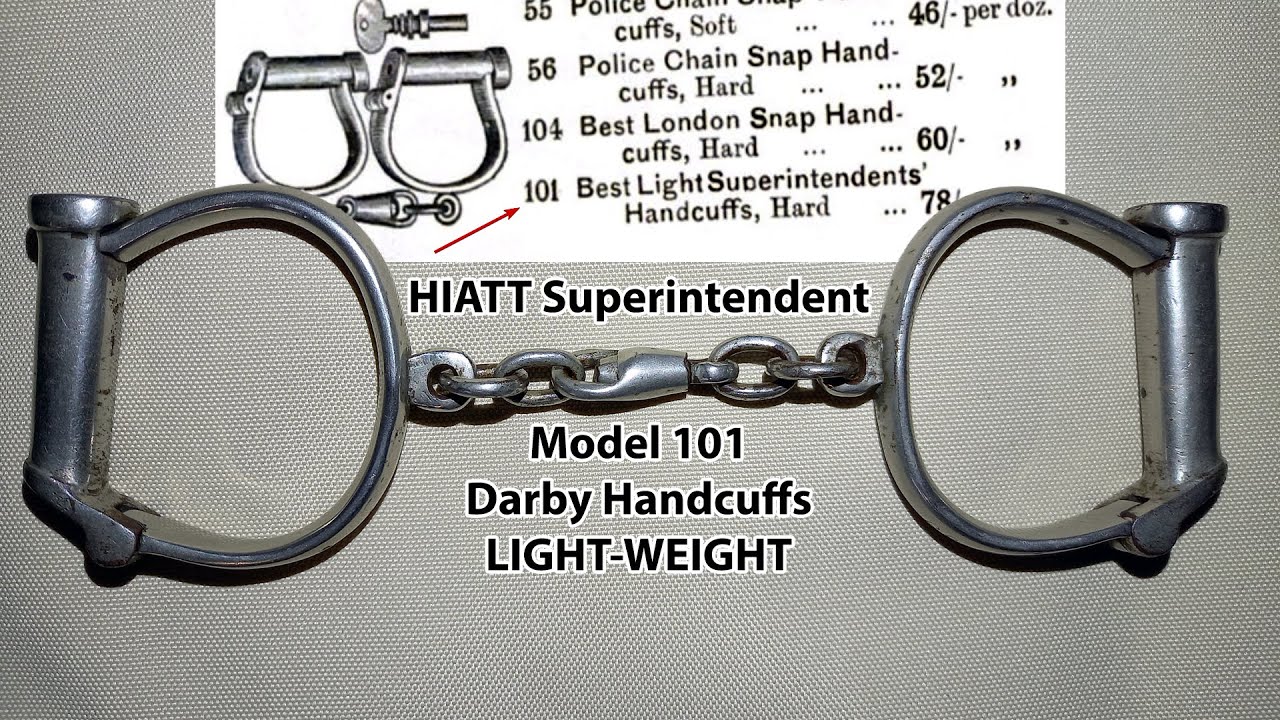
HIATT 101 Superintendent Lightweight British Darby Handcuffs Pre WW1 with original key


These are the British lightweight HIATT model 101 Darby handcuffs, known as Superintendent model. These are pre WW1 / WWI / World War 1 / The Great War. They were listed in the Hiatt's 1904 catalogue. I am not sure when they were actually first released but my pair "just" pre-dates The Great War.

These weigh 265 grams. They have an extra chain link on either side of the swivel. They are about the same over-all length as a normal pair of model 104 Darby handcuffs because the chain links used are smaller.

The swivel is also smaller and lighter and the shackle or bow is thinner in width than the average Darby handcuff. All this goes towards lowering the weight. An average Darby handcuff weighs approximately 400 ish grams. But here's a list of my other darby weights, so you can see a comparison for how light these are:

265g HIATT Superintendent model 101 (the pair in this video)

390g R.C.S Military model 104 style.
402g Model 104  M&C 1916
404g Model 104 1930s
413g Model 104 M&C 1915
490g Model 104 Large (late 1800s)
848g Chunky Model 104 basic design British Indian Army WW2

In 1904 this model would have sold for about 6.5 shillings, while the standard model 104 would have cost about 5 shillings. Apparently these were often used by the MET police in London, but elsewhere were not as widely carried as standard, due to the increased cost. This is why you see many more model 104 for sale than 101 superintendents. Check the pinned comment for a picture of what a Superintendent looked like in 1920. No wonder they needed lighter, thinner handcuffs! Very little places to carry anything!

Hiatt 115 Steel Adjustable Darby Handcuffs 1950 era (gimmicked by a magician or escapeologist)


This is an early pair of Hiatt 115 Steel Adjustable Darby Handcuffs from the 1950s. The classic Victorian design Darby handcuff only has 1 size. It is what it is. Either you have a small pair, a medium size pair or a large pair, but whatever you have on you is the only wrist size you can handcuff. These adjustable ones were to offer a police officer the ability to have all sizes of handcuffs in one handcuff.

The early models were made from steel, while later ones were made of cheap pot metal. The key I have is a pot metal key from a later pair.

These were the precursor to the modern style of swing-through handcuffs used by British police. Swing-through cuffs had been invented many years before, but because of costs, weren't adopted as a style in Britain until 1960 when Hiatt made their 1960 pattern.

This pair I have, has at some time been modified by a previous owner who was either into magic or escaping handcuffs. They have been gimmicked. When I received them, all but the last 2 teeth had been gimmicked, meaning you can get out of them by a sharp and hard yank outwards unless they were closed to the 2 smallest sizes. This technique of leaving the last 2 teeth is so they can be put on a small assistant and they can be tested as being secure, but when placed on the larger wrists of the magician, can be escaped without a key.

Since they were already gimmicked anyway, I decided to file 1 more tooth on both bracelets so that my wrist size has no ability to get locked in them, as the one key I have is a bad quality pot metal key that if damaged, could be annoying.

I was hoping they would be a normal pair of Hiatt 115. They were sold as "Good working condition" which depending on how you look at it, is true. They do "work" but they are not a secure pair of handcuffs as they had been intended to be when they were manufactured. So I am a bit disappointed. But they will do as a placeholder pair of handcuffs which help illustrate the journey through time of British police handcuff evolution.

They are relatively comfortable and when handcuffed behind your back, they are very restrictive that would make it difficult for someone to access their keyring or things from their pockets. Your hands are side by side, horizontally.

Enjoy.

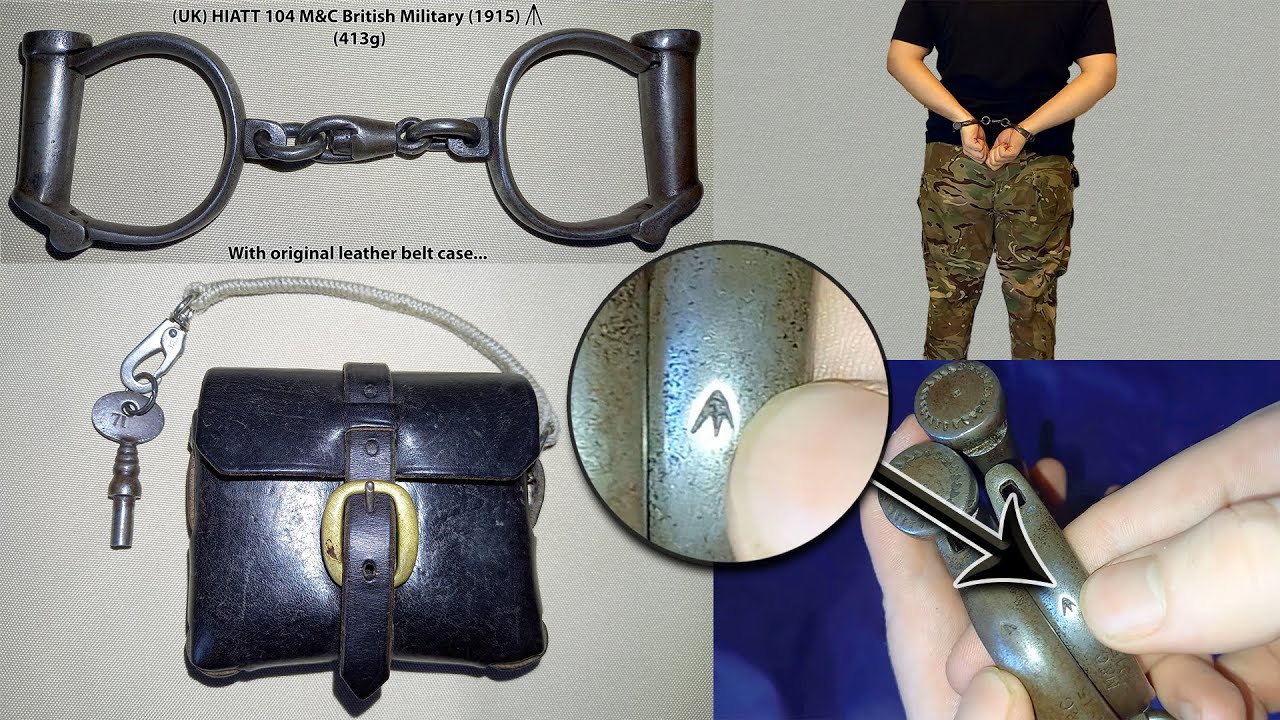
HIATT Model 104 M&C 1915 British Military World War 1 Darby Handcuffs Broad Arrow Stamp & has ORIGINAL case


These are a pair of Hiatt Model 104 Ministry and Civil 1915 Darby handcuffs. These are a British military pair. Exactly the same as my younger 1916 model, these 1915 are slightly heavier though and not plated. So these would have been made 1 year into WW1 (world war 1 also known as The Great War).

They also have the broad arrow or crows-foot stamp on them, which apparently is not often seen, since the presence of M&C already denoted they were military issue. M&C was non-combat/war related, so my theory is perhaps they were broad arrow stamped because they actually made it to the field of battle and the presence of the broad arrow may have been preferable since it was on most of their other stuff? I do not know, this is just my theory.

They are size 2 and just fit my wrists (same size as my plated shiny pair of 1916). So these would likely be a medium size. Comfortable enough for my wrists. I take a size large in gloves and I'm absolutely not a skinny person... So bare these things in mind when judging sizing if you acquire a pair.

I am assuming these have been well-used because when you turn the key, the pawl plug it's self actually twists a bit, meaning the square hole it fits into is not as tight fitting, so there is some slop in the movement internally. So I think they have probably seen a lot of use, though I doubt they are in danger of being worn out.

When I saw these on eBay, I assumed someone had found an old leather pouch that they fit in, but it turns out after looking more into it and asking around that this is absolutely a genuine leather belt case to hold them in, with a nice lobster claw connector so the key can spin freely without having to be unclipped, while being easy to unclip if the key needed to be handed to someone else.

The key number matches the handcuffs, which is nice. This key perfectly fits my 1916 pair but does not nicely work in any of my other cuffs. I won't abuse this key to try and get it's threading working in my other cuffs, I have enough keys for those, so I will leave this key as-is. It's a nice complete whole set!

I did have to do quite a bit of spraying solvents and oil in to get some gunk out. I have used peek polish and renaissance wax on both the cuffs and key as well as the leather case.

I love this little set! I shall keep it all together in my box, rather than separate everything. Normally cases are in some drawer, keys are centralised in my safe, but in this case I will leave it all intact.

Enjoy!

HIATT BEST 104 Darby Large Size Handcuffs Late 1800's - very early 1900's


These are amazingly nice! They are a pair of 104 Hiatt best darby handcuffs of the large size. They are most likely the oldest handcuffs I own. Though I have no hard date, they are from between the late 1800's up to pre 1920.

These have a bulge where the clevis (connector which connects the chain links to the bow) being inserted in the bow causes the bulge. In later years they minimised this bulge.

They are marked with WARRANTED WROUGHT, though there's a lot of wear on the engraving. However you can see a comparison on the video which shows a later pair which has the stamping intact vs these. They are also marked HARD signifying that they are made from hardened steel.

They are pretty comfortable and are the heaviest darby cuffs I own at this point in time. They weigh 496 grams.

They came with no key, but luckily I have 2 keys which I was able to forcefully work into the mechanism to make them function nicely. Apparently HIATT were not very uniform with the bolt threading, so there were little variances between pairs of handcuffs.

I love these, the shape is really nice. Most Darby handcuffs I see have the slightly more rectangular shape, whereas the bows on these are a nice smoothly curved " c " shape.

Enjoy!

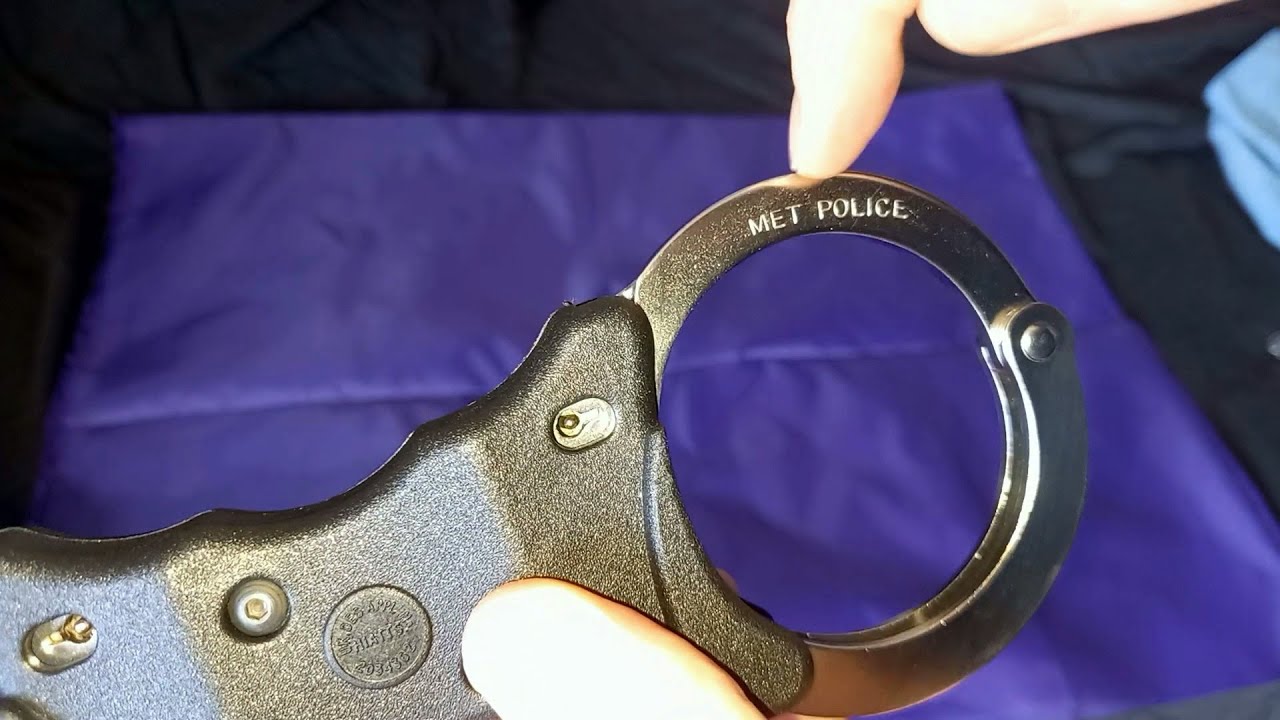
HIATTS 2103 Handcuffs MET POLICE stamped speedcuffs


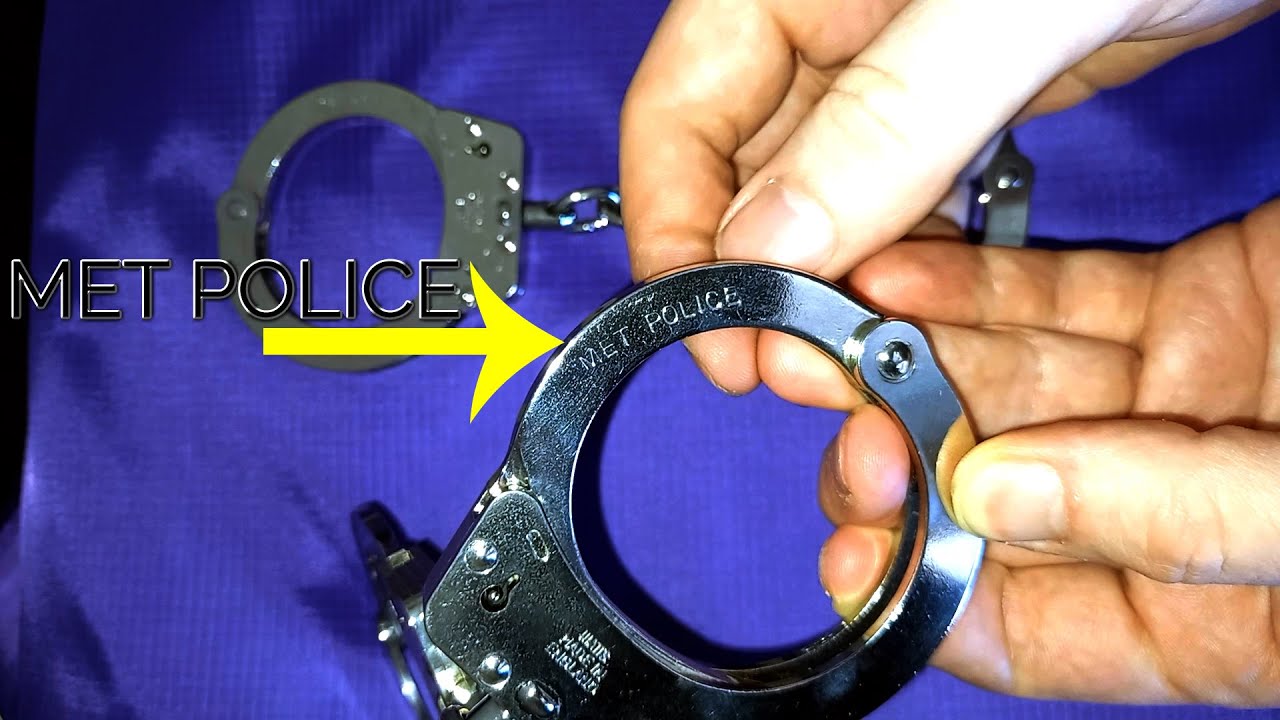
These are a pair of HIATTS 2103 speedcuffs, but these have the rare MET POLICE stamping on them, which signifies they were issued to police forces in London.

These have 3 pawls, great bow alignment and are in amazingly good condition. I am thrilled to now have a MET POLICE pair of speedcuffs and the chain cuffs.

They also have the backloading feature and for whatever reason, this pair does not hardly rattle at all, compared to my other ex-police pair which has the serial ground off.

I am really happy to add these to my collection.

Enjoy!

HIATT Peerless Handcuffs 1960 - 1969 (limited run under license) predecessor to HIATT 1970


This is the HIATT Peerless handcuff. This version is from around 1960 - 1969. This was created by HIATT under a license with Peerless to use their handcuff bracelet design. It uses a similar swivel design that were used in Darby handcuffs and the Hiatt 1960 models instead of a more modern chain design.

These are good quality handcuffs, though not perfect. They have the channel cut into the bow but the body of the handcuff has no protrusions to make use of it. This means a very strong person could pull outwards and pull the bow teeth away from the pawl teeth and escape.

These were too expensive to make due to the licensing restrictions and as such did not see widespread issuing in the UK. So later on, Hiatt tweaked the design to get around patent issues and they made the Hiatt 1970, which was free of licensing issues and in my opinion was a worse handcuff than this Hiat-Peerless design.

These have one single pawl but they have strong springs which can make picking a little bit more difficult.

I am very happy to have this handcuff in my collection, to show the lineage of British handcuff designs that were used by our police forces.

Enjoy!

USA HIATT 2103 Speedcuffs with British TCH 840 Style Handcuffs Grips. A mystery!


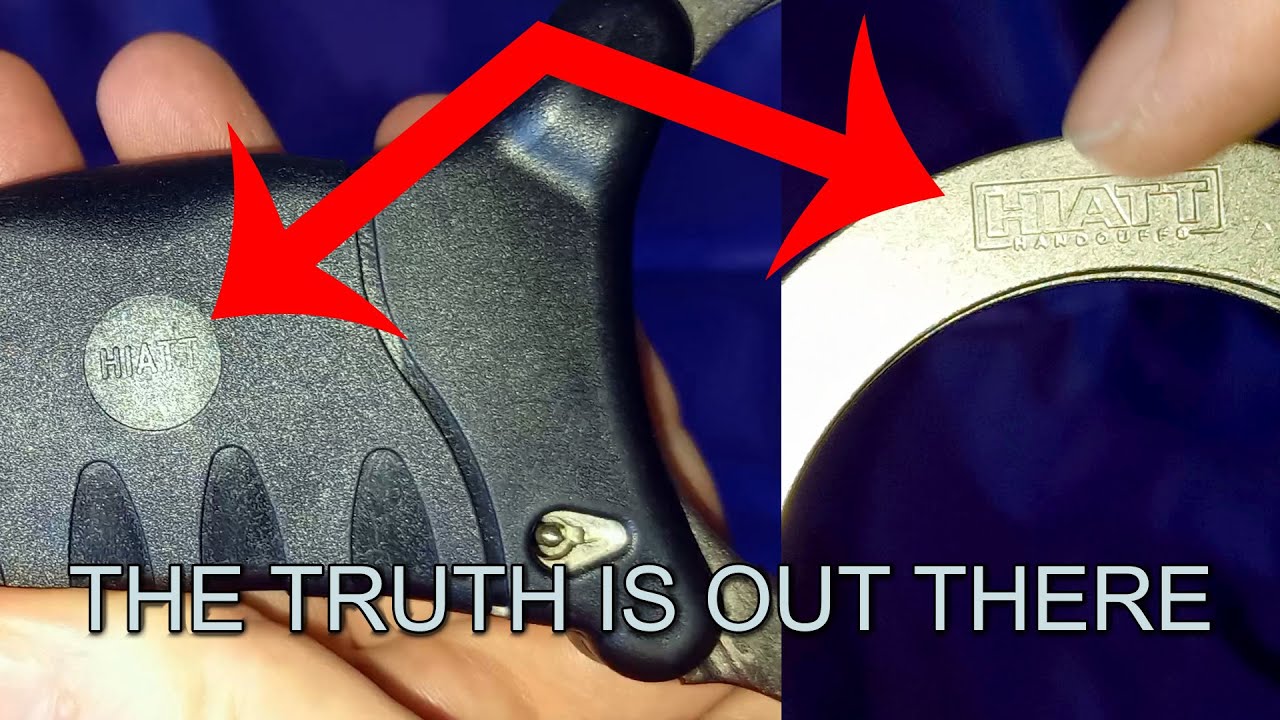
This is a case for Moulder and Skully. This is a genuine latest USA produced HIATT 2103 rigid "Speedcuffs" handcuffs. It has a very nice etched branding on the double strands. These are ex BRITISH police issue. Yes, an American handcuff used by UK police. However, it has British TCH style modern grips which are branded HIATT.

How is this possible? Is the US brand HIATT now offering TCH style grips? Were a bunch of American HIATT speedcuffs procured by a particular force in the UK for some reason (instead of buying TCH domestically) and they asked TCH to make them some grips with HIATT stamped on them instead of TCH? This is a mystery.

What I know, is that these were procured from one force in the UK and that they only had 4 of these available. They all are USA HIATT 2103 handcuffs (based on branding style and the fact HIATT no longer is a UK company) with the nice etched branding on the double strands and they all have HIATT branding on the TCH style grips.

The truth is out there...

I was not going to buy any more handcuffs, but with very limited quantity available, I had to get a pair asap.

If anyone in the US knows of any HIATT speedcuffs with this style of grips, please do let us all know in the comments below. Also if anyone from TCH or HIATT or handcuff museum comes across this and has any insight, please share with the rest of the class 😂.

Enjoy!

Very quick look at MET POLICE stamped & actually issued HIATTS 2010 handcuffs!


Since they are the same model of handcuff as I did a usual video on, this is just a quick look at another pair I received today which are a pair of HIATTS 2010 that have actually been issued to a police officer and still have the MET POLICE stamp intact.

Usually when used police handcuffs are sold in bulk, part of the contract is that the serial number and police markings are ground off. However when police officers retire, some or all of them are given their handcuffs to keep and many of these eventually get sold over the years. So I am lucky to have found and bough these before anyone could beat me to it lol!