Showing posts with label backstrap. Show all posts

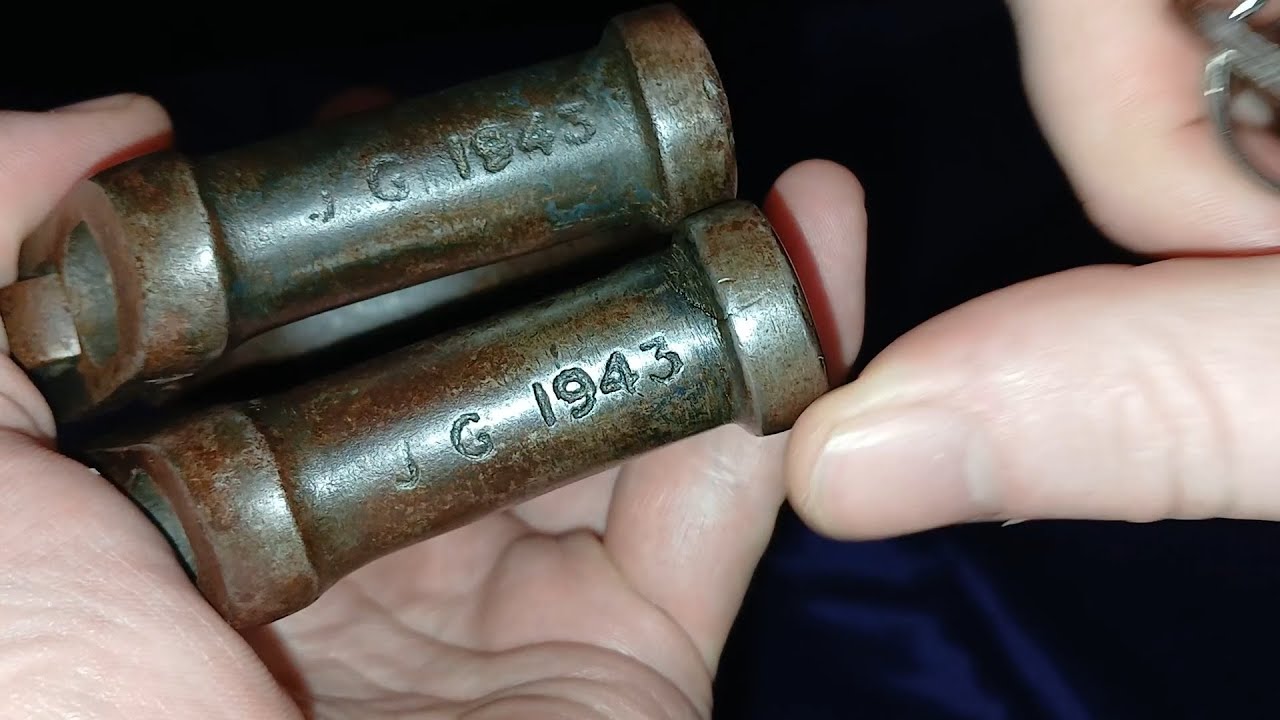
JG 1943 WW2 False Backstrap British Military Darby Handcuffs


These are JG (J.G) Handcuffs from World war 2 ( 1943 ). They are British Army issue and have the Broad Arrow (or crowsfoot as it's sometimes called) stamp very clearly on the lock tube.

These are really cool and heavy handcuffs (605 grams), though strangely are a bit on the small side. I can just about fit my wrists in them but they are certainly not comfortable at all, so I won't be doing an on-body demonstration.

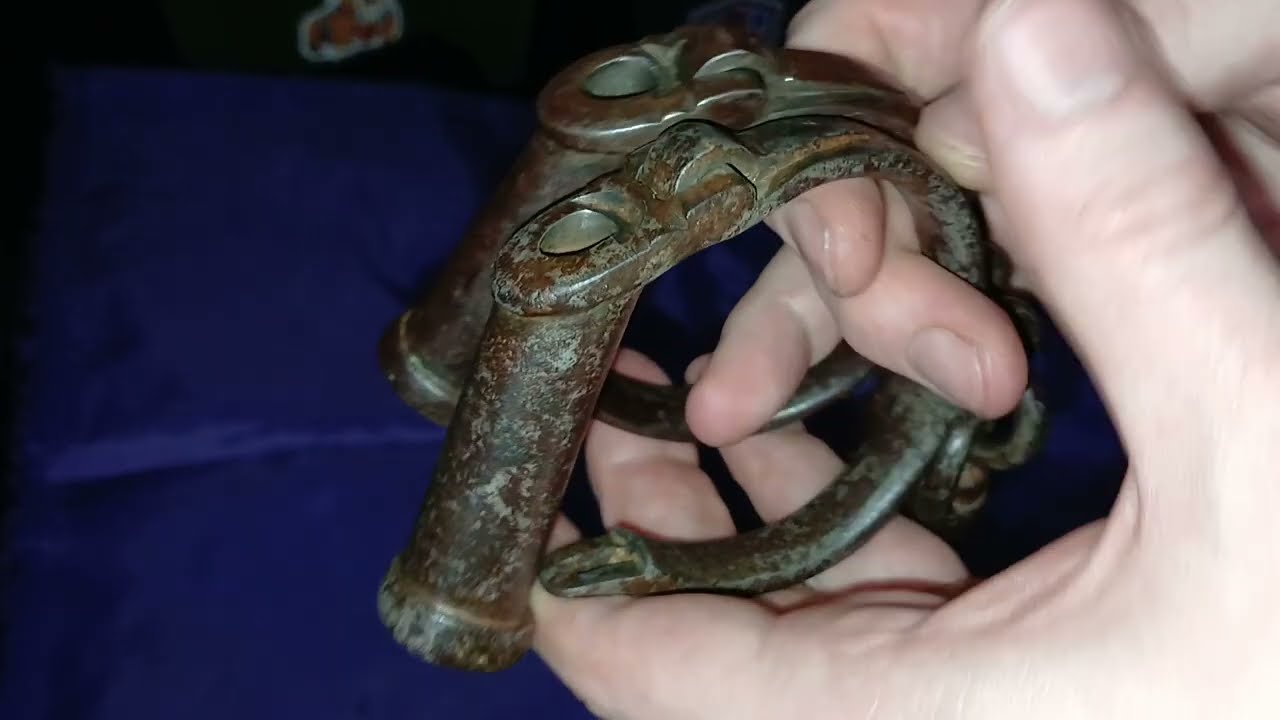
These are a false backstrap, which means the hinge looks like a backstrap but it isn't. Imagine a backpack strap. You have the material end and the other end is a buckle kind of thing. The shackle of the cuff is longer and gets fed through a rectangular hole made in the lock tube and then the shackle tail bit is folded back on itself so that it is permanently linked to the lock tube.A FALSE-backstrap like on this handcuff is opposite. The lock tube does not have a solid rectangular hole made, it has pincers that are poking outwards and the shackle is meaty on the hinge side and has a hole drilled through it. The shackle is placed between the pincers that are part of the lock tube and then the pincers are crimped inwards into the hole that is on the shackle to create a permanent connection and form the hinge.

There is a little crack near the cap end of the lock tune on one of the cuffs that lets light shine through. Though there is more than enough integrity surrounding it so that it's not a security issue or any form of show-stopper. 00:43 shows the crack on the bottom shackle near the right side by the plug end.

All in all, very nice indeed! Very happy to have another world war 2 handcuff in my collection and a British Military one at that! The little nick on the key barrel and the crack in the lock tube leads me to believe these have likely seen some serious action.

Anyway, Enjoy!

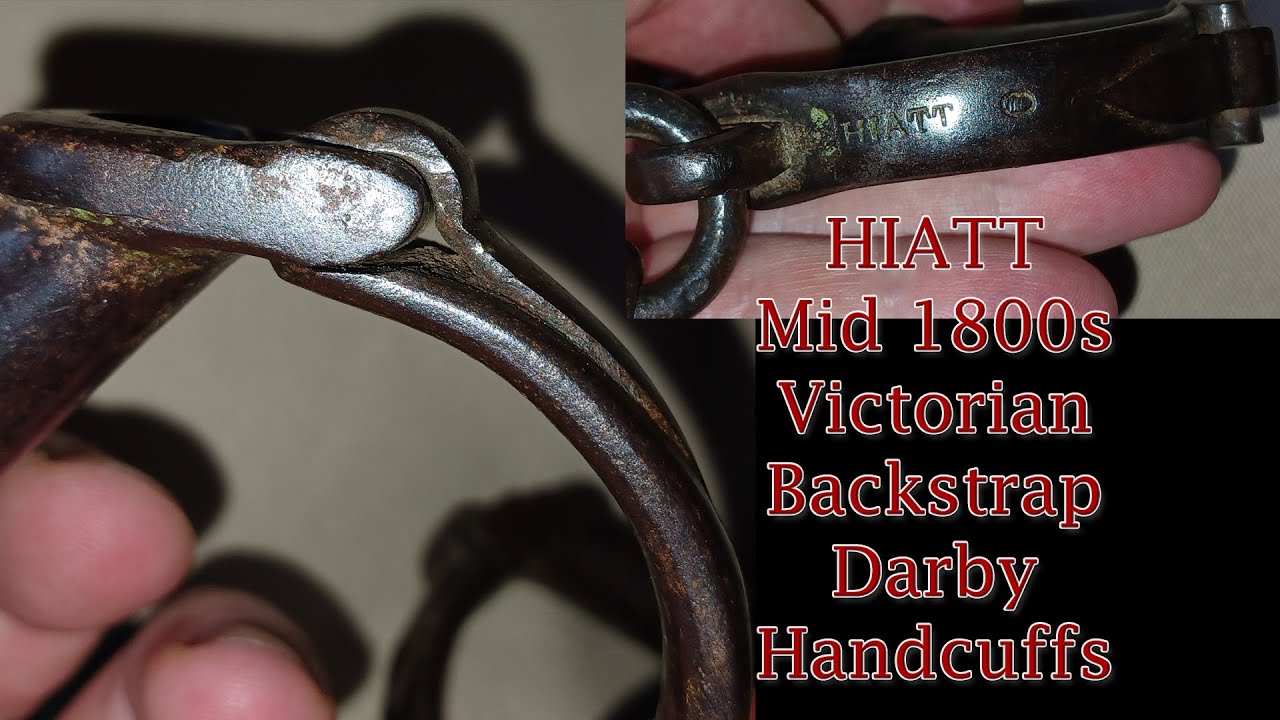
A quick comparison of Victorian HIATT 1800s Backstrap Darby handcuffs to my previous ones.


Since these handcuffs are essentially identical to my previous ones, except where the number is stamped and the fact that the key doesn't work in my existing ones, I decided to make a comparison video rather than a full video overview.

These handcuffs were scheduled for recycling at a place that deals with metals, but someone spotted them in a pile of junk metal from a house clearance and decided to list them on eBay. I asked the seller what brand they were and he said they had no brand, only having "HARD" stamped on both shackles. Well he was incorrect. They are HIATT. I was kind of hoping they would be a different brand. But I feel like I have helped rescue them from becoming part of a electric vehicle engine block or something lol.

They are nice, though generally speaking not as nice external quality as my existing ones. The stamping is ok but the HIATT is not quite as deeply stamped as the one side on my existing ones. In person they look not too bad after I did some work to get rid of rust. But on camera here they look a bit dreadful. Weird they look so bad on camera but not too bad in person.

HIATT 104 Approx mid 1800s Genuine Backstrap Darby Victorian Police Handcuffs in GREAT condition


Happy Handcuffs day! (Feb 20th) These are a Victorian pair of HIATT 104 Darby Backstrap handcuffs from the mid - late 1800s.

These differ from my other HIATT 104 handcuffs, in that these are a genuine backstrap or back strap. This means, instead of having a more modern hinge style where the two sections mate and a pin is pushed in to keep them connected, these instead have an elongated tongue at the end of the shackle which is fed through a specially made gap in the lock tube and folded back on itself to create a sturdy hinge. It is quite an elegant system, really.

In the early 1800s, Darby handcuffs had various hinge styles, including backstrap and pinned hinge. There are also later hinges called False backstraps, like on my JG Army handcuffs which was a somewhat similar visual style but instead of folding a tongue over to create the hinge, the shackle was made more chunky and a hole drilled through it, at which point the lock tube would be permanently connected through the hole in the shackle.

I am incredibly happy to have an actual backstrap handcuff in my collection! They had been in the original owner's family for many many years. Handed down. The seller's Granddad had them since before WW2 and I would imagine his dad gave them to him since these are from the 1800s, given this old hinge design. I got a great deal on them. I could not fully tell from the images but once I got them, I knew for sure what I had! They had some surface rust but were in amazing working order. I used a bit of super fine wire wool, some peek metal cleaner, Autosol polish and Renaissance wax polish and now they look a million miles better.

They are less heavy than my other 1800s pair of HIATT, by about 100 grams lighter (these are 397g, whereas my more bulky 1800s pair weigh 496g. They are what I would call a large size. I have somewhat large wrists and there's decent room left when wearing them.

Best estimates I have seen from people with more experience of varying models, are that mine are an early Hiatt backstrap pair from approx 1850 ish (mid 19th century) So at the time of making this video, they are probably 160 years old and still work smoothly!

Enjoy!