Showing posts with label rigid. Show all posts

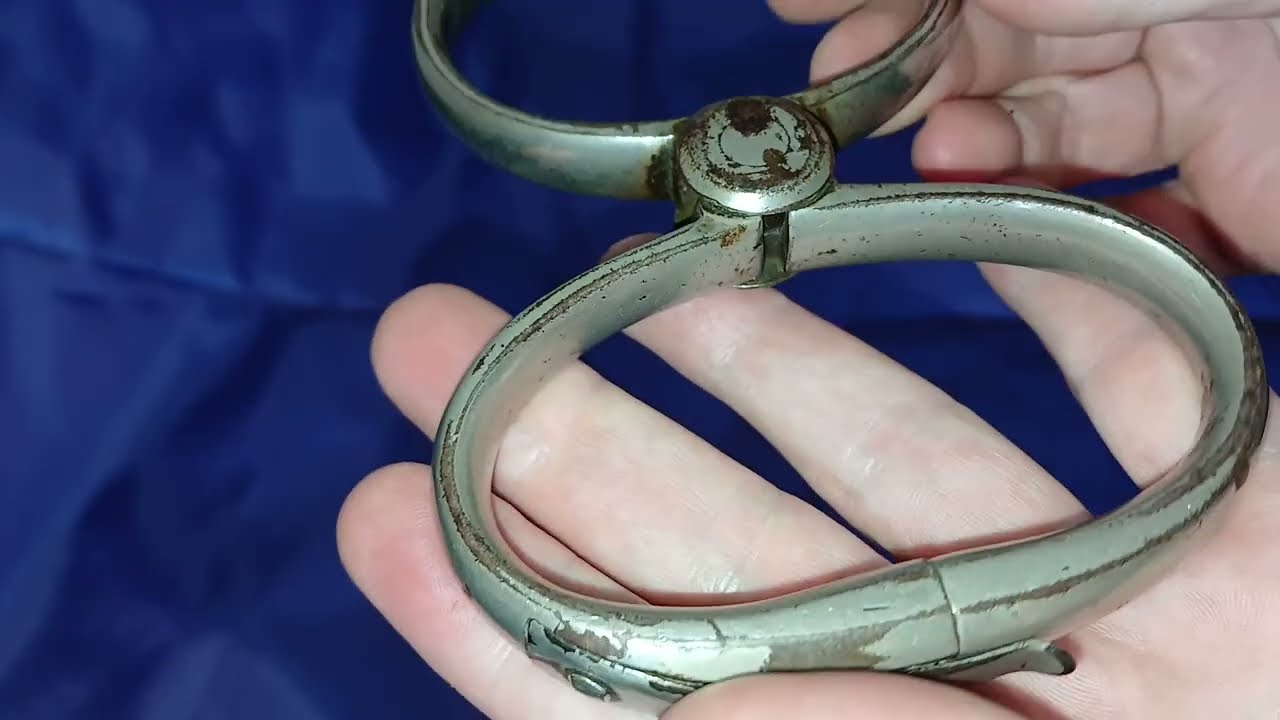
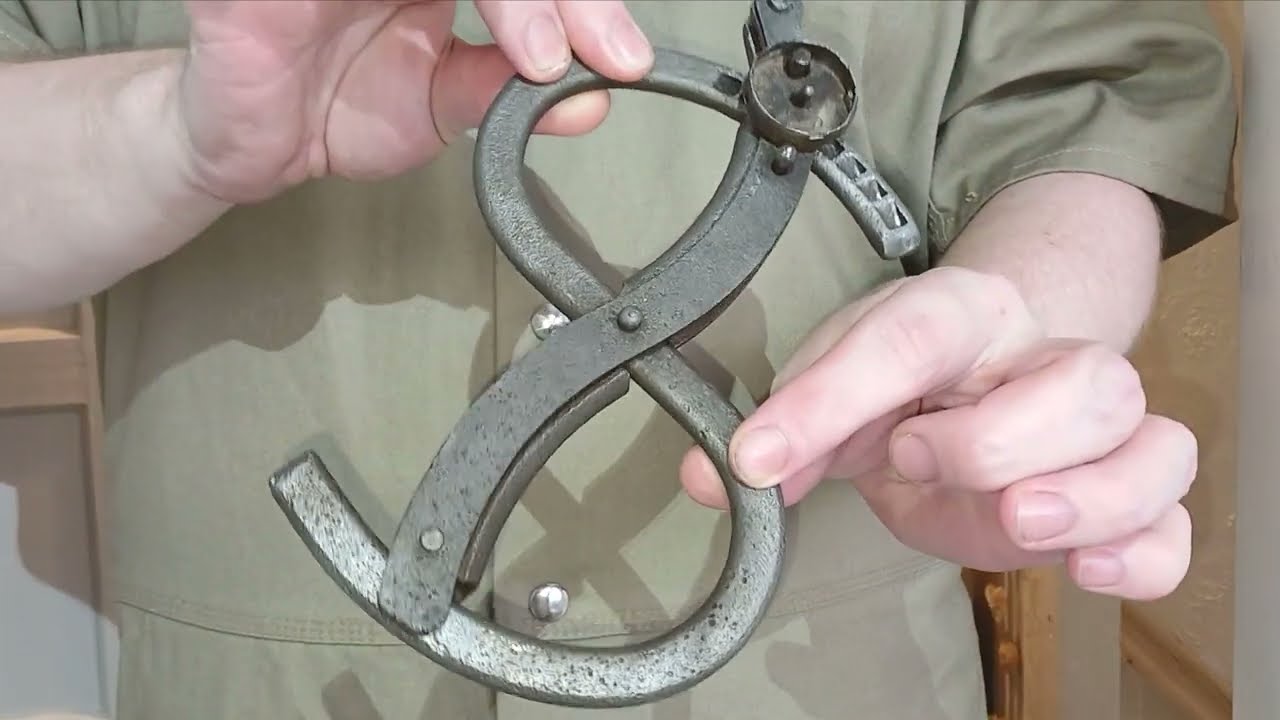
DAMAGED (but basically functional) Italian Dollar Handcuff 1930s Also used by Germany and Austria


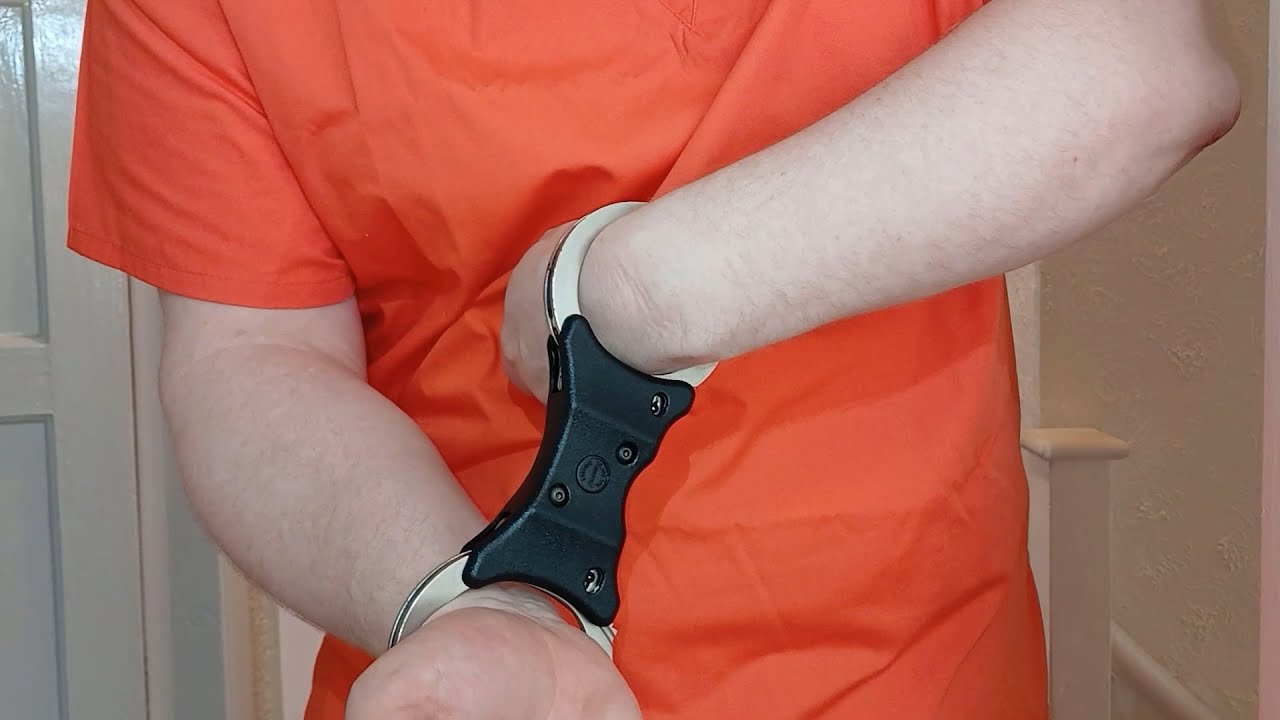
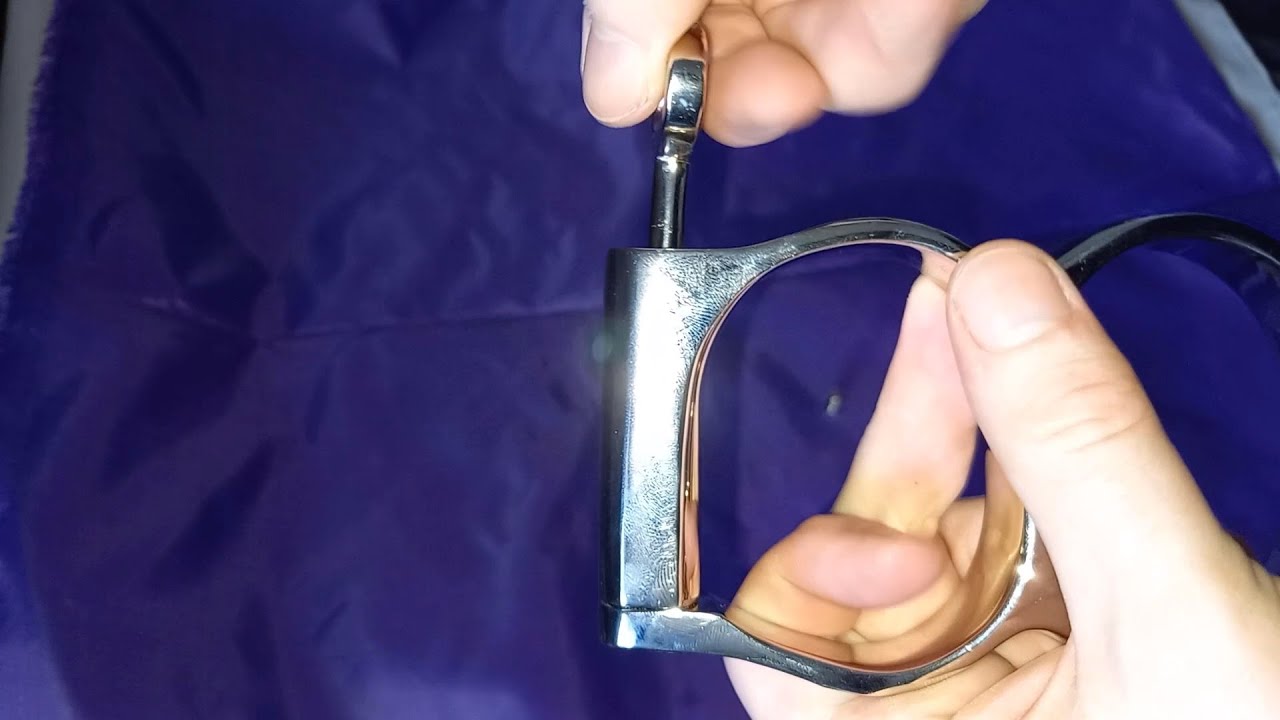
This is the Dollar handcuff. It is an Italian handcuff that was also used by Germany and Austria, in the shape of a dollar sign. I cannot know which country specifically used this particular example. Quite rare.

It is a rigid handcuff where a single closing action simultaneously secures both wrist apertures at the same time. Very interesting design.

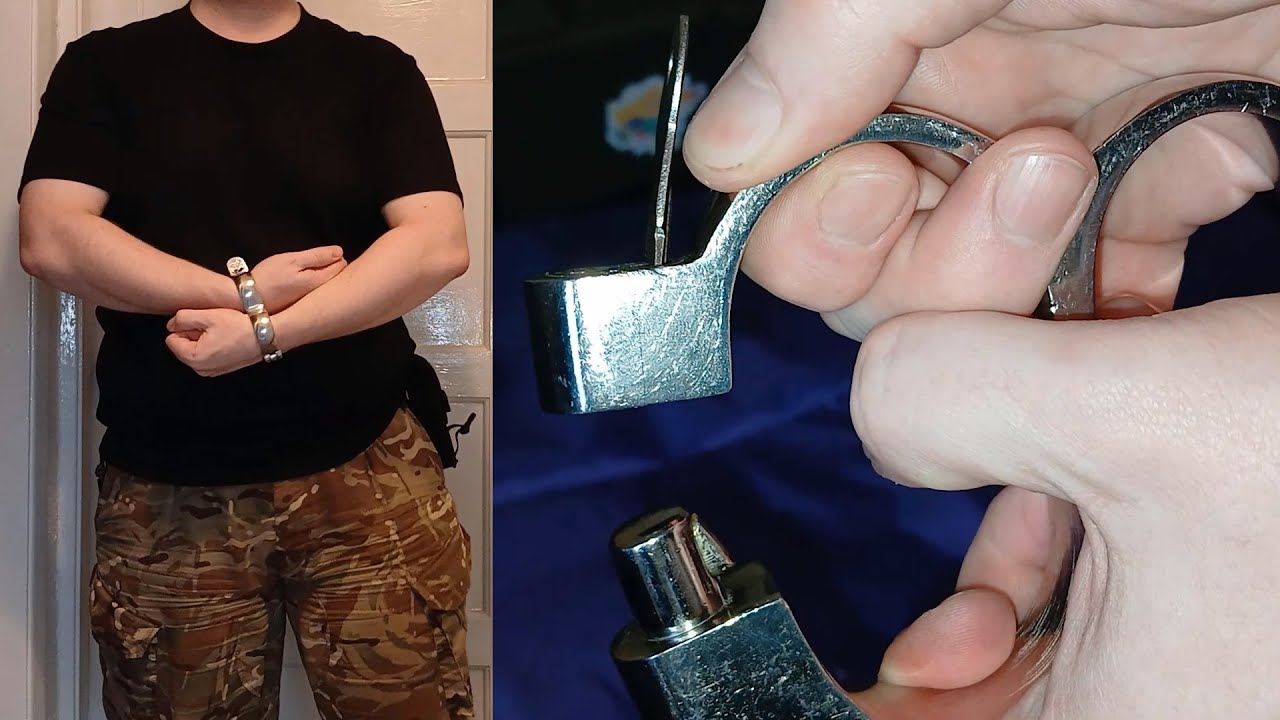
My pair had it's internal locking mechanism gutted so a another better quality cuff could be made to be properly and fully functional. I did a small trade to acquire this as almost "scrap metal" with "minor functionality". I was expecting a cool paperweight, but I was very happily surprised that the basic mechanism to close the cuff, hold it closed and also selectively open the cuff was intact. It has no locking mechanism, so while it can close and stay closed, my pair is incapable of LOCKING closed, you'll see what I mean in the video.

The inventors added a rather nifty feature that authorities could securely attach a chain to the cuff, that when properly locked, would provide either the ability to hold on to the person to stop them running away (a lead chain) or attach them to a fixed location to prevent running away. Quite ingenious design I think.

These are quite rare and I am happy to have one even in this condition. Not sure how widespread their use would have been during WW2 but I imagine this model of cuff saw use.

I demonstrate them with my on-person demo while wearing some bright and plain Khaki US prison clothing so that the cuffs show up better. Normally I wear a lot of black or camo trousers and black shirt so cuffs don't show up that well. So having a plain and brighter background helps. Plus contextually it is more applicable.

Enjoy!

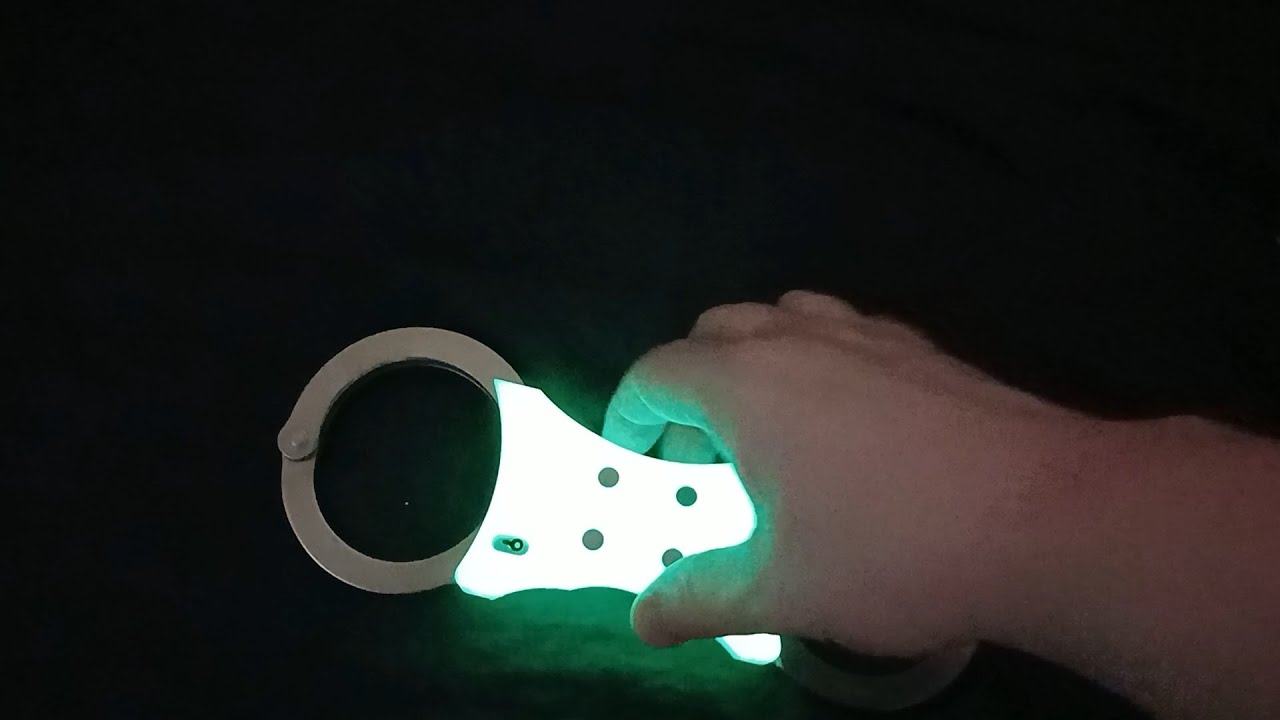
Coxyspicks custom GITD Glow in the dark grips for HIATT 2103 , 2105, TCH 840 handcuffs!


This is a little look at the custom grips that Coxyspicks made that are glow in the dark! Very cool indeed!!

Enjoy!

HIATTS 2103 British Police Handcuffs with Original Smooth Grip Design (Is old design worse? 🤔)


These are the HIATTS 2103 police Speedcuffs. They are British rigid handcuffs. Though this pair is an earlier pair which had the original smoother grip design. By smooth, I mean a nice flowing ergonomic design with no harsh steps.

These have the usual HIATT pin-push double lock, they have backloading capability and mechanically identical to all my British 2103 HIATTS.

I have 4 pairs of these now, though each one has differences. The grips on this early model are fantastic! The thumb naturally slides into the concave sections of the grips very nicely. Whereas the more modern (and even the new American HIATT ones) have the tear-drop shaped protrusions where the thumb goes. There may be some benefits to the tear-drop models but I find them not as comfortable to grip as this old pair with the nice ergonomic design. Very very nice indeed!

These have 3 pawls, though like every other British HIATTS I have tested, there is no split-spring, meaning if you go to lockpick your way out of these, you only need to pick or shim one of the pawl bars and a tiny squeeze on the bow will make all the other pawls drop. Modern TCH have a split spring so that the only way this is possible is if you hit the exact middle pawl, making the TCH slightly more secure.

I have wanted a pair of these with this grip design for a long time and was lucky enough to find a pair being sold by rusthut2020 on eBay. I have bought several cuffs from them now and it's always been a pleasure. Very accommodating and decent people. Very recommended.

Victor Works Model 1035 Irish 8 Rigid Handcuffs with Hamburg 8 Locking Mechanism


These are the Victor Works model 1035 Irish 8 style handcuffs with a Hamburg 8 locking mechanism. I am unsure of the age of these, but I do not see VW often at all.

These are a solid, rigid handcuff that have a somewhat simplistic locking mechanism. The key is basically a shim by any other name. The key is pressed into the keyway and this is enough to unlock them. So if you have a flat-head screwdriver, you can also disengage the lock. So, not very high security UNLESS they are applied adequately. If these are placed on someone in a rear stack position with the keyhole facing downwards, it would make escaping very difficult. The key is hard to insert by hand and the more outward force is placed on the cuffs, the harder the key is to press into the mechanism to unlock them. So the best way to unlock these yourself is to get the key into the hole and then relax all force on the cuffs and press the key down inside using your chin or a pushing up under a tale top etc so that you're not struggling against the cuffs while pressing the key in.

For a larger person like me, if you put rigid cuffs like these on with your palms facing each other, it is very restrictive because the more you pull your arms in towards you, the more your arms need to separate, which the cuffs won't allow. So it can be painful and maybe even snap bones if you try too quick or fall down while wearing the in such a position. SO be warned! Stack positions are most advisable. I demo a front stack but if you do the same thing behind the back that should also be safe.

This is the first example in my collection of Victor Works, which is nice. Also the first Hamburg 8 mechanism that I have. They are made in Pakistan, similarly to KUB or KUBIND handcuffs and leg irons etc.

A very restrictive handcuff, like the two KUB rigid ones I did videos on prior.

Enjoy!

HACKETTS Nipper or Come Along from early 1900s or perhaps late 1800s


This is a one-handed restraint known as a "come along" or "nipper", which is a type of device to restrain one arm and maintain control over someone to guide them to where you want them to go, but having the ability to apply pain or break the wrist or forearm if they struggle. It was an alternative to using handcuffs, when people were less likely to be violent and need fully restraining.

This particular one is referred to by Hiatt as a Snap, because it closes with a "snap!" However this does not appear to be made by Hiatt, it has HACKETTS stamped on the top of it. Basically nothing is known about this manufacturer or brand, but this particular Come-along I have was owned by the great grandfather of the seller, who was a policeman in Cheshire, England at the turn of the 20th century (very early 1900s, probably a bit before too, since we are talking about the father of the seller's grandfather being the original owner..)

A nice interesting alternative to handcuffs, that I thought I would share with you.

𝗔 𝗯𝗶𝗴 𝘁𝗵𝗮𝗻𝗸 𝘆𝗼𝘂 to @CoxysPicks for acquiring this nice and unique addition online, to add to my collection. I am not sure if I will include it on my handcuff collection images, because strictly-speaking it is not in anyway a handcuff, as far as I am aware. But I am 𝘃𝗲𝗿𝘆 happy to have this 😁 .

Enjoy! 🍻

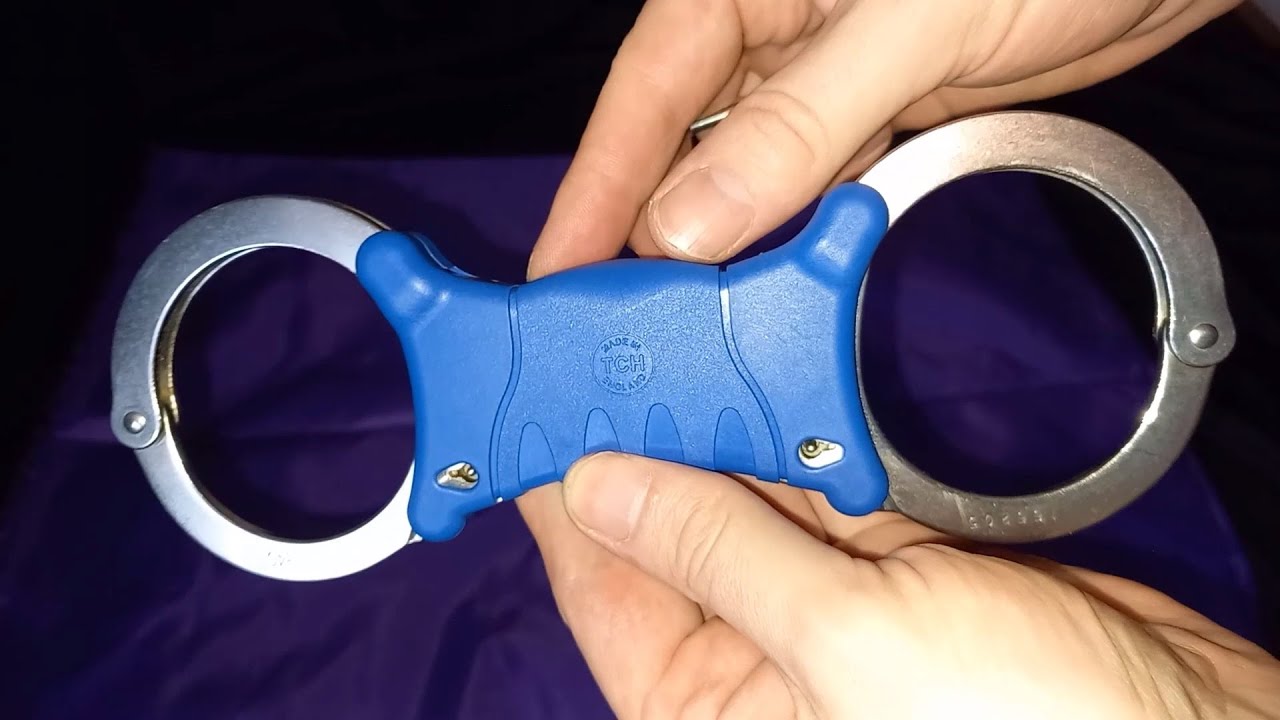
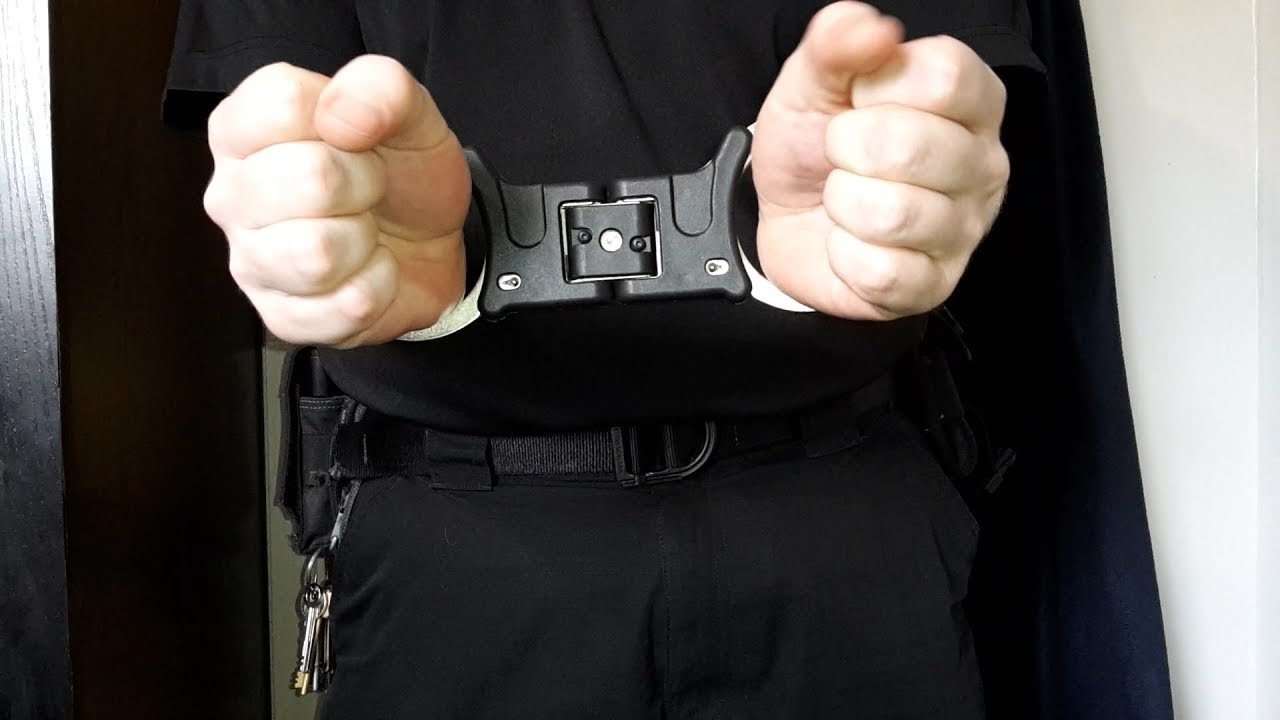
TCH 840 Blue Rigid Speedcuffs Northern Ireland Police Handcuffs


These are the familiar TCH 840 rigid speedcuffs, which have the Northern Ireland blue coloured gripping area.

I have not seen these handcuffs in photos very often but it's a known thing that these were for Northern Ireland. I have seen video footage where they were worn on officers belts, but I was never able to find this again on YouTube.

They have 3 pawl bars and all the other usual TCH features like back-loading and double locking.

The number of colours that TCH 840 speedcuffs come in are black, red, blue and yellow. Black are standard, as used by most police forces. Red are used during training which clearly identify the person in them is not actually under arrest. Yellow have been used by private security, to signify they are not impersonating a police officer, since they do not have the typical black colour. Blue is for Northern Ireland police.

Enjoy!

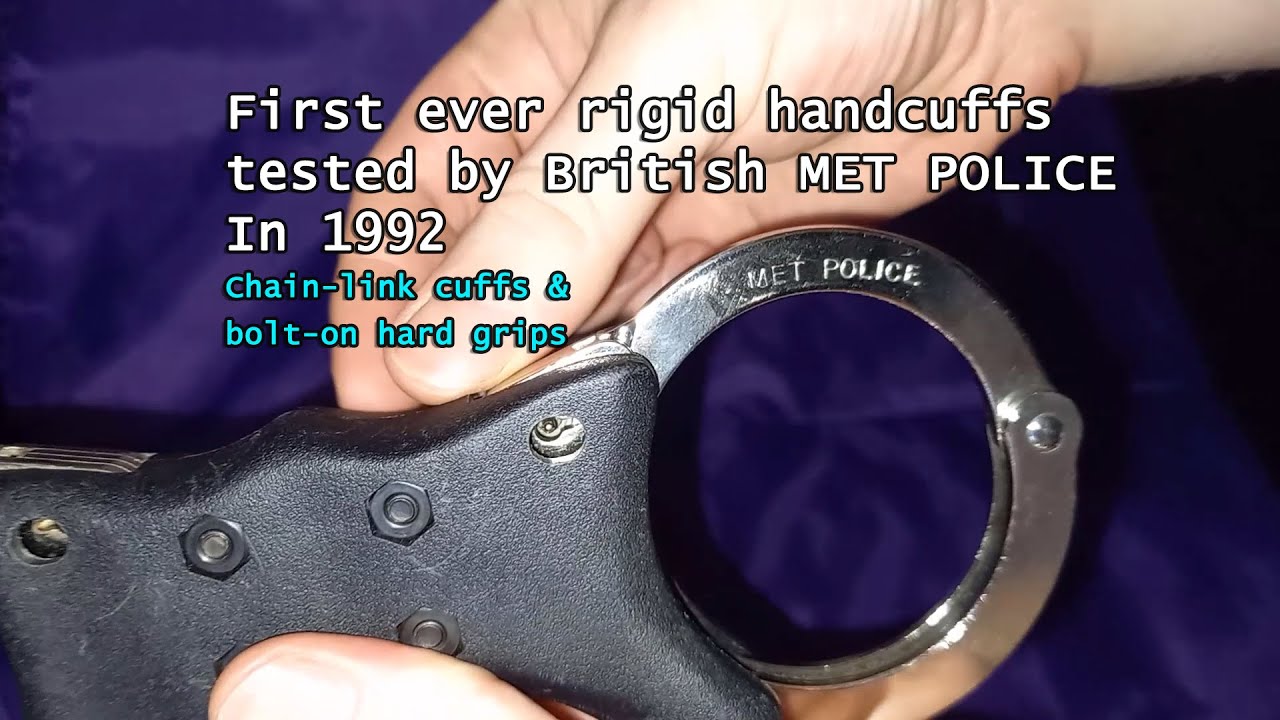
Quik-Kuf Pre-assembled HIATTS 2003 handcuffs with Bolt-on Hard QK Grips. Strong pseudo-rigid


This is the original Quik-Kuf. It was initially trialled by the British MET Police in London in late 1992 for 3 months, to see if having a rigid handcuff would provide an advantage for officers in terms of restricting arm movement as well as offering more control over suspects.

This pair of cuffs consisted of a pair of HIATTS 2003 chain-link handcuffs, which are the 17% larger wrist size model (same size used today on modern British rigid cuffs) and special hand grips, designed by Quik-Kuf were then bolted on over the top, encasing the chain-link handcuffs in hard polymer or FRN type material. This made a pseudo-rigid handcuff. It is not a true rigid, because if someone could use leverage or extreme strength they "might" be able to snap the casing and gain more movement. Maybe... But they are very strong and a decent rigid handcuff.

So as you would expect, using a pair of standard HIATTS chain handcuffs, they have all the usual features, 3 pawls, back-loading, double locking.

After the trial, it was determined that this rigid style was excellent at helping control dangerous individuals as well as performing the typical functionality of securing arms. Later in 1994 a specific rigid handcuff was made from the ground up and manufactured by HIATT in partnership with Quik-Kuf which had a rigid steel bar connecting the bracelets and then a similar set of grips (though different style) bolted over the top to make handling of the handcuffs ergonomic and easy.

So this is pair is a nice (and as-is complete) pair of handcuffs to add to my British Police history of handcuff usage box, because it represents a turning point, going to rigid as standard instead of chain-link.

I hope you enjoy the video 😀

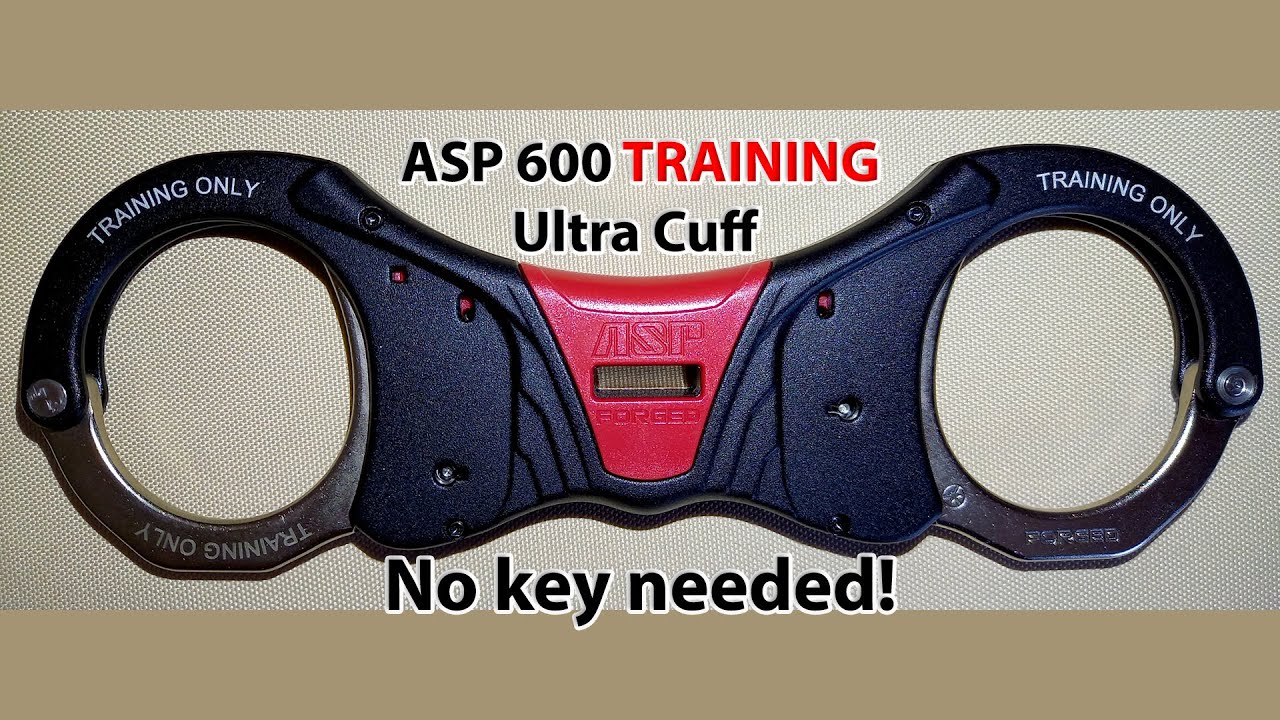
ASP Rigid Ultra Cuff 600 TRAINING Red pawl handcuffs


Just got back from a dog walk, please excuse my Darth Vader sound! This is the training version of the ASP model 600 rigid handcuffs. They are made from forged aluminum or aluminium as known in the UK, with steel bows. The red pawls and red body indicators signify that this is a training model. If that is not sufficient, it has in 5 places stamped on it TRAINING ONLY in case anyone does not know the meaning of the red colouration.

This handcuff is designed for easy training, to speed things up, since when single locked, the wearer can pull them off without the operator having to use a key on each bracelet. This can speed up training. Also for people interested in picking handcuffs, it offers a safety feature so that the wearer can get out of them in case their picking attempts fail.

This technology is commonly referred to in the magic/escapology community as "Gimmicking". The concept of gimmicking is that there is an alternative mechanism to get out of the handcuffs without having to properly use a key. Usually a quick mechanism. This particular type of gimmicking is referred to as "bridge jumpers" because it was used by magicians etc to escape handcuffs in an instant when jumping from a bridge or building into a body of water, where every tiny moment matters. Some types of gimmicking are more elaborate and able to withstand audience inspection etc. This style is very basic and makes a loud zipping sound when you escape them, so they are not best suited for magic tricks, though they work great as a safety feature during training or lockpicking experiments.

Long ago there were some red-pawl ASP handcuffs made which were NOT "escapable" training models. So if buying second hand, ask the seller and test them yourself to be sure they are what you expect.

They are very nice. The body of the handcuffs is absolutely identical to any other of their similar handcuffs. The only difference is the fact that red is ONLY used for training models and they also have TRAINING ONLY stamped on them. If you were to remove the red locksets and replace with a standard "real" lockset of yellow, green or blue, you would have an entirely secure and fully functional handcuff. The magic of this capability is entirely in the pawls / locksets which have the red double locking window.

Anyway, hopefully this has enlightened you as to the purpose and capabilities of the red "training only" models of ASP handcuffs.

Enjoy! (please like and subscribe :D )

KUB 115 Plug 8 Handcuffs A Recreation Of Old British Design. Made in Pakistan. Nice Quality!


These are a set of Plug 8 handcuffs made in Pakistan by KUB (short for KUBIND). Model 115 or KB-115.

They are a recreation of an old British design that I believe pre-dates the regular Darby style.

These were apparently used mainly for transferring prisoners to and from court and possibly used in prisons, as I have read somewhere.

I think these weren't used as regular-use handcuffs for some reason. They are quite limiting and bulky.

It was difficult to do the on-person demo of these because of the difficulty and discomfort involved in operating them on yourself without help. This on-person demo is the second take. The first take I did took ages. I kept dropping the key, dropping the plug and it absolutely killed my wrist. I was stuck in them for a few minutes while I let my wrists have a little rest before continuing.

They are made very well, are nice and smooth and are very good quality. I believe they are made of brass and they're nickel plated.

They have a little plug that seals the keyway to add extra security. Why do you need to screw the key in before you can interact with the actual mechanism? (I thought). Well, I think it is both to make the keyway smaller, because now you have threading to negotiate instead of it being a wide open keyway. Also, the plug it's self acts as a barrier to picking. Sort of a double lock feature. So if people were put in these handcuffs with the backs of their hands facing the lock mechanism, and the plug was installed, it would be EXTREMELY difficult to escape them. Not only are your hands facing the wrong way, the keyway narrowed because of threading, but also the exterior threading means it's fiddly and precise to get the key into the keyway. If you do not align the key properly it's super difficult to get the key to screw in. Pretty high security! (I'm sure Coxyspicks may disagree 🤣) I bet this is why they were used during transport when going to court.

Enjoy!

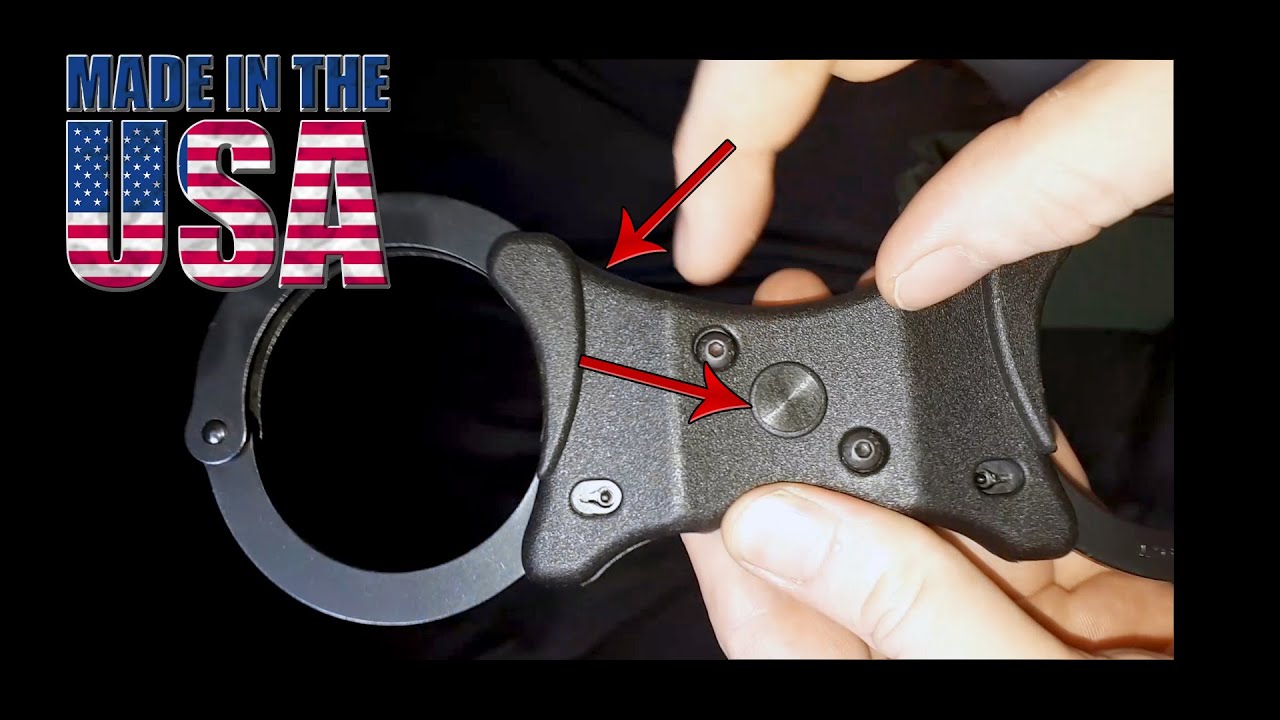
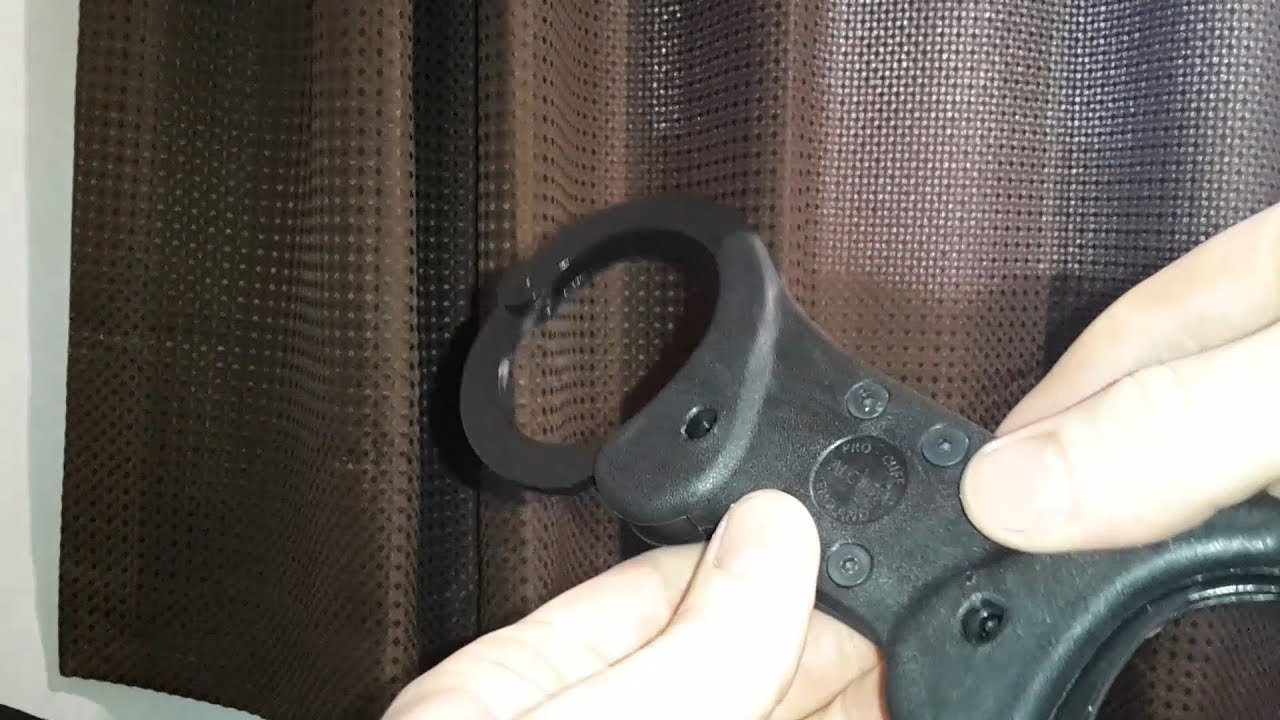
USA HIATT 2103 Speedcuffs with British TCH 840 Style Handcuffs Grips. A mystery!


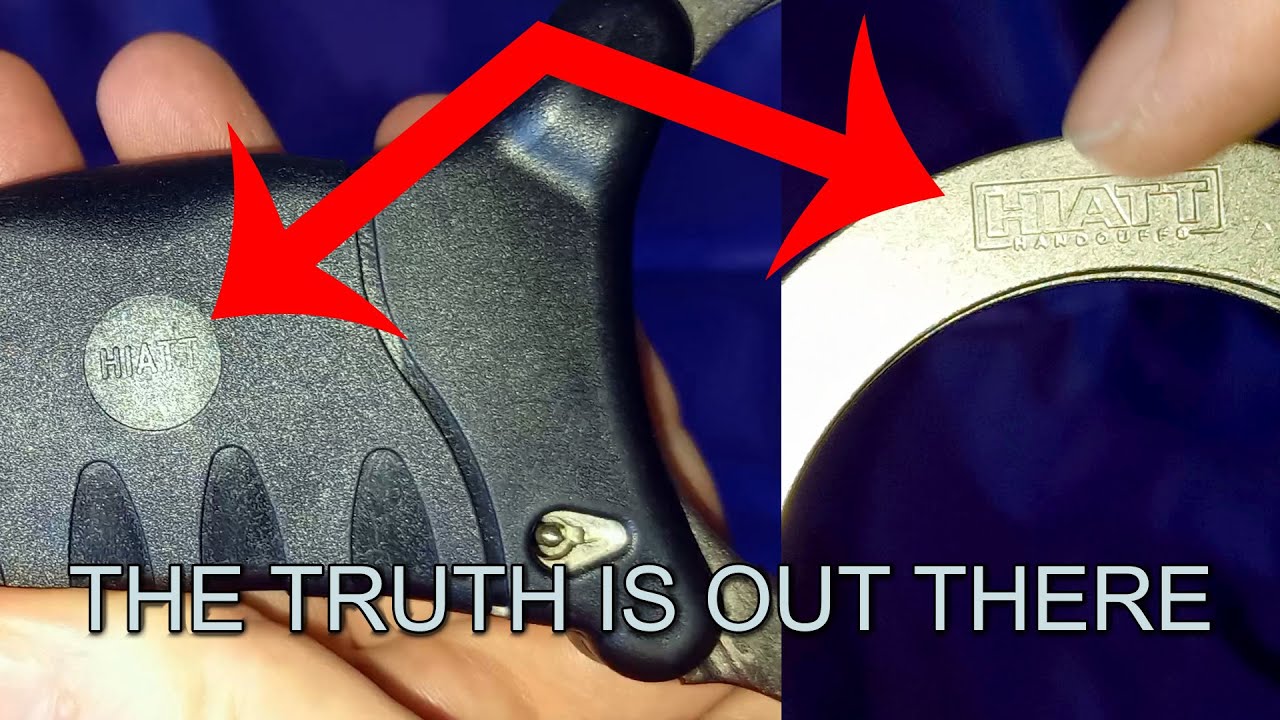
This is a case for Moulder and Skully. This is a genuine latest USA produced HIATT 2103 rigid "Speedcuffs" handcuffs. It has a very nice etched branding on the double strands. These are ex BRITISH police issue. Yes, an American handcuff used by UK police. However, it has British TCH style modern grips which are branded HIATT.

How is this possible? Is the US brand HIATT now offering TCH style grips? Were a bunch of American HIATT speedcuffs procured by a particular force in the UK for some reason (instead of buying TCH domestically) and they asked TCH to make them some grips with HIATT stamped on them instead of TCH? This is a mystery.

What I know, is that these were procured from one force in the UK and that they only had 4 of these available. They all are USA HIATT 2103 handcuffs (based on branding style and the fact HIATT no longer is a UK company) with the nice etched branding on the double strands and they all have HIATT branding on the TCH style grips.

The truth is out there...

I was not going to buy any more handcuffs, but with very limited quantity available, I had to get a pair asap.

If anyone in the US knows of any HIATT speedcuffs with this style of grips, please do let us all know in the comments below. Also if anyone from TCH or HIATT or handcuff museum comes across this and has any insight, please share with the rest of the class 😂.

Enjoy!

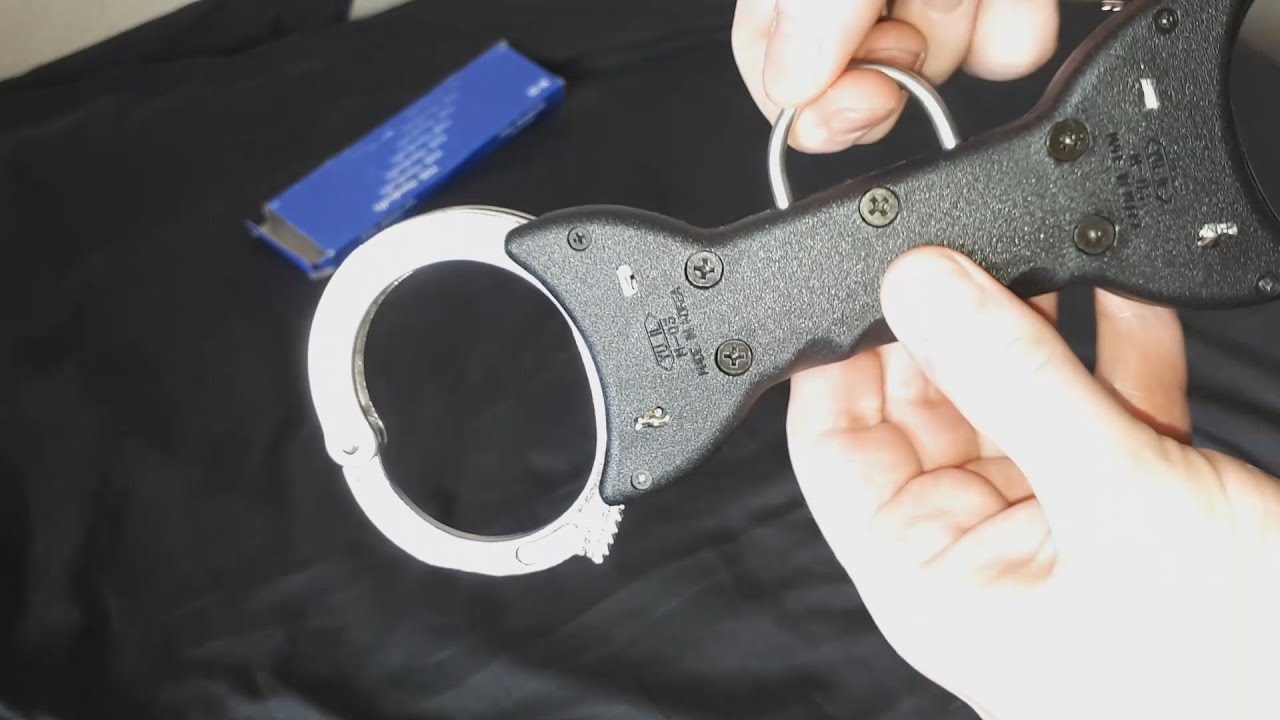
ASP Ultra Cuff Model 600 Rigid Transport Handcuffs & DIY Belly Chain Demo of Transport Feature!


These are the ASP Ultra Cuff Model 600 Rigid Transport handcuffs. These have the blue high security mechanism which uses a special key (normal keys can be modified to work with them).

These rigid handcuffs are very nice. The most comfortable of all rigid handcuffs I have tried. They have great features like rounded edges, keyhole activated access to the double lock activation and they can fit a larger size wrist compared to conventional handcuffs.

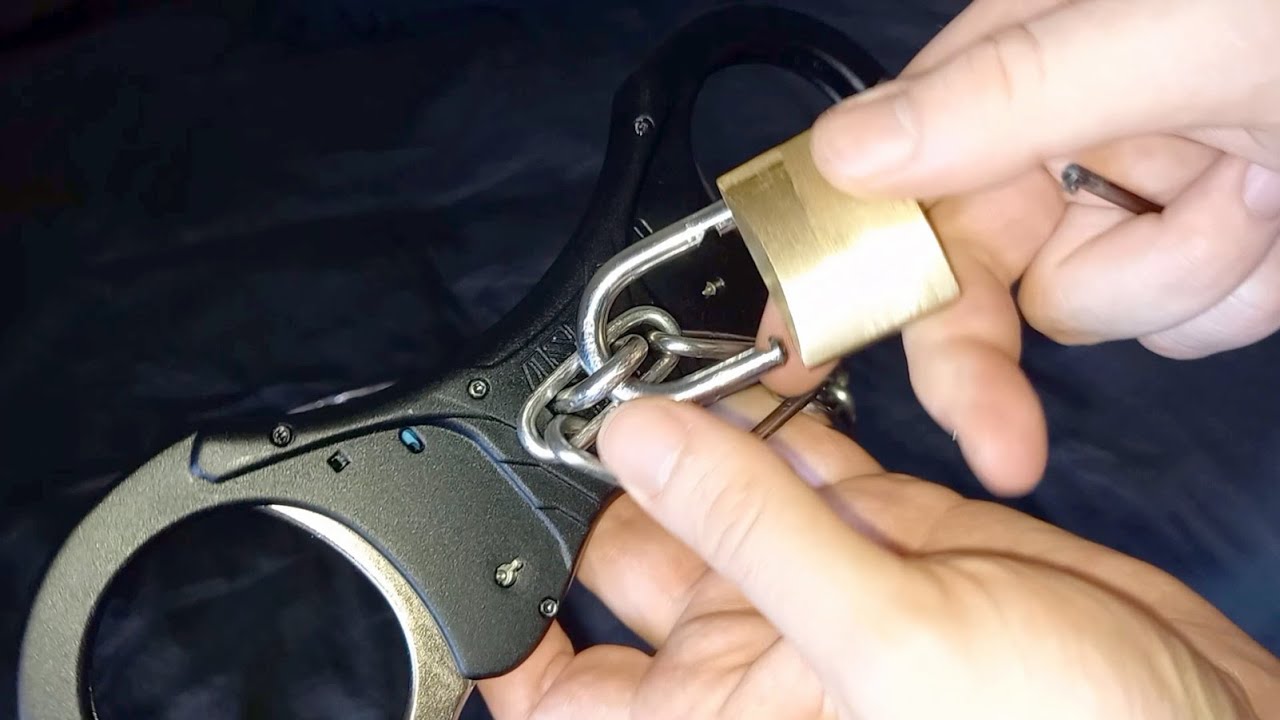
They have a rectangular hole in the middle which is for use with the official ASP Transport Kit, which consists of either a chain model or a nylon webbing belt version. These transport kits are not cheap, so I made a make-shift DIY belly chain which performs the same basic feature of securing the handcuffed hands close to the body. This helps stop a suspect or convict from strangling someone or attacking a guard or police officer etc. The official kits have options to connect them to leg irons also for added security, though it looks a bit weird with how that system works. (See official free ASP youtube videos on their transport kits to see them in action).

These handcuffs are really nice. You can put whatever security level of locks you want into them. Mine came with green European 3 pawl locking mechanisms, which I swapped around my mechanisms and put a blue set in these and moved the greens into a different pair. I love the blue because they are more secure and less common. The yellow are very basic and I am not a big fan of them. I don't know why they bother even making the basic yellow mechanism when they make the green one which is slightly better while still using standard keys.

My DIY belly chain / waist chain,  consists of a 4mm thick 316 stainless steel chain with long links, a 5mm thick Dee shackle and some JB Weld MarineWeld epoxy which I put on the threading and openings of the Dee Shackle to ensure it never unscrews ever again once installed onto the chain. Before I installed the Dee Shackle, I used a hacksaw and cut off the thumb-turn area, to make it more flat. Then I mixed and appliex the epoxy and screwed the bar in place using my pliers on the exposed sliver of the thumb-turn I left. Once fully cured in 24 hours, this epoxy is waterproof, acid proof, chemical proof. So I figured that would be more than adequate. I might keep this belly chain or one day I might sell it, so I wanted it to be a decent job.

One last thing to mention, I did have to do some small amount of grinding on the outer edges of the tall parts of the Dee Shackle and I had to use a dead-blow hammer outside to bend the shackle to allow it to slide in the transport hole on the cuffs and then to straighten it, I clamped it in a vice and used a pipe wrench to bend it back into being a nice even shape, while still fitting into the cuff's transport hole. It took a little bit of effort, but it was not hard to achieve.

The links to the exact Dee Shackle and chain that I used are below:

Chain: https://www.ebay.co.uk/itm/164917122044
Dee Shackle: https://www.ebay.co.uk/itm/3735316615...

Anyway, I hope you found this video useful or interesting, please like, subscribe, share and I will see you next time :D

Enjoy

Comparing various handcuffs for securely carrying a case / briefcase, inc the new Alfa Proj 9923!


Well, almost all these handcuffs have pros and cons, except the rigid ones which would have nothing but cons. Things you have to think about...

How long is the chain, will it be visible to everyone?

How loud does the chain jingle and will I announce my presence like Jacob Marley walking down a street?

How secure is the handcuff, can normal keys open it?

Over all I prefer the Alfa Proj (Ralkem) 9923 because it connects to the case via a chain rather than the handcuff having to close around the handle, the chain is not too long, the chain is relatively quiet and the handcuff uses a totally non-standard key, meaning a criminal with a handcuff key who's anticipating to quickly bash, grab & run by using their "normal" cuff key will be thwarted.

The one part which does make more sound is the rectangular connection link. But you could attach this cuff to your case and then put some cello-tape, masking tape, duct tape, scapa tape or whatever else around it just to stop it jangling, since the rest of the chain is quite low noise really.

I am over the moon to have this 9923 back in my collection! An excellent handcuff.

Enjoy!

British Police Hiatt 2103 Speedcuffs Shiny! (surplus ex-police grade, after cleaning/polishing)


These are British Police Hiatt 2103 Speedcuffs in surplus "ex-police" condition. They are in generally good condition (from BritishBobby on eBay) and have the serial number ground off.

I disassembled them, blasted with my usual PMA Brake & Clutch Cleaner, lubricated with WD40 Specialist Dry PTFE , cleaned and polished them with Peek Cleaner (I use "The Pink Stuff" for generally dirty or rusty cuffs) and gave them a Renaissance Wax polish. They are super shiny now! The rags I was using while cleaning and polishing were dirty black. They visibly looked ok, but after cleaning WOW what a difference.

They have 3 pawls, the same usual nice plastic grip. But my god, they rattle like hell though!


Enjoy!

Hiatt 2105 Black Rigid Speedcuffs Police Handcuffs USA made


These are the USA made Hiatt 2105 rigid handcuffs (speedcuffs) in black "blued" finish. Identical to the nickel plated model 2103, only in a blued black finish.

These are an early pair from America, after a US company acquired the British company Hiatt. They have the typical modern (old style) Hiatt speedcuff grip, with the exception that the central circle has no branding or patent information. Also if you unscrew the handcuffs and remove the plastic grip, this pair has no branding stamped into the metal either.

Over the years the American Hiatt has had various branding styles from blank like mine, nice [ HIATT ] stamped into the bows and eventually moving to a laser engraving or similar.

Essentially these are almost identical to the old British Hiatt speedcuffs in every way, except these were made in the USA and from what I can tell, the double locking actuator in the handcuff has an exterior rectangular angled shape instead of being circular.

These are a high quality handcuff, as you would expect from Hiatt. They do rattle though. Every Hiatt speedcuff I have ever handled has rattled quite a bit. TCH speedcuffs can rattle but not as loudly and easily as Hiatt. But this does not detract from their quality.

They have 3 pawls, back-loading capability and are generally a high quality and secure handcuff.

Enjoy!

British Police Quik-Kuf Rigid Handcuffs Speedcuffs (prior to Hiatt speedcuffs being made)


These Quik-Kuf rigid handcuffs were introduced to the British police force in 1994 and were a landmark new design, since (to my knowledge) the police had not used rigid handcuffs prior to this.

They have 2 pawls, use standard handcuff keys and are lighter weight than today's modern speedcuffs by TCH. Instead of a full-width steel connecting bar on the inside, they utilise a much smaller rectangular "rod" which connects the two sides of the handcuffs, reducing the weight. They also have zero rattle and you shake them.

This is a matt black pair, and are blued black using a process called bluing which oxidises the metal to turn it black. These are nice. They came in different variations. Some variants have 3 pawls, others 2, different plastic grip styles. I believe this is one of the later symmetrical ones.

Also, here's a fact for you. The Quik-Kuf keys have a small hole size, which only accommodates keyposts of very small diameter. These do work in the old Hiatt, but they do not work in modern TCH. Nor do they work in Peerless. I have not bothered trying any other brands because it is very very clear from looking, the QK key is mostly only useful for use in their cuffs, not as a general-use handcuff key.

Enjoy!

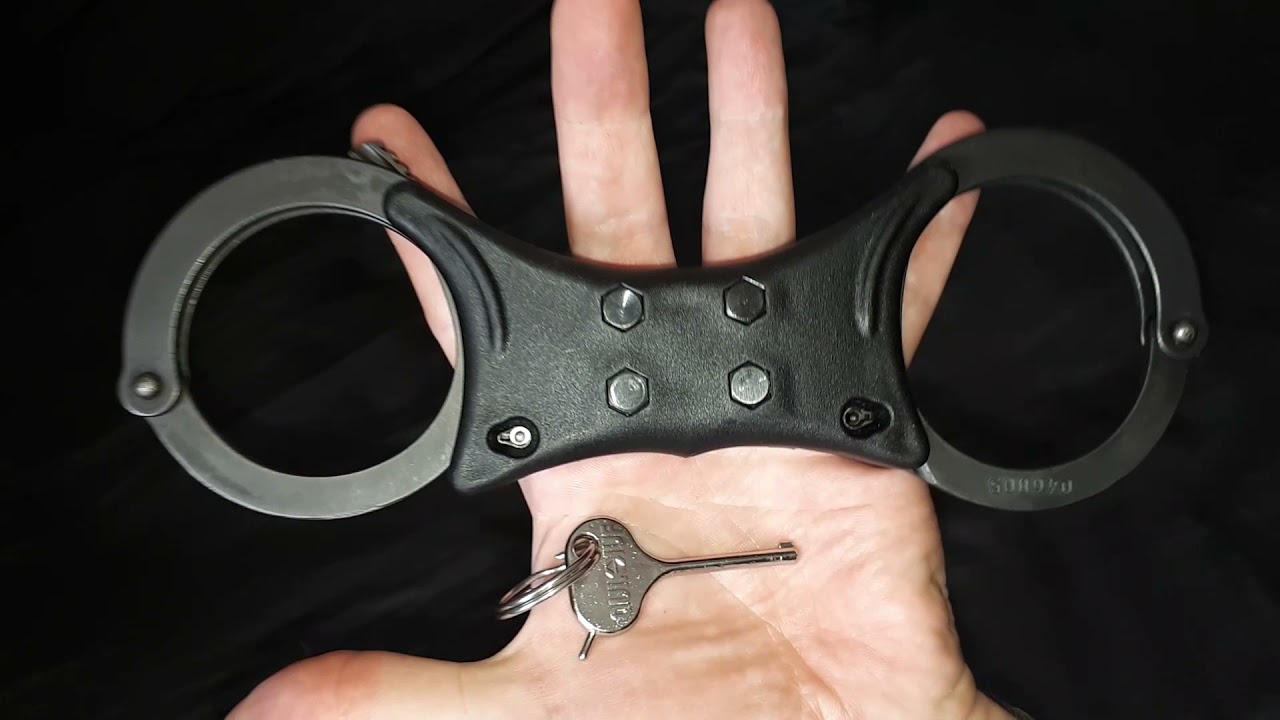
Yuil M-03-1 Korean Rigid Transport Handcuffs (Pretty good security)


This is an interesting pair of Yuil M-03-1 Transport Handcuffs, made in Korea. South Korea to be specific (not the crazy North Korea!) These are the connection ring version of the M-03 model. The purpose of the ring is to create a chain gang environment for prisoner transport so one chain can run through all the cuffs to link the prisoners together. Alternatively it can allow them to be connected to leg irons. However this steel ring can be pressed down when not needed to allow normal grip and application of the handcuffs.

The gap between the wrists is larger and it makes accessing the key holes more difficult. They have a 2 pawl system, though mainly normal keys are able to open the handcuffs.

An interesting aspect of these is they are actually chain link handcuffs, using one very elongated welded chain. The plastic is then bolted on afterwards to provide rigidity from twisting, thus becoming rigid handcuffs. Though if the keyholes are facing out, someone could use a screw driver to undo the screws (normal cross-head screws, nothing fancy) and they could remove the plastic and they would become chain link handcuffs with a larger one single link, which would let people have twisting capability. You can see this in the image I took of them after I disassembled them: https://i.imgur.com/IvNb7XQ.jpg

Over all they are good handcuffs and worthy of being in my collection. It would have been nice if they would have used more secure screws, instead of the regular Philips type. But I do like them. Handcuffs like these should ideally not be applied where the keyholes are facing the hands because they can fiddle with the locks as much as any screws too.

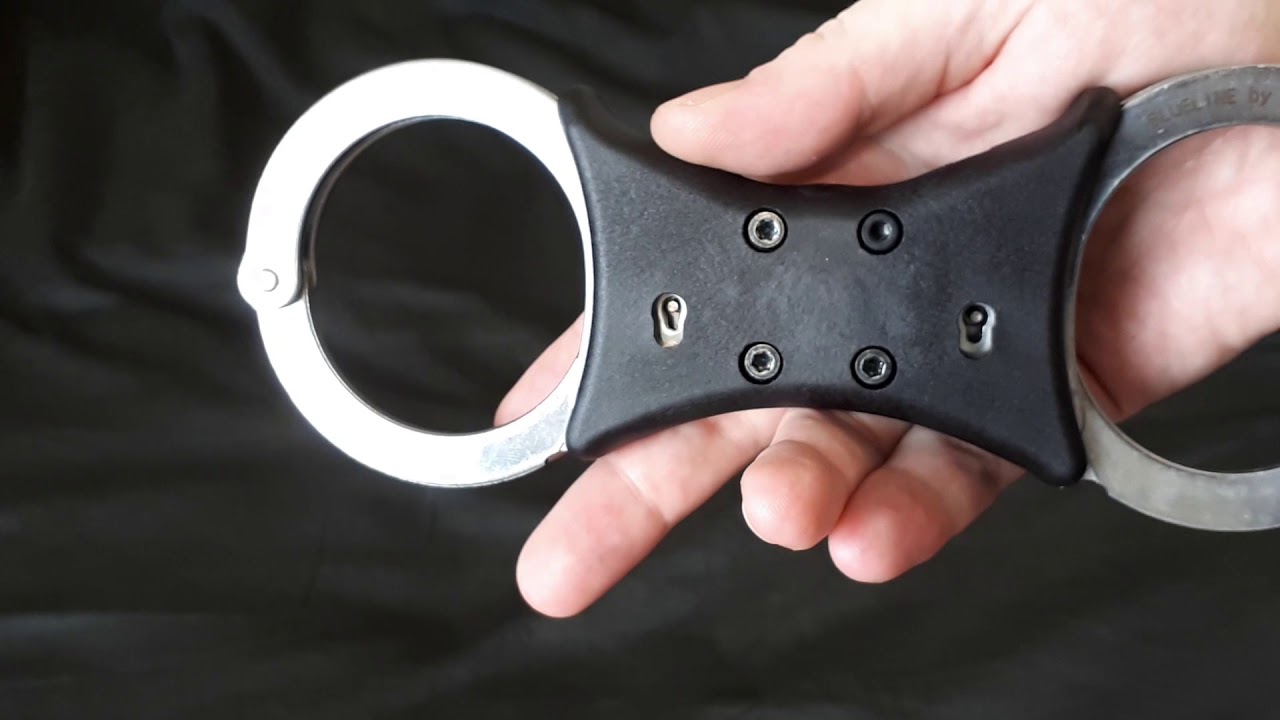
Blueline by Kel-Met Polish Rigid NATO Police Handcuffs (Improved backloading)


This is the new and improved Kel-Met rigid handcuff, known as model KM 2000. This is a rebrand called BlueLine, which still has Kel-Met stamped on them as well. Made in Poland. Not related to the Chinese "Blueline" brand I overviewed a while back.

The original backloading had an issue where the last 3 clicks could be mistaken for normal handcuff size positions and in this case double locking was non-functional despite being engaged. So after contacting Kel-Met about this, a month later I received the improved model.

It is a rigid handcuff, similarly sized and shaped as British TCH 840 handcuffs. The keyway orientation is different from that of TCH, in that it is sideways similarly how Peerless and Alcyon handcuffs are.

These handcuffs are rigid when left assembled but if you disassemble the plastic grip cover, the two cuffs are capable of swivelling around in place, while staying rigidly connected.

(If you would like to see what these look like when the grip is removed, leave me a comment and when I get time I might make a video.)

These are made of stainless steel, so cause less or maybe even no allergic reactions on the skin. They are strong and seemingly have no need of ditched jaws, according to Kel-Met. There is a visual outline of the ditches but there is no peg or protrusion that fits inside them.

This is a much improved model in my opinion to the prior model, although I feel there is room for further improvement in that at present only the last click is not safely usable due to not being double locking capable. I have heard this is a somewhat common issue with various basic-backloading handcuffs. But I would like to see this get resolved and maybe improve tolerances on the mechanism so that when double locked the pawl bars are more firmly in place and unable to move.

All this said, I would say this new revised model is a worthwhile handcuff and I would be much happier using this model in a professional context than their original one.

Alcyon Pro-Cuff 5050-RB Black Spanish Rigid Handcuffs


These Alcyon Pro-Cuff 5050-RB are made in Spain and have some pros and cons to them.

Firstly, they are a normal sized handcuff, which means they still fit the majority of people and will not let people spin the handcuffs as easily. This means it is more difficult, painful or impossible to swap your hands position, when handcuffed in a stack, in order to get access to a keyhole. This of course also means they will not fit people with abnormally large wrists (perhaps very muscularly built people and very overweight people.

Related to the normal size of the wrist capacity, they are more restrictive in movement. When handcuffed in front, palms together, you cannot (at least I, with my weight) am not able to get my hands close to my body in comfort, due to the more restriction. In this regard TCH840 rigid handcuffs are more comfortable, with TCH850 folding rigid being the best.

Also, the sloppy tolerances inside the mechanism, means there appears to be an accidental backloading capability by 1 click. This initially sounds like a benefit, until you realise that the final proper click, a click where it is still secure and not freely rotating, is not double-lock capable. If you double lock the final click, the handcuffs will over-close and freely rotate, causing a health and safety issue for people with small wrists who fall over while in the handcuffs. Nothing would stop their weight going onto the cuffs and crushing their wrist bones etc. I believe better tolerances (preventing all pawl bar movement when double locked) would solve this. I recommend Alcyon do this asap for safety reasons as well as added security reasons.

Over all, I do like them, they are an interesting diversion away from TCH rigid handcuffs. But they could do better. Also there are somewhat sharp edges on the fibreglass outercover which could be smoothed prior to installation on the handcuff.

Also, in regards to tolerances, the lateral unintentional movement of the rotating arms is kind of sloppy. One side of my cuffs is chipped by repettative use. This is because the arm rotates and has enough freedom of movement that it can land on the metal cheek plate, to the side of the channel where it should pass through. But when it hits this, it both stops the handcuff from positively interacting with the pawl's teeth and also chips away the metal, leaving a shiny silver dent where some metal is missing.

Here is a look at what they look like when you remove the plastic: http://i.imgur.com/bcoYpbo.jpg The central bar is part of the middle of the both cuff bracelets, it is one solid piece running from side to side.

Thanks for watching

Please like and subscribe :)

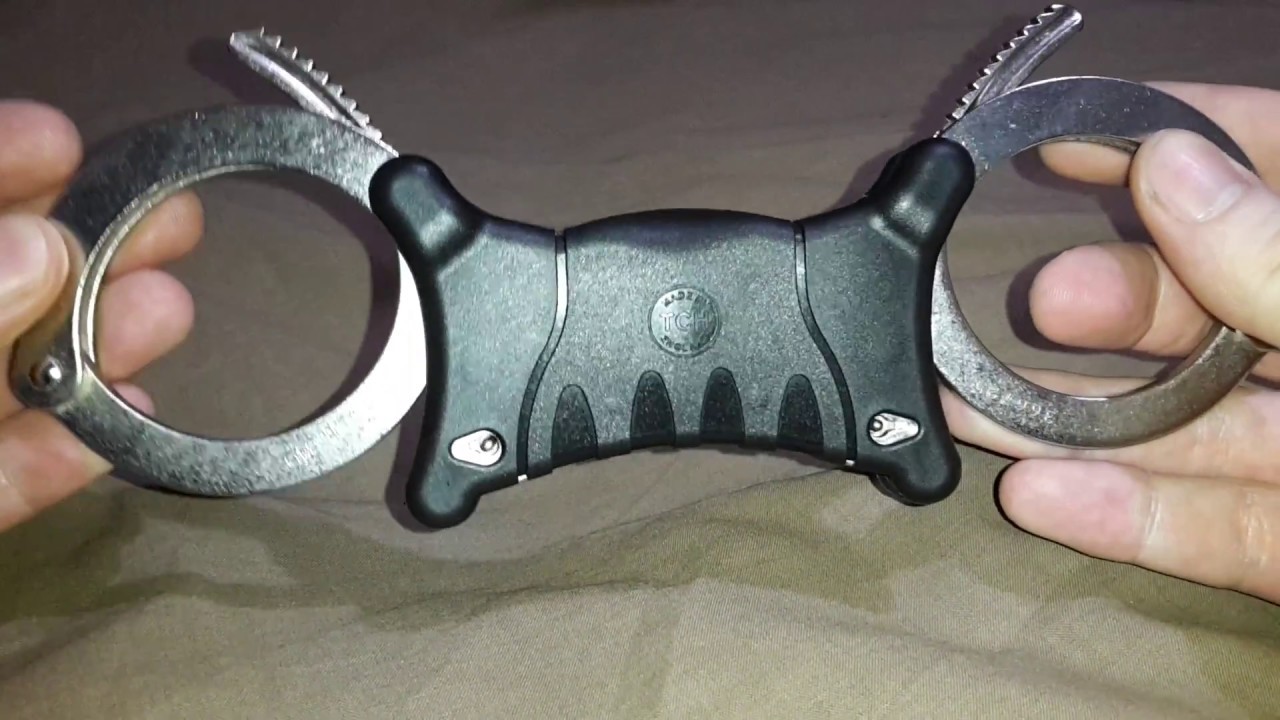
TCH850 Silver Premier Folding Rigid Handcuffs UK British Police (NIJ)


These are the fantastic TCH 850 Premier Folding Rigid Handcuffs used by the British police. NIJ Rated.

These are essentially rigid handcuffs, that can be folded in half to make carrying them easier for police officers and also more covert.

I have a video on a belt pouch designed for these cuffs, with a pair of TCH850B (black model 850) that I used to have.

The fact that they fold means criminals are less likely to notice the tell-tail profile that standard rigid handcuffs have when carried. Also, some officers do not like to have big long handcuffs that could dig into them when they sit down etc. So these are a nice authorised alternative.

They fold in half using the same normal handcuff key you use to operate the usual handcuff locking mechanisms.

Once opened, they stay rigid with only a very very tiny amount of flex, so essentially rigid for all intents and purposes.

Very comfortable for the person wearing them. The gap between the cuff bracelets is slightly longer, meaning when cuffed in front side by side, it is a bit more comfortable. However when cuffed in a rear stack, the slightly increased gap forces the arms higher and lower which could prove to be slightly more uncomfortable for people.

A very very high quality handcuff. A pleasure to have in my collection. I wanted this silver pair from the beginning but I settled on the black due to the discounted price. I got these silver ones at a real bargain price on ebay. Brand new, sealed, boxed everything. I am very happy indeed!

Official Current Latest UK Police TCH 840 Handcuffs Overview (NIJ) Police Supplies HD


This is the official latest standard issue for the UK Police force. The TCH model 840. This edition has keyholes on one side only for security reasons.

This helps to prevent or limit the chance of an offender using tools or keys to escape from the handcuffs.

TCH stands for "Total Control Handcuffs" and is a rebranding of the old HIATT or HIATTS cuffs. They are still made in England using the same factory. Safariland acquired Hiatt sometime around 2010 and after some failures of trying to absorb HIATT into their own branding, they have decided to revert and keep the HIATT brand as a sub-brand of Safariland due to global recognition of the HIATT brand.

So, everything that HIATT had is brought through into the TCH range. Essentially they are one and the same, TCH, Safariland, HIATT. Perhaps in the future new innovations will begin to distinguish TCH from it's HIATTS past.

These are very solid, rigid handcuffs. They allow an officer to have maximum control over a suspect by limiting their movement more effectively than with chain linked handcuffs and having the capability to use the cuffs on pressure points in the wrist to help subdue violent criminals to effectively restrain them. Kind of how martial artists can use pressure points.

An interesting note is the depressions or markings on the back side that show where the keyholes would be created on a pair of Model 842 (I have a video on that model too). This is likely to decrease the cost of production by providing markings for machining the plastic for that model. Or perhaps a demonstration of keyhole placement so people can decide which model they want? This is unknown and has no bearing on the function of the handcuffs.

Very nice handcuffs. However I would like to see the UK Police force transition to hinged handcuffs to still maintain the pressure-point and movement restriction capabilities while at the same time offering a little bit extra comfort for the person. These are great for violent people in my opinion but might be a bit over-kill for an average joe who gets into an argument and is escorted to the station in these. Still, they are high quality and perfect for what they are designed for. Plus they fit larger wrist sizes as these only come in the "Superior" size model. For fitting smaller wrists police officers can acquire the TCH handcuff recuder, which is also overviewed on my channel.

Thanks for watching.


Police gear police supplies security equipment police equipment