A blog showing videos of handcuffs, various brands and models such as Smith & Wesson, Peerless, Yuil, ASP, Clejuso and more.
• Click "Older Posts" under the last video listed, to see the next page of videos :)
Showing posts with label military. Show all posts
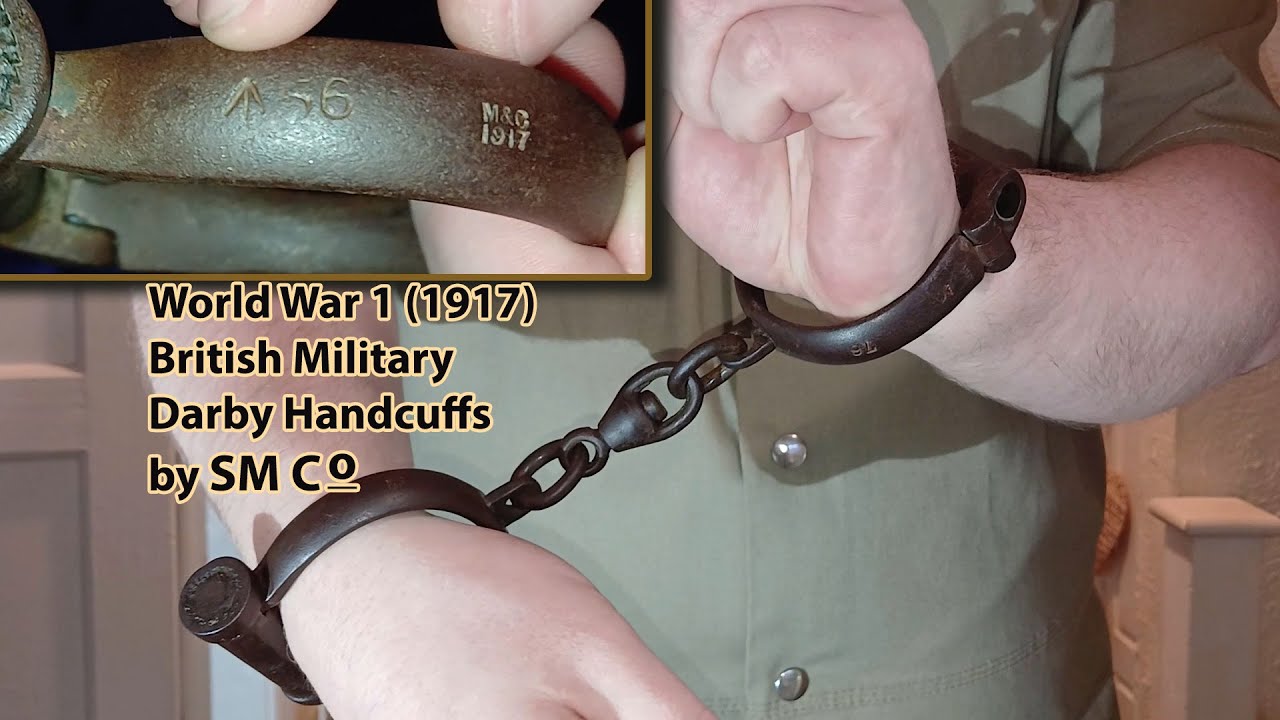
Scarce SM Co Darby WW1 Great War British Military M&C 1917 LARGE Handcuffs with Broad Arrow
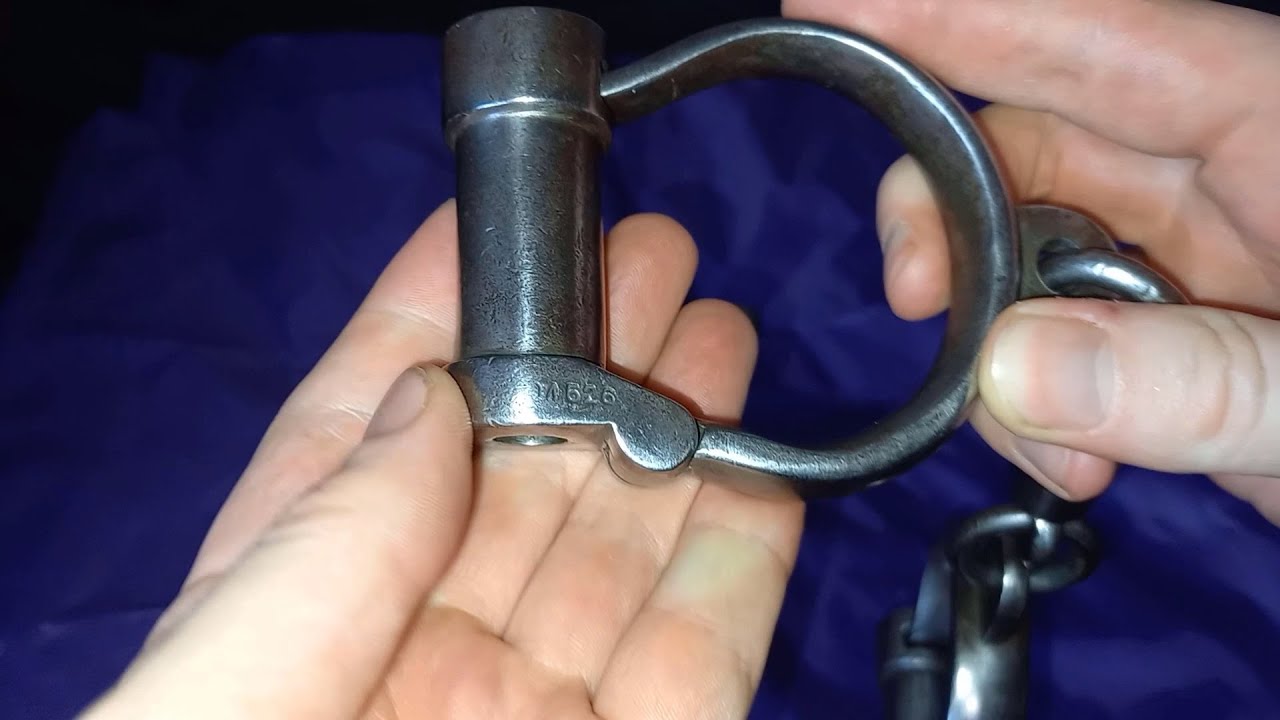
These are a pair of British MIlitary SM Co (Security Manufacturing Company) pair of HIATT 104 style non-adjustable Darby handcuffs From WW1.
SM Co are only known to have made handcuffs during the first world war, to fulfil government contracts when other manufacturers could not keep up with the demand. These are stamped with the official British military Broad Arrow or Crows Foot stamp, as well as M&C which was a military and government marking of the day. M&C likely stood for Ministry and Civil or Military and Civil. So to have M&C AND also the Broad Arrow is always cool! Dated 1917, as per the stamp. M&C 1917 is stamped very small!
They are a Size 3 large size... If I can spin my wrists around in them, they're big... ! 403 grams in weight. There would be many reasons for handcuffing during The Great War, such as internal soldier discipline if they had tried to desert, or got drunken or such things as well as for prisoner transport.
I had to do some usual maintenance on them. Using Autosol to remove the surface loose red rust to let the dark patina show through, blasting with fully evaporating brake and clutch cleaner, brushing, re-lubricating etc. But once I had finished (and waxed them of course!) they are a really nice pair of handcuffs. And they came with 2 keys! Fully, legitimate working keys. I am very impressed.
Have these been in the trenches subjected to gas attacks, apprehending German military officers? Have they been re-purposed during WW2 or given to reserve units like the Home Guard? Impossible to tell. I was unable to obtain their history because the seller had no direct ties to the original owner.
They work smoothly. This is the first SM Co brand of handcuffs in my collection.
Enjoy!
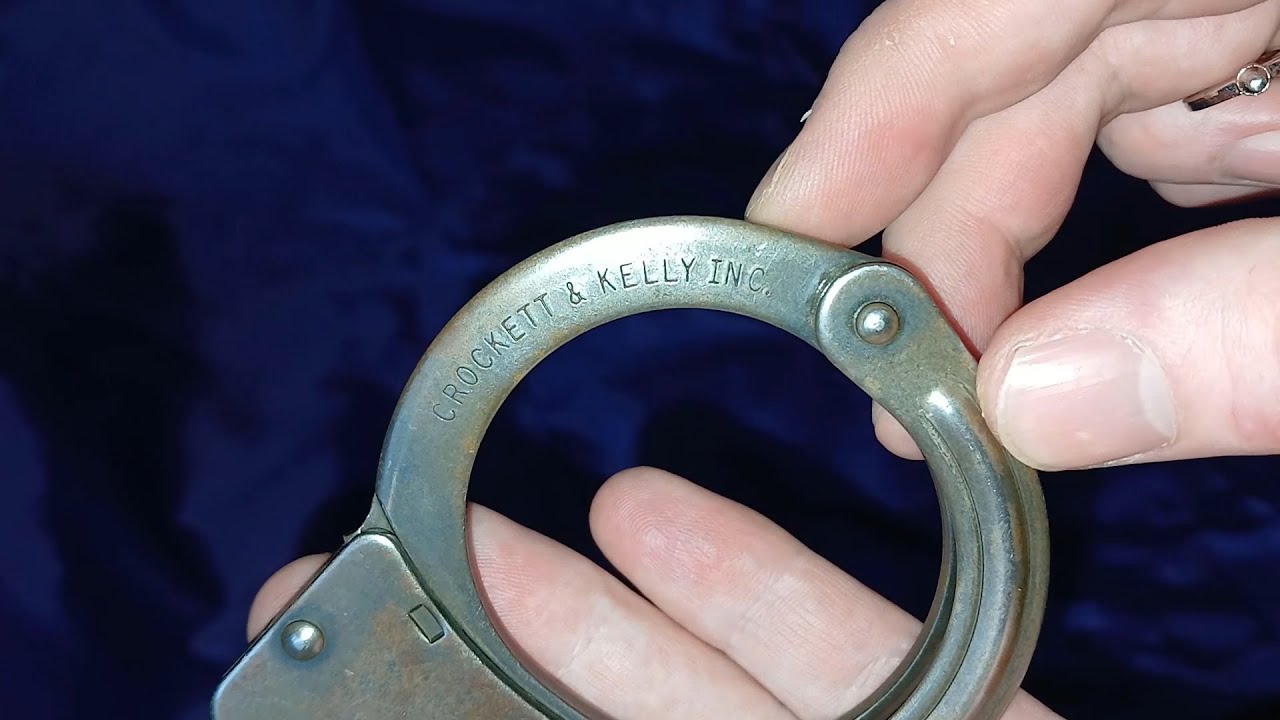
Crockett and Kelly Model 1 (Version 2) American DoD Military Police Handcuffs Mid 1980s
These are the Version 2 of the model 1 Crockett and Kelly handcuffs. It seems the US DoD (Department of Defence) placed an order for them because they were a lower cost handcuff. So these would have been destined for military police, most likely.
They are a spitting image of American Handcuff Co handcuffs, but with double strand designs that are similar to the South Korean company Kyung Chang. The bulge in the double strands gives them a unique look.
These have 1 pawl (as you would expect with most US handcuffs) and they double lock. There is no backloading feature for the single strand.
The build quality is quite decent, except that there is a bit of a gap between one of the cheek plate sides and the body of the handcuffs, reminiscent of how Russian handcuffs are very often. Like it was not quite riveted together as tightly as it should have been.
The branding looks nice on the single strand / bow.
I like them! Another American handcuff in my collection.
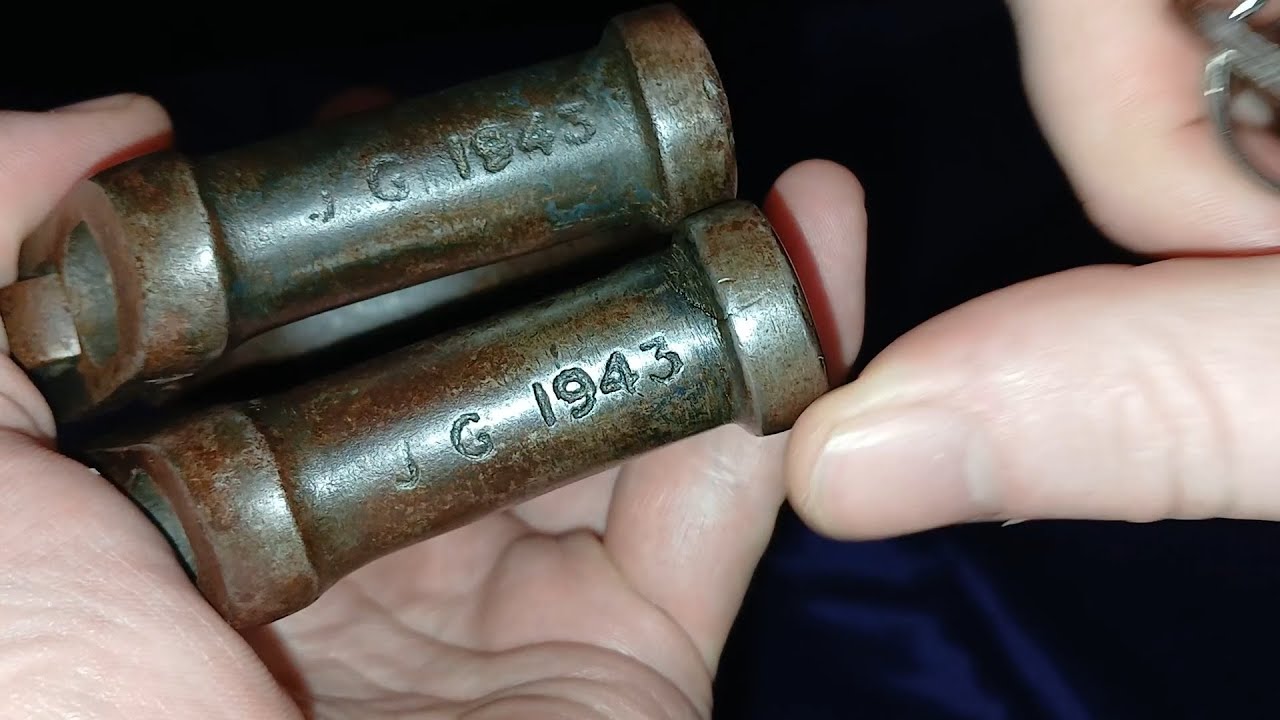
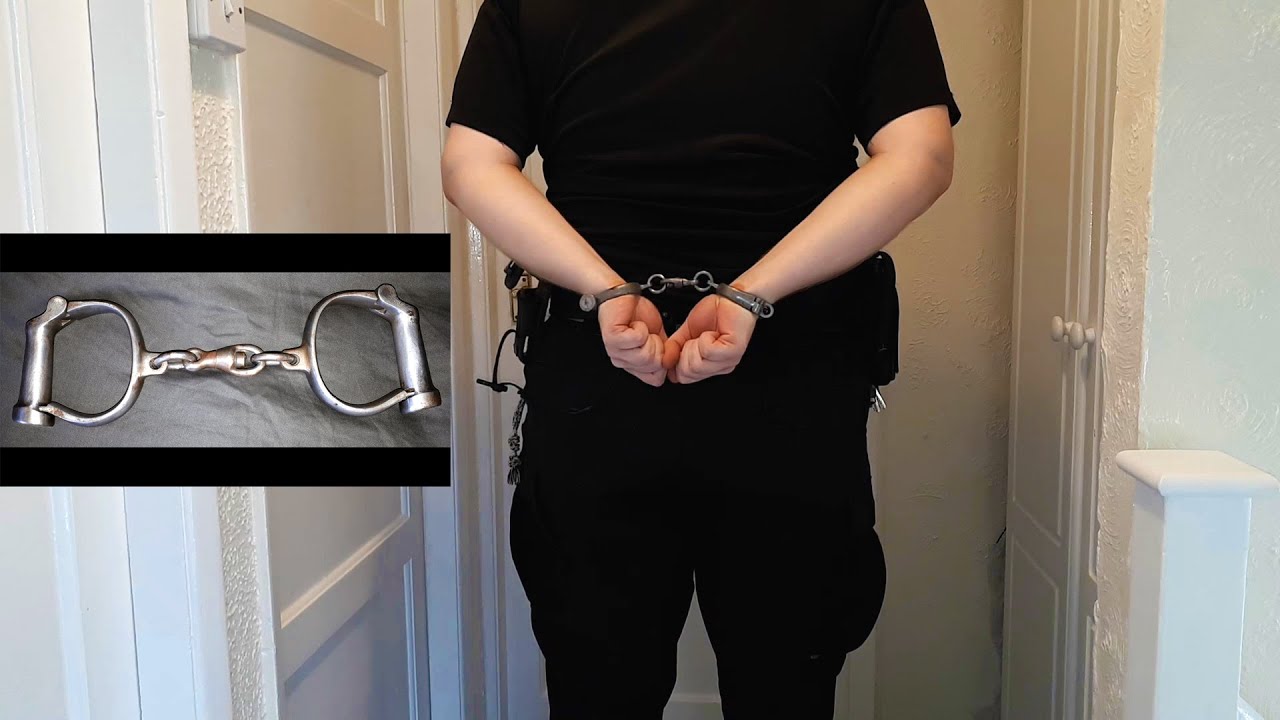
JG 1943 WW2 False Backstrap British Military Darby Handcuffs
These are JG (J.G) Handcuffs from World war 2 ( 1943 ). They are British Army issue and have the Broad Arrow (or crowsfoot as it's sometimes called) stamp very clearly on the lock tube.
These are really cool and heavy handcuffs (605 grams), though strangely are a bit on the small side. I can just about fit my wrists in them but they are certainly not comfortable at all, so I won't be doing an on-body demonstration.
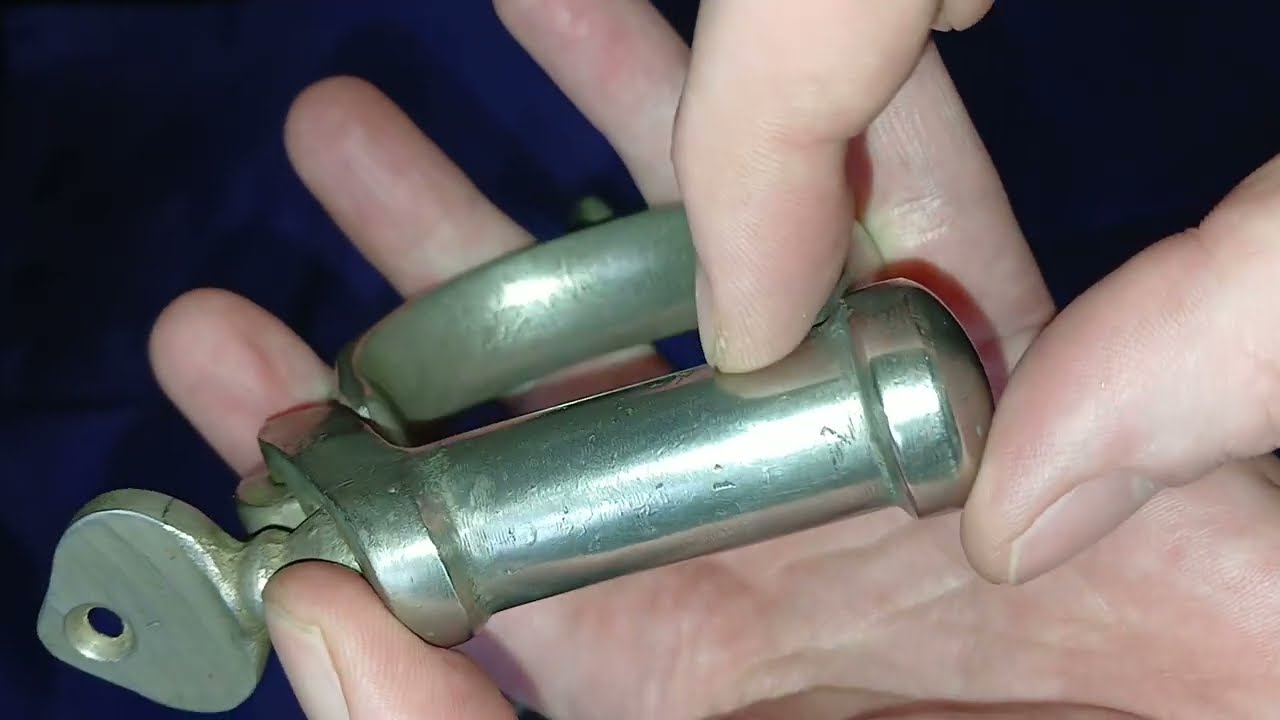
These are a false backstrap, which means the hinge looks like a backstrap but it isn't. Imagine a backpack strap. You have the material end and the other end is a buckle kind of thing. The shackle of the cuff is longer and gets fed through a rectangular hole made in the lock tube and then the shackle tail bit is folded back on itself so that it is permanently linked to the lock tube.A FALSE-backstrap like on this handcuff is opposite. The lock tube does not have a solid rectangular hole made, it has pincers that are poking outwards and the shackle is meaty on the hinge side and has a hole drilled through it. The shackle is placed between the pincers that are part of the lock tube and then the pincers are crimped inwards into the hole that is on the shackle to create a permanent connection and form the hinge.
There is a little crack near the cap end of the lock tune on one of the cuffs that lets light shine through. Though there is more than enough integrity surrounding it so that it's not a security issue or any form of show-stopper. 00:43 shows the crack on the bottom shackle near the right side by the plug end.
All in all, very nice indeed! Very happy to have another world war 2 handcuff in my collection and a British Military one at that! The little nick on the key barrel and the crack in the lock tube leads me to believe these have likely seen some serious action.
Anyway, Enjoy!
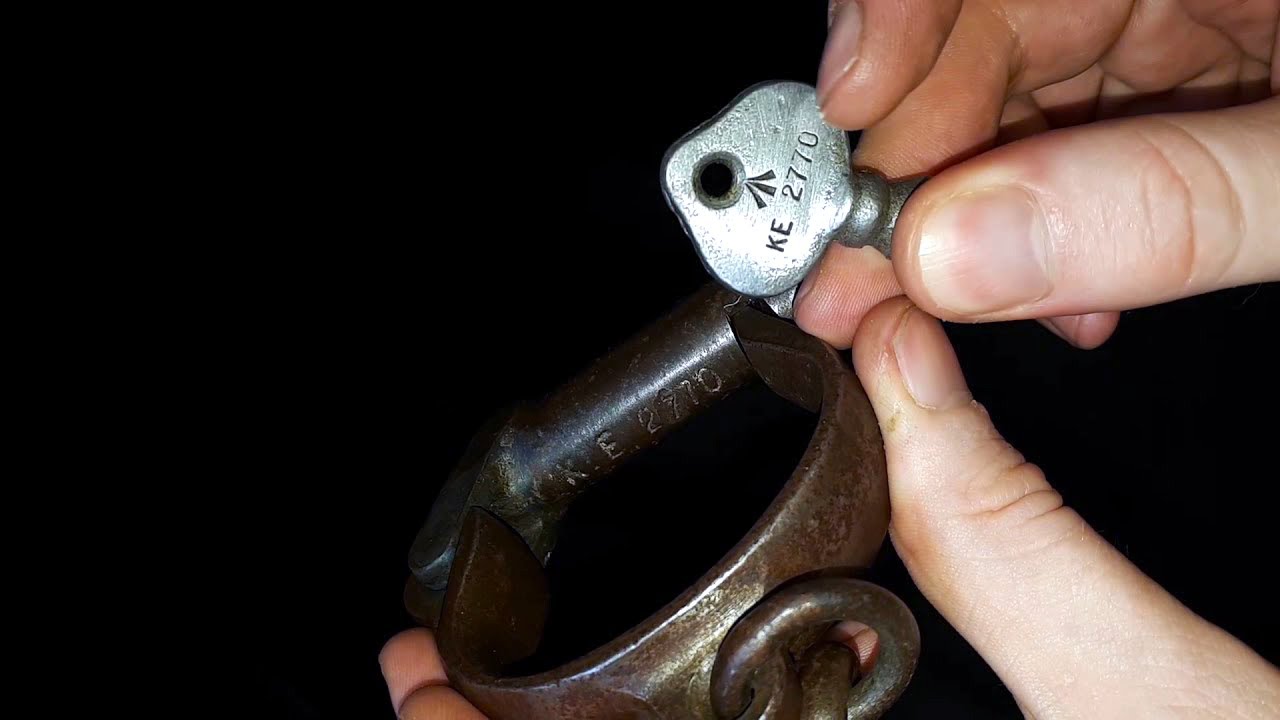
J.G 1950s KE 2770 British Military Darby Handcuffs (stamping ground off ðŸ˜)
I had a pair of these J.G British Military handcuffs a while back but sold them because they were too small for me to comfortably demonstrate for people.
I was holding out that a larger size would be available but they seem to be always small. Since I had no other false back-strap handcuffs, I decided to get another pair. But unfortunately some military jobsworth ground all the branding and military signage off the cuffs before parting with them. They even ground off the contract number and broad arrow off the keys!!?! 🤬 There are tell-tail traces enough that based on my prior experience I can tell they are J.G and the same KE 2770 contract, however other than detecting that they are from the 1950s (like most I have seen) I cannot tell which specific year in the 50s they come from. It is just loopy beyond comprehension looking at.... well lets call it what it is DEFACEMENT of these really nice handcuffs. You'll see me make a curly gesture going off screen lol. My god. I just can't believe someone would do that. They aren't even personally identifiable markings to any individual. Anyway..
I really like the design of false back-strap because I feel like they are more rugged than a riveted design. Shockingly these are heavy! They weigh 617 grams! The typical darby style handcuff is about 400 on the top end, so these are up there in the meaty category, especially considering I can barely close them on my smaller wrist. It's a lot of metal for a small-medium wrist size cuff...
Over all I am really, really happy to have a pair back in my collection. I will put up with them being small, just to have this design back in my collection. Though, if I find a better looking pair at a decent price in the future, I may swap them out for a better looking pair with stampings intact.
Enjoy!
Smith & Wesson Model 90 Police Handcuffs From Late 1970's / Early 1980's
This is a pair of Smith & Wesson Model 90 handcuffs. They were used in the US by police (probably military police as well). I am not sure when this model was first manufactured but it would have been probably early 1970's or perhaps earlier. The airweight model 925 was modelled on these and I believe 925's were around in the late 50's so... chicken or egg. Not sure which came first but I do like these model 90.
They stopped manufacturing these in 1979, I believe. Based on the design nuances and serial number of mine, it would track with the original sellers claims that these were bought in the US 40+ years ago.
This pair has some interesting professional stamping of DFC and A / A which I do not know the meaning of. But there is also a owner-engraved number on there which fits the format of a US Social Security number. Apparently the US military used SS numbers for identity for a long time, so it makes me think these were possibly owned by someone in the US military. Given this context, if you know what DFC or A / A means, please comment below.
The mechanism is very strong and in amazing condition. I did have to use some 0000 steel wool to get some gunk off and then do my usual cleaning and maintenance steps to ensure proper working order.
I really like these! Very smooth feeling and yet have all the required modern features you would want, including the indent system for the bow which bites and holds the bow in place in case a very strong person tries to escape by pulling outwards.
Enjoy!
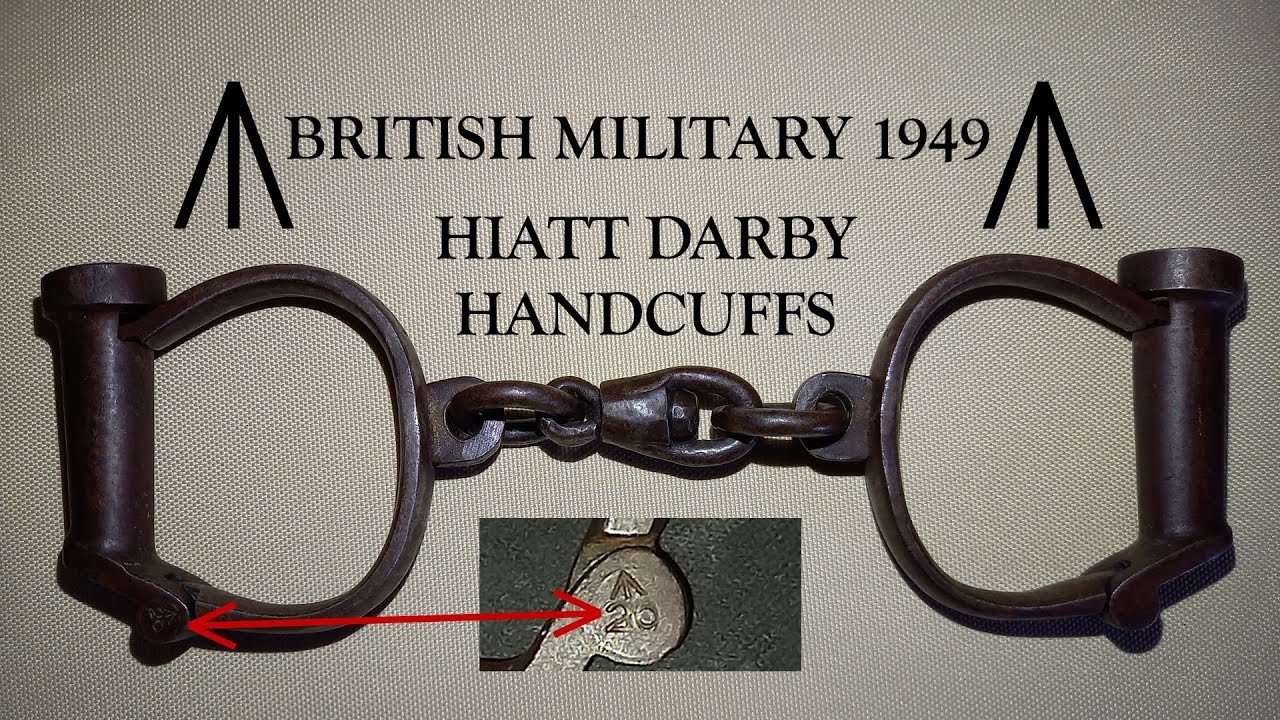
HIATT 104 (basic) 1949 British Military á—‘ Darby Handcuffs
These are a pair of Hiatt 104 Darby handcuffs. They are from 1949 and are British Military issue, 4 years after WW2.
The mechanism uses a screw key, as most Darby handcuffs. However, the internal bolts' threading is worn/abused and while one cuff (with the crows foot / Broad arrow stamp) works decently enough, the other only works with 1 key out of all keys I have and only if I am careful, slow and lose while initially turning. So, I will not be doing an on-person demo of them because I do not want to have to destroy them to get them off me or anyone else.
They do not have any markings like BEST, WARRANTED WROUGHT or HARD. So, these are likely a more budget model of lesser quality/ruggedness after the war when things were tight due to the country trying to rebuild. The damage on the threading makes sense to me in light of the presumed lower-grade quality & strength, because if they were hardened, they would have been stamped HARD and the fact it has no such stamp means they are made (likely) of softer more wear-prone steel.
They are size 1. I did try them on initially. On my wrists they are snug and fit ok, but if I flex out my hands to separate my fingers the max distance, I can feel the discomfort on my wrists.
They have a very nice Broad Arrow or Crows foot stamp on the hinge of one bracelet. Not obscured or worn, still very easily visible! I like this.
It is a pity they are not in better-working condition, but due to a poll I posted, 75% of people said they would keep them regardless of their lack of ability to function properly, so I have decided to officially welcome them into my collection 😀
Enjoy!
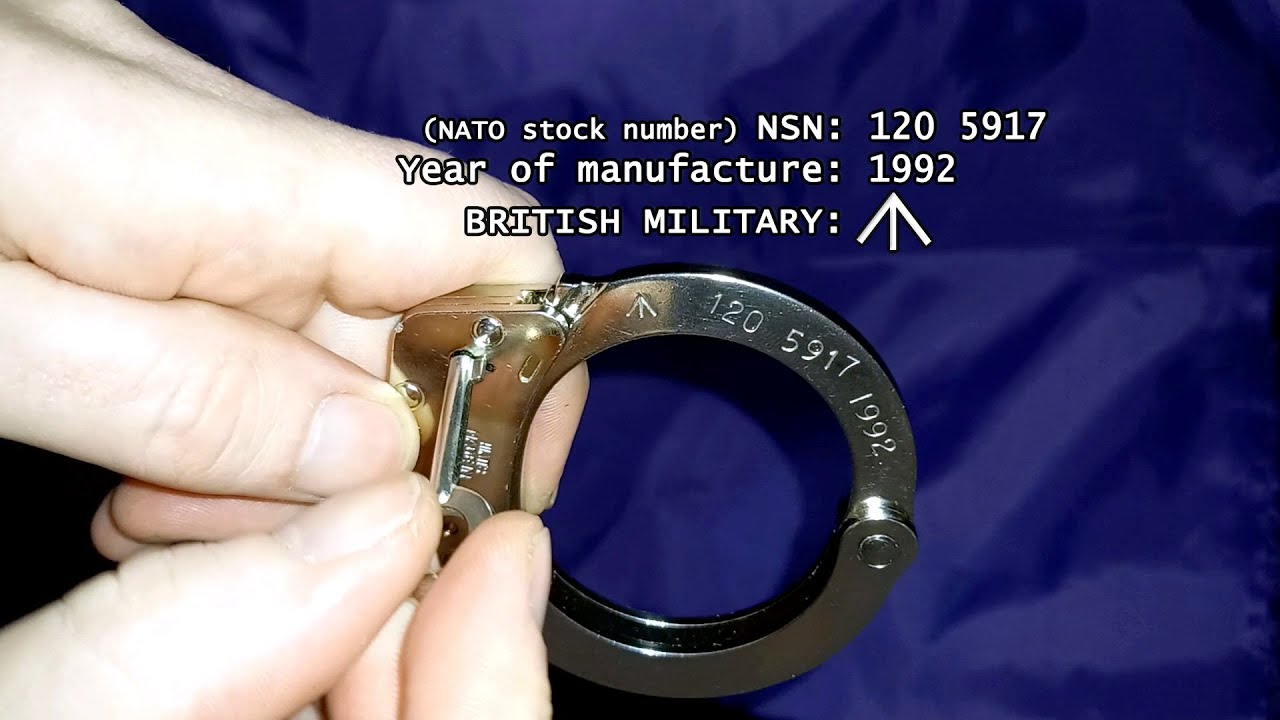
HIATTS 2010 Chain-link Handcuffs with á—‘ British Military Broad arrow / Crows-foot!
These are a typical pair of HIATTS 2010. The regular size of their chain-link handcuffs. But these are from British military surplus. They are in stunning condition. They look almost unused and have good, strong springs in the mechanism!
These have the year of manufacture on them (1992), they have the NSN number (NATO Stock Number) stamped on and if that wasn't cool enough, they have the British military Broad arrow or Crows-foot stamped on them too which is just the cherry on top!
All the features you'd expect. They double lock, have 3 pawls and they back-load. Soon as I got them I did some maintenance on them just in case. I brushed any crap out of the teeth (pawls & bows), polished them with Peek metal cleaner and then waxed them. Also I lubricated the boss rivet, swivels and internal mechanisms with WD40 Specialist Dry PTFE lubricant.
These are one of my pairs which are so shiny, it's hard to photograph them because they want to look black, due to reflecting my camera's body lol.
I am super happy to have these in my collection, even though I now have 3 pairs of HIATTS 2010. I have a standard pair with serial number, a MET POLICE stamped pair and now this British military broad-arrow pair!
😀
🌜
Enjoy!
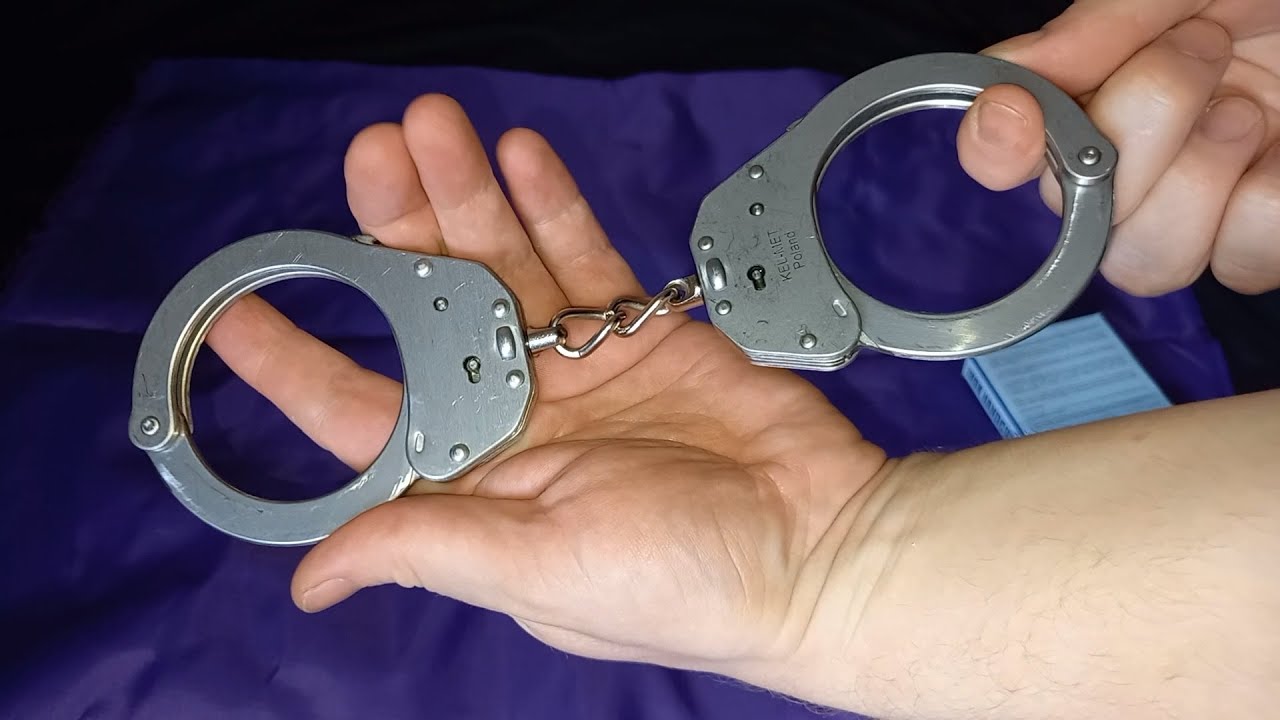
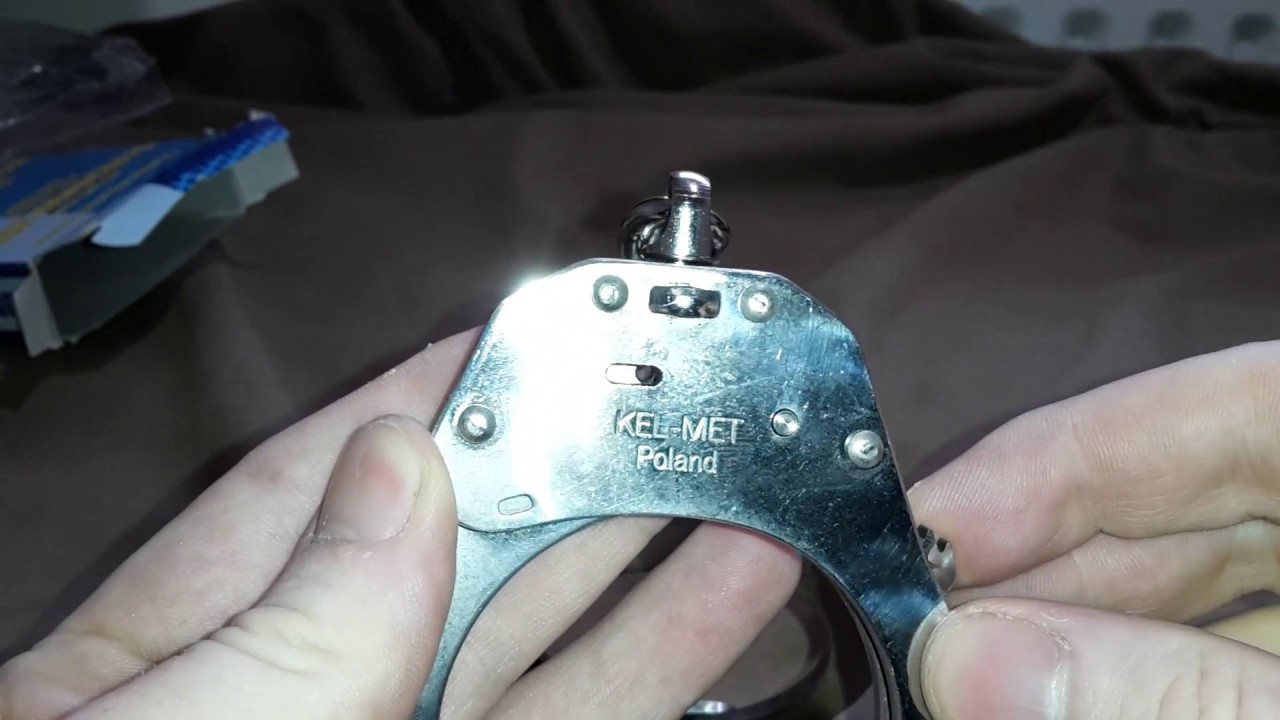
New KEL-MET KM 1001 Polish chain link NATO certified military handcuffs NCAGE: 2034H
These are the new KEL-MET KM 1001 chain link handcuffs in stainless steel, from Poland. I used to have a pair of KM 1000 before, and I thought these were the same but they aren't! These are the newer model used by Polish police I believe, but are also military certified and even have a NATO stock number!
These have a 3 pawl mechanism, some rudimentary anti-shim at the beginning of the pawls and they are made of stainless steel with no coatings, so that they are hypo-allergenic, that means they are more skin-safe for more people than a typical nickel-plated handcuff.
Because these are made from all stainless steel, instead of the typical hardened carbon steel with nickel plating, they are thicker, meatier and a bit more heavy than a typical chain handcuff. They weigh 356 grams.
They have a twisted chain instead of a plain flat chain. This could add some anti-snap technology to make it harder or impossible to "break" the handcuff chain by binding it up.
The double locking area protrudes slightly (though the pin is concave which helps) and it is too narrow for Smith & Wesson key double locking pins on the end of their keys.
These have no back-loading capability, though I was not impressed with their early attempts at back-loading on their rigid handcuffs. If adding back-loading means a handcuff will not double lock on the last solid click, then it should not be added, in my opinion. So I like these a lot.
They have mirrored sides, meaning the keyholes are facing the same way when applied to the wrists in the same downward motion. Some other manufacturers (typically eastern, but there are others) use one mould for their handcuff bracelets and so you end up with one keyhole facing the front of the hands and one keyhole facing the body, which is just goofy and lazy in my opinion!
The 3 pawls tend to act as one single pawl because the internal spring has no split in it, meaning if one pawl is pressed down, all the other 2 pawls will drop also, so this is something that could easily be improved upon by adding a split spring so that not all 3 pawls are controlled by one single spring.
All in all, I like these handcuffs even more than the rigid ones they do.
btw here are links to both the product page and the NATO certifications:
http://www.kelmet-defence.eu/km-1001-stainless-steel-handcuffs.html
http://www.kelmet-defence.eu/kelmet-certificates.html
Enjoy!
U.M.W British Indian Army Darby Military Handcuffs WW2 era VERY HEAVY! Behind back demo also.
These are from the British Raj period, during the World War 2 era. These are a model 104 style Darby handcuff that were made in India for the British Indian Army.
These old WW2 handcuffs have an extremely high quality of production, according to experts these are much better quality than India's modern handcuffs. They use a higher security mechanism which is similar to one Hiatt called "The Sheffield Pattern", which swaps around the male and female parts so that the inside of the handcuffs looks like you'd expect a Darby handcuffs key to look like and the key looks like what you'd expect to see inside a Darby handcuff!
The springs are so strong that I am pretty much incapable of snapping them closed. Since getting them this morning I have managed to get one to snap but it took me ages and a LOT of effort to get it to snap shut. So, unless you're Hercules, you really need to use the key when locking them.
They are a large size, with a nice rounded shape. I can even spin my wrists around in them, so they must be big! But the weight is off the charts. 848 grams! They are in a similar weight/comfort category as the modern Clejuso model 13. They are heavy but they are pretty comfortable.
I love these things. I am so happy to have a pair in my collection. They don't make them like they used to! These are epic.
Enjoy!
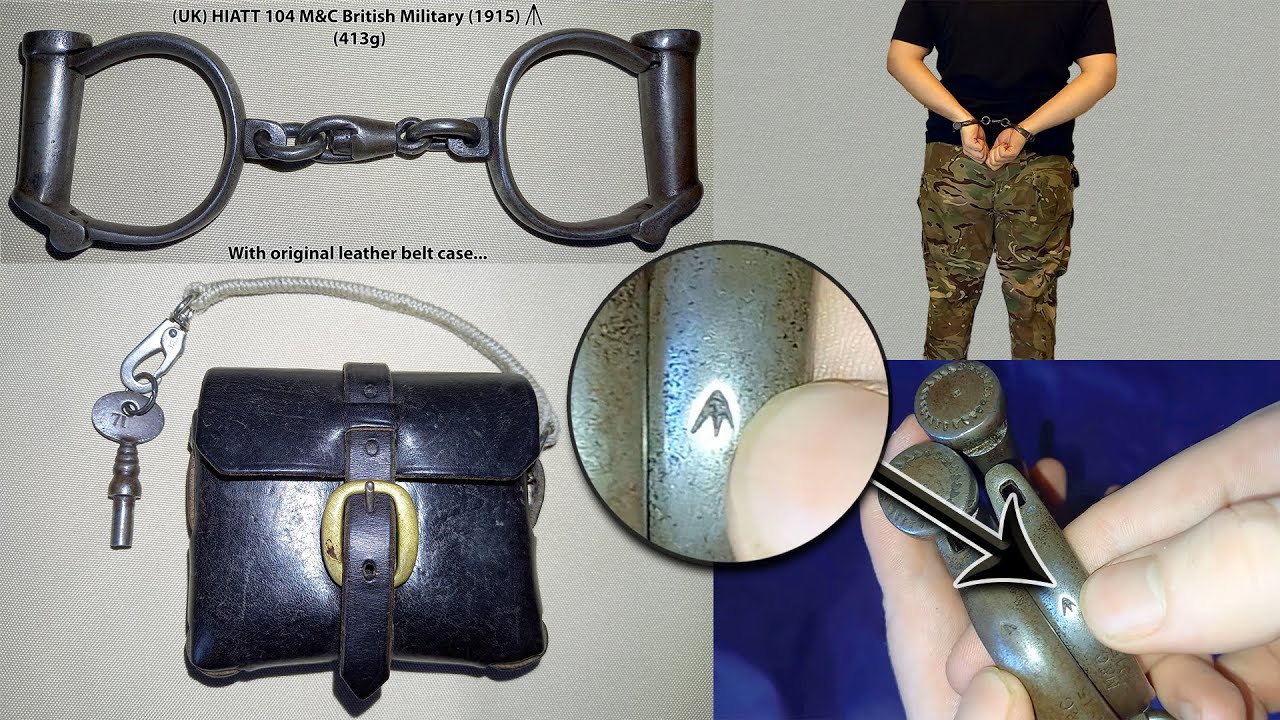
HIATT Model 104 M&C 1915 British Military World War 1 Darby Handcuffs Broad Arrow Stamp & has ORIGINAL case
These are a pair of Hiatt Model 104 Ministry and Civil 1915 Darby handcuffs. These are a British military pair. Exactly the same as my younger 1916 model, these 1915 are slightly heavier though and not plated. So these would have been made 1 year into WW1 (world war 1 also known as The Great War).
They also have the broad arrow or crows-foot stamp on them, which apparently is not often seen, since the presence of M&C already denoted they were military issue. M&C was non-combat/war related, so my theory is perhaps they were broad arrow stamped because they actually made it to the field of battle and the presence of the broad arrow may have been preferable since it was on most of their other stuff? I do not know, this is just my theory.
They are size 2 and just fit my wrists (same size as my plated shiny pair of 1916). So these would likely be a medium size. Comfortable enough for my wrists. I take a size large in gloves and I'm absolutely not a skinny person... So bare these things in mind when judging sizing if you acquire a pair.
I am assuming these have been well-used because when you turn the key, the pawl plug it's self actually twists a bit, meaning the square hole it fits into is not as tight fitting, so there is some slop in the movement internally. So I think they have probably seen a lot of use, though I doubt they are in danger of being worn out.
When I saw these on eBay, I assumed someone had found an old leather pouch that they fit in, but it turns out after looking more into it and asking around that this is absolutely a genuine leather belt case to hold them in, with a nice lobster claw connector so the key can spin freely without having to be unclipped, while being easy to unclip if the key needed to be handed to someone else.
The key number matches the handcuffs, which is nice. This key perfectly fits my 1916 pair but does not nicely work in any of my other cuffs. I won't abuse this key to try and get it's threading working in my other cuffs, I have enough keys for those, so I will leave this key as-is. It's a nice complete whole set!
I did have to do quite a bit of spraying solvents and oil in to get some gunk out. I have used peek polish and renaissance wax on both the cuffs and key as well as the leather case.
I love this little set! I shall keep it all together in my box, rather than separate everything. Normally cases are in some drawer, keys are centralised in my safe, but in this case I will leave it all intact.
Enjoy!
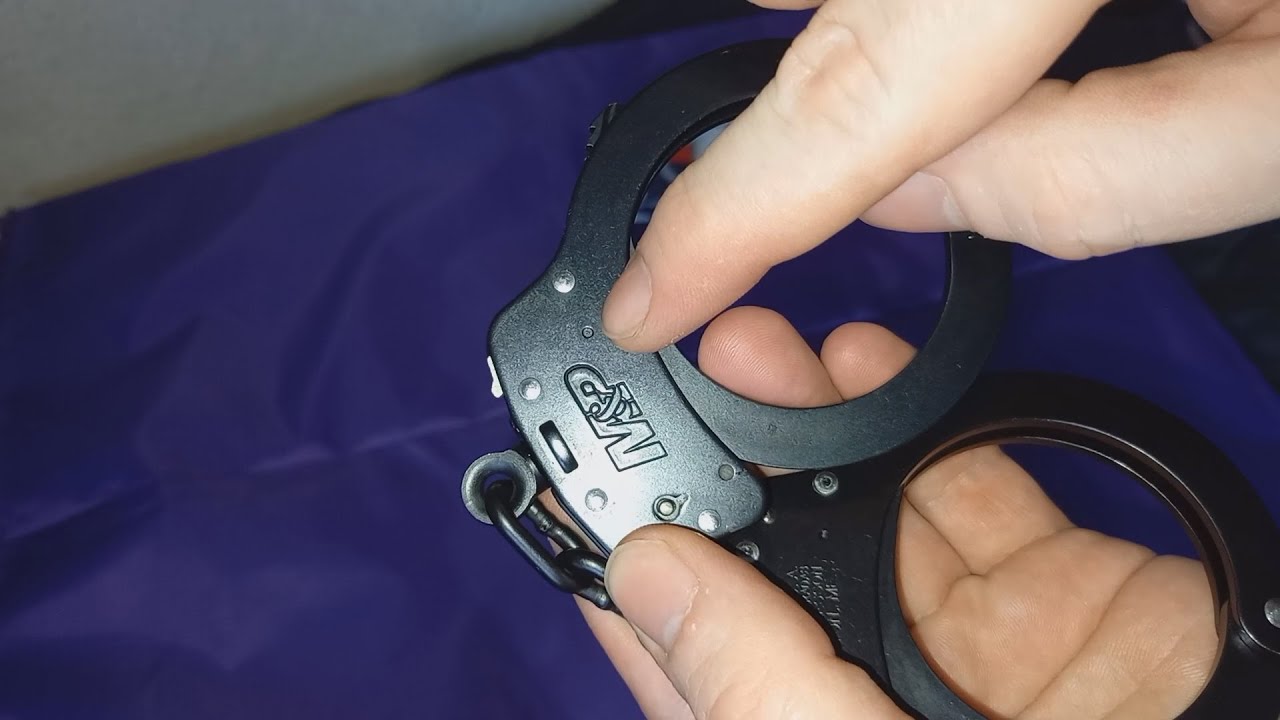
Smith & Wesson M100-1 M&P (Military & Police) Chain Handcuffs in Black Melonite Finish NIJ
These are a standard pair of Smith & Wesson M100-1 handcuffs which have 2 special things about them. This is the M&P model, which stands for Military and Police. These have a Melonite (Carbon nitride) finish which provides a similar look and feel as a blued finish and also provides protection from rusting, but also further hardens the exterior metal face to offer scratch resistance etc.
Another thing which makes these special is the fact they have a lever action double lock. Smith & Wesson do some models where you dig the end of your cuff key into the side of the handcuff to double lock, they have their classic window slot where you use the back of the key to slide the double lock across and the M&P have a lever which you can pull using your finger, without needing to use a key.
The double lock lever should work even if you have bitten your nails off too!
Aside from this, they are just another excellent pair of Smith & Wesson handcuffs. Yes, they only have 1 pawl bar like most standard US handcuffs, but these are top notch build quality, tolerances and quality control. A really, really nice handcuff. I like it a lot! Smith & Wesson are trusted by police officers, amongst other brands like Peerless, Chicago, ASP, Hiatt, CTS Thompson and many more.
Enjoy!
🎖🔗🇬🇧 JG British Military Faux Backstrap Darby Handcuffs from 1952 (Korean War)
These are the JG (J.G) British military Darby handcuffs from 1952 around the time of the Korean War. They are known as a faux or fake backstrap design, due to how the hinge was designed. A backstrap darby handcuff has a flap of the bow pulled back to make a gap for the hinge, whereas a fake backstrap is visually designed similarly, but it's more of a pronounced hole that is made in the chunkier metal of the hinge area.
These are the most heavy darby handcuffs in my collection. Approximately 55% heavier, 25% wider bow and 20% wider lock tube. These are BEEFY handcuffs indeed! 627 grams! This size is a tad on the smaller than regular and are very tight on me. If I flex my fist while wearing the cuffs, they hurt. But at least they fit enough that I could demo them for you.
They are a fixed bow, non-adjustable handcuff.
I won these on eBay and they had no key. Luckily I had won a bid on a key weeks earlier when I first bought a pair of Darby handcuffs. It did not fit any that I had my eye on but I knew it might come in handy since I wanted a pair of these! As luck would have it, these cuffs showed up and I won, so now I have 1 working key for them 😎 The key number is KE 2770.
Enjoy
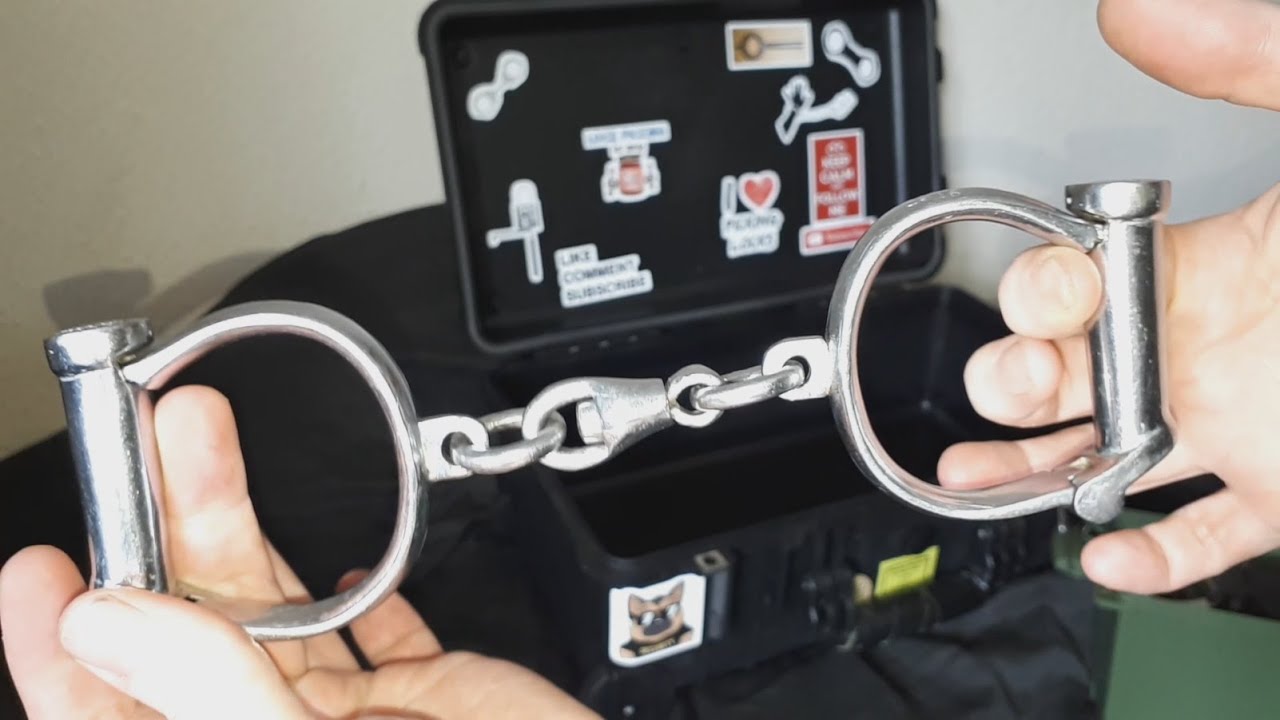
HIATT 2 M&C (Ministry & Civil) Model 104 Darby Handcuffs Made 1916 (Behind back demo also)
These are a Ministry & Civil (M&C) pair of HIATT Darby handcuffs from 1916 (world war 1). SHINY! They came with no key, but the key from my HIATT BEST pair work fine with these.
These are apparently military, though not used for front-line war purposes. Perhaps they were used by military police or some other domestic purpose. They are not stamped with the crows foot or broad arrow because the M&C was enough to mark them as being Military property at the time.
These are very similar to the previous pair of Police version of these handcuffs, only these are older and still have the chrome plating intact which looks shiny as hell and feel very smooth since waxing them. Truly a nice pair of cuffs.
The seller had listed them with the wrong brand name of "RIATT" but the images clearly showed they were HIATT. So I was the only person who bid on them and I unexpectedly won them for about £25 total which is a total steal at that price!
At the time of writing, these are 105 years old and still work great. I did have to clean a lot of dirt and graphite out of them and then re-lubricate and polish them but once done they are amazing.
Enjoy.
Genuine British Army Darby Style Handcuffs from 1956, made by R.C.S Ruben, Craddock & Sons
These are British army / military handcuffs from 1956. They are stamped with the British government or military broad arrow symbol. These are only slightly different than those that were used during WWII World War 2.It is a screw style mechanism and are not adjustable to different wrist sizes.
There were 3 sizes made, though it is unlikely that military or police would carry all 3 sizes in my opinion due to weight, which is why the ratchet handcuff was to be adopted not too long after these R.C.S versions of the Darby style cuffs were used. This style of cuff has been made by various brands, most notably HIATT.
This style is surprisingly comfortable, considering that this design dates to the mid 1800's. As long as your wrist fits in the bracelet, they are relatively comfortable.The screw mechanism is very simple. A STRONG spring keeps the pawl in the closed position and when you screw the key in, it progressively pulls the pawl plunger outwards, enabling you to open the handcuff.These have the Victorian / Sherlock Holmes vibe to them because the basic style is so old. But they are effective and designs like this are still used in some eastern countries like Pakistan.
I also demo these behind my back so you get an additional view of how they look and restrict.
These are not the quickest handcuffs to operate! The springs are extremely strong and often hard to snap shut. You can imagine how inconvenient and possibly pointless and dangerous it would be to have to screw a key so many times to lock handcuffs on someone's wrist if you did not have enough strength in your hands to snap them shut! The modern swing-through ratchet handcuff was so much of an improvement that it has become the standard world-wide to replace this design.
Enjoy!
KEL-MET Military Standard Chain Handcuffs Stainless Steel NATO Certified: NCAGE 2034H
These are NATO standard: NCAGE: 2034H standard chain link stainless steel handcuffs by KEL-MET. They are not, as far as I know, certified by the NIJ. However they are certified by NATO.
However this being the case, I personally believe the box that they come in looks terribly unprofessional, like something that came out of a 1980's children's comic series. Don't be fooled though, they are legitimate NATO certified professional chain-link handcuffs.
The size capacity of these handcuffs is similar to UK Police speedcuffs. The larger size. I can close them one click and easily pass my hand through the hole, something which is impossible for me on "standard" size cuffs.
They are a very solid, smooth operating pair of handcuffs. They use a non-standard key and have 2 pawl bars, so these could be considered higher than usual security although they are pickable in a similar fashion as Alcyon can be. These are Polish handcuffs. So, being made in Poland, I was interested to see the quality as I have never had any from there before. Very well done. I am impressed. Also they purposefully use stainless steel to prevent the chance of skin reactions to nickel that most other companies coat their cuffs in.
These are primarily for the Military it seems according to their own site's category: http://www.kelmet.pl/en/produkt/stainless-steel-handcuffs
Subscribe to:
Posts (Atom)